

Physics
Get insights from 5.6k questions on Physics, answered by students, alumni, and experts. You may also ask and answer any question you like about Physics
Follow Ask QuestionQuestions
Discussions
Active Users
Followers
New answer posted
a year ago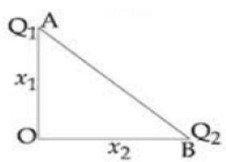
Contributor-Level 10
Net field along AB at O must be zero.
E? cosα = E? sinα
(kQ? /x? ²) (x? /AB) = (kQ? /x? ²) (x? /AB)
Q? /Q? = x? ³/x? ³
New answer posted
a year agoContributor-Level 10
F = -dU/dr = - [-12A/r¹³ + 6B/r? ]
F=0 ⇒ r= (2A/B)¹/?
U (at r= (2B/A)¹/? ) = -A²/4B
New answer posted
a year ago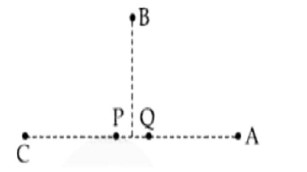
Contributor-Level 10
Φ? = π/2 - (2π/λ)x = π/2 - (2π/20)5 = 0
Φ_B = π/2
Φ_C = π/2 + (2π/λ)x = π/2 + π/2 = π
I_A = 4I? ; I_B = 2I? ; I_C = 0
New answer posted
a year ago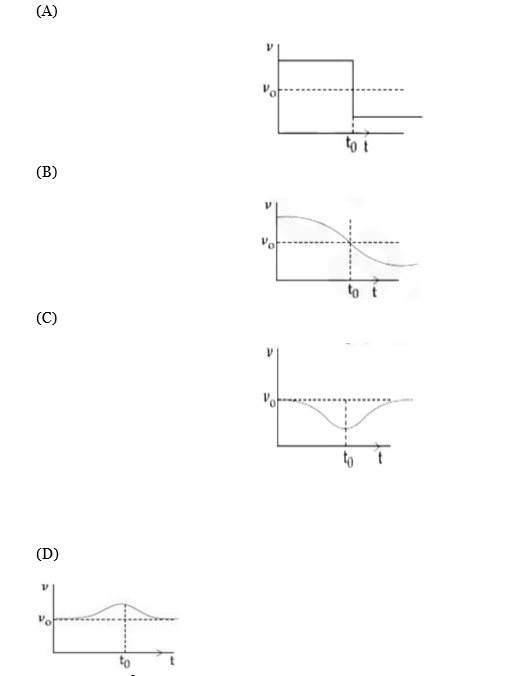
Contributor-Level 10
While approaching: v = v? (c / (c - vcosθ)
While receding: v = v? (c / (c + vcosθ)
New answer posted
a year agoContributor-Level 10
Surprisingly, the viscosity of a dilute gas behaves exactly opposite to what you might expect for liquids. Liquid viscosity generally decreases as temperature is lowered. The viscosity of a dilute gas increases as and when you raise its temperature. This counter-intuitive behaviour was clearly established experimentally and is explained by the kinetic theory.
Taking an Exam? Selecting a College?
Get authentic answers from experts, students and alumni that you won't find anywhere else
Sign Up on ShikshaOn Shiksha, get access to
- 67k Colleges
- 1.2k Exams
- 718k Reviews
- 1850k Answers