

Physics
Get insights from 5.6k questions on Physics, answered by students, alumni, and experts. You may also ask and answer any question you like about Physics
Follow Ask Question
5.6k
Questions
0
Discussions
24
Active Users
0
Followers
New answer posted
a year ago
0 Follower
1 View
V
New answer posted
a year ago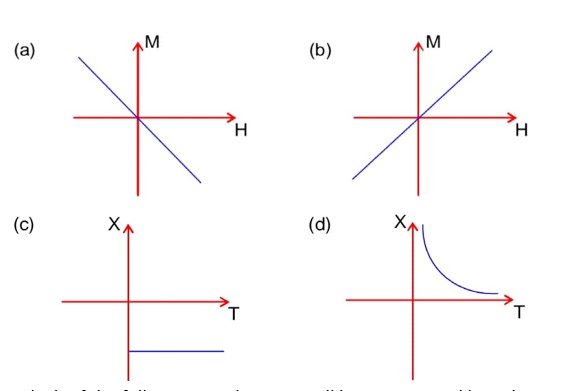
0 Follower
18 Views
A
alok kumar singh
Contributor-Level 10
Magnetization (M) is directly proportional to magnetizing field and magnetic susceptibility does not depend on temperature so option 3 is correct.
New answer posted
a year ago
0 Follower
6 Views
V
Vishal Baghel
Contributor-Level 10
Load of mass will be equally distributed among the four colours so force on each columns will be 125 * 103 N.
Cross section area of the column =
Using young's modulus :
Taking an Exam? Selecting a College?
Get authentic answers from experts, students and alumni that you won't find anywhere else
Sign Up on ShikshaOn Shiksha, get access to
- 67k Colleges
- 1.2k Exams
- 718k Reviews
- 1850k Answers