Physics

Get insights from 5.6k questions on Physics, answered by students, alumni, and experts. You may also ask and answer any question you like about Physics

Follow Ask Question
5.6k

Questions

0

Discussions

30

Active Users

0

Followers

New answer posted

6 months ago

0 Follower 5 Views

A
alok kumar singh

Contributor-Level 10

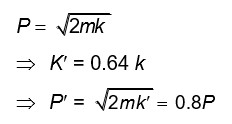
Kindly go through the solution 


New answer posted

6 months ago

0 Follower 1 View

A
alok kumar singh

Contributor-Level 10

In rotational motion, angular velocity of every particle on rigid body will be same. But linear velocity is given as v = r ? .

New answer posted

6 months ago

0 Follower 1 View

A
alok kumar singh

Contributor-Level 10

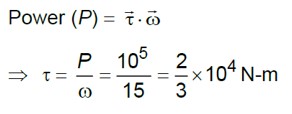
Kindly go through the solution


New answer posted

6 months ago

0 Follower 1 View

A
alok kumar singh

Contributor-Level 10

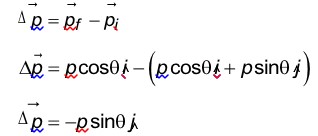
Kindly go through the solution


New answer posted

6 months ago

0 Follower 1 View

A
alok kumar singh

Contributor-Level 10

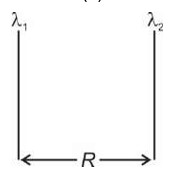
Kindly go through the solution


New answer posted

6 months ago

0 Follower 1 View

A
alok kumar singh

Contributor-Level 10

As per Newton third law, the horse exerts a force on the ground, the ground will also exert a force on the horse.

New answer posted

6 months ago

0 Follower 1 View

A
Aadit Singh Uppal

Contributor-Level 10

Nice Question! In this case, the matter wouldn't even exist. Atoms will exhibit non-uniform energy levels and can easily jump between different orbitals, leading to instability in the energies. This will lead to an unstable spectra and anything would, ;t exist today in the way we know it to be.

New answer posted

6 months ago

0 Follower 1 View

A
alok kumar singh

Contributor-Level 10

Kindly go through the solution


New answer posted

6 months ago

0 Follower 2 Views

A
alok kumar singh

Contributor-Level 10

I = m (2v) = 1 * 2 * 15 = 30 kg m s–1

New answer posted

6 months ago

0 Follower 1 View

A
Aadit Singh Uppal

Contributor-Level 10

Linear momentum refers to the motion in a straight line, from one point to another. And angular momentum is the rotational equivalent of linear momentum. Since the electrons move in circular tracks or orbitals, the angular momentum is used to calculate the movement of these electrons.

Get authentic answers from experts, students and alumni that you won't find anywhere else

Sign Up on Shiksha

On Shiksha, get access to

  • 66k Colleges
  • 1.2k Exams
  • 687k Reviews
  • 1800k Answers

Share Your College Life Experience

×

This website uses Cookies and related technologies for the site to function correctly and securely, improve & personalise your browsing experience, analyse traffic, and support our marketing efforts and serve the Core Purpose. By continuing to browse the site, you agree to Privacy Policy and Cookie Policy.