Physics

Get insights from 5.6k questions on Physics, answered by students, alumni, and experts. You may also ask and answer any question you like about Physics

Follow Ask Question
5.6k

Questions

0

Discussions

28

Active Users

0

Followers

New answer posted

11 months ago

0 Follower 14 Views

A
alok kumar singh

Contributor-Level 10

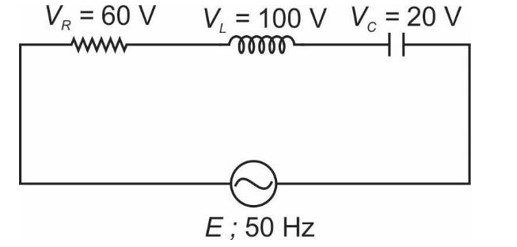
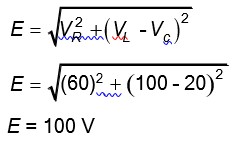
Kindly go through the solution


New answer posted

11 months ago

0 Follower 3 Views

A
alok kumar singh

Contributor-Level 10

For no emission of electron

λ > λ0

Q λ0 = hc/w0,  so λ > hc/w0


New answer posted

11 months ago

0 Follower 1 View

S
Swayam Gupta

Contributor-Level 9

Surface tension is the force acting on the surface of the liquid.

New answer posted

11 months ago

0 Follower 3 Views

S
Swayam Gupta

Contributor-Level 9

Bernoulli's principle states that in a steady flow, the sum of pressure, kinetic energy per unit volume, and potential energy per unit volume remains constant.

New answer posted

11 months ago

0 Follower 2 Views

S
Swayam Gupta

Contributor-Level 9

Yes, the Mechanical properties of fluids class 11th physics is important in NEET. On average, 1-2 questions would be asked from this chapter, which you can cover from the Class 11th Mechanical Properties of Fluids notes.

New answer posted

11 months ago

0 Follower 6 Views

S
Swayam Gupta

Contributor-Level 9

The main mechanical properties of fluids are exerting pressure, resisting flow or viscosity, forming surface tension, following Bernoulli's principle, and moving in a streamline.

New question posted

11 months ago

0 Follower 2 Views

New answer posted

11 months ago

0 Follower 5 Views

R
Raj Pandey

Contributor-Level 9

qR =1/60º for human eye

= 21.6 km

New answer posted

11 months ago

0 Follower 2 Views

R
Raj Pandey

Contributor-Level 9

For no emission of electron

λ > λ0


New answer posted

11 months ago

0 Follower 3 Views

P
Pallavi Pathak

Contributor-Level 10

There are two types of electricity - static and current. The current electricity is divided into Alternating Current (AC) and Direct Current (DC). Based on the production methods, electricity is divided into - heat, chemical, pressure, light and magnetism.

Get authentic answers from experts, students and alumni that you won't find anywhere else

Sign Up on Shiksha

On Shiksha, get access to

  • 66k Colleges
  • 1.2k Exams
  • 711k Reviews
  • 1850k Answers

Share Your College Life Experience

×
×

This website uses Cookies and related technologies for the site to function correctly and securely, improve & personalise your browsing experience, analyse traffic, and support our marketing efforts and serve the Core Purpose. By continuing to browse the site, you agree to Privacy Policy and Cookie Policy.