

Chemistry
Get insights from 6.9k questions on Chemistry, answered by students, alumni, and experts. You may also ask and answer any question you like about Chemistry
Follow Ask QuestionQuestions
Discussions
Active Users
Followers
New answer posted
a year ago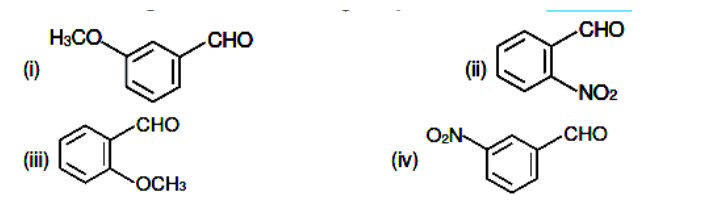
Contributor-Level 9
-I, -M effect of NO? increase reactivity towards nucleophilic addition reaction with HCN.
New answer posted
a year agoContributor-Level 9
For AB? compound possible geometry are
S. No. | Bond pair | Lone pair | Total | Hybridisation | Geometry | Polarity |
1 | 4 | 0 | 4 |
| Tetrahedral | non polar |
2 | 4 | 1 | 5 |
| Sea-saw | Polar |
3 | 4 | 2 | 6 |
| Square Planar | non polar |


Square pyramidal can be polar due to lone pair moment as the bond pair moments will get cancelled out.
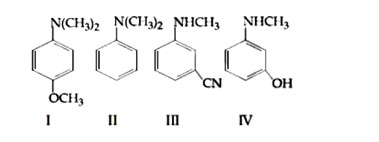
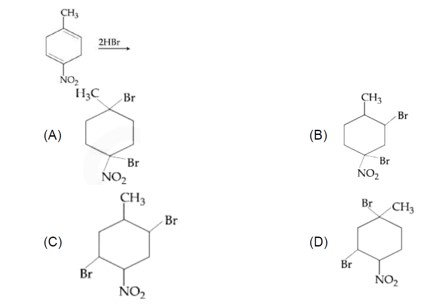
New answer posted
a year agoContributor-Level 10
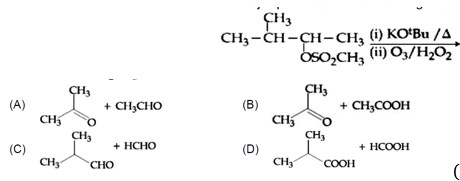
Terminal alkynes and Non Terminal Alkynes are both variants of alkynes, but the difference lies in the position of the triple carbon bond. Terminal Alkynes have the triple carbon bond at the end of the chain, such as ethyne and propyne. On the other hand, Non Terminal Alkynes have their triple carbon bond in the middle of the chain. Example: 2-Butyene.
Taking an Exam? Selecting a College?
Get authentic answers from experts, students and alumni that you won't find anywhere else
Sign Up on ShikshaOn Shiksha, get access to
- 67k Colleges
- 1.2k Exams
- 716k Reviews
- 1850k Answers