

Chemistry
Get insights from 6.9k questions on Chemistry, answered by students, alumni, and experts. You may also ask and answer any question you like about Chemistry
Follow Ask QuestionQuestions
Discussions
Active Users
Followers
New answer posted
a year agoContributor-Level 10
For n=4, l can be 0,1,2,3. m=-2 is possible for l=2,3. So 2 subshells (4d, 4f).
New answer posted
a year agoContributor-Level 9
Sol. E? cell = E? (Sn²? |Sn) - E? (Cu²? |Cu)
= -0.16 - 0.34 = -0.50V
ΔG? = -nFE? cell
= -2 * 96500 * (-0.5) = 96500 J
= 96.5 kJ = 96500 J
New answer posted
a year ago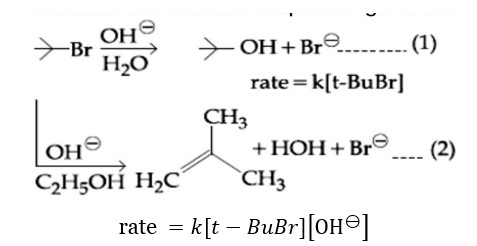
Contributor-Level 10
Reaction (1) is SN1 (rate independent of [OH? ]). Reaction (2) is E2 (rate depends on [OH? ]).
Statement (B) is correct. Changing concentration of base will have no effect on reaction (1).
New answer posted
a year ago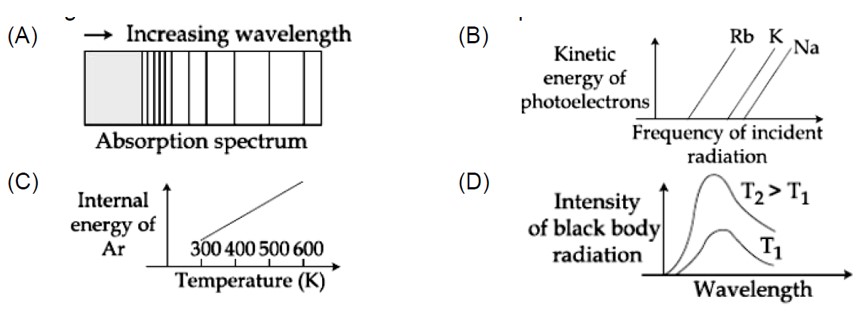
Contributor-Level 9
1, 2 and 3 are according to quantum theory but (4) is statement of kinetic theory of gases
New answer posted
a year agoContributor-Level 9
Cesium has lowest ionisation enthalpy and hence it can show photoelectric effect to the maximum extent hence it is used in photo electric cell.
New question posted
a year ago
New question posted
a year ago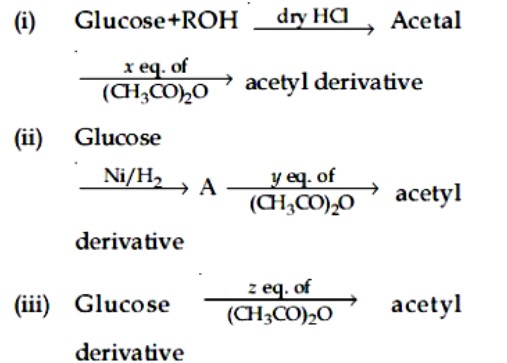
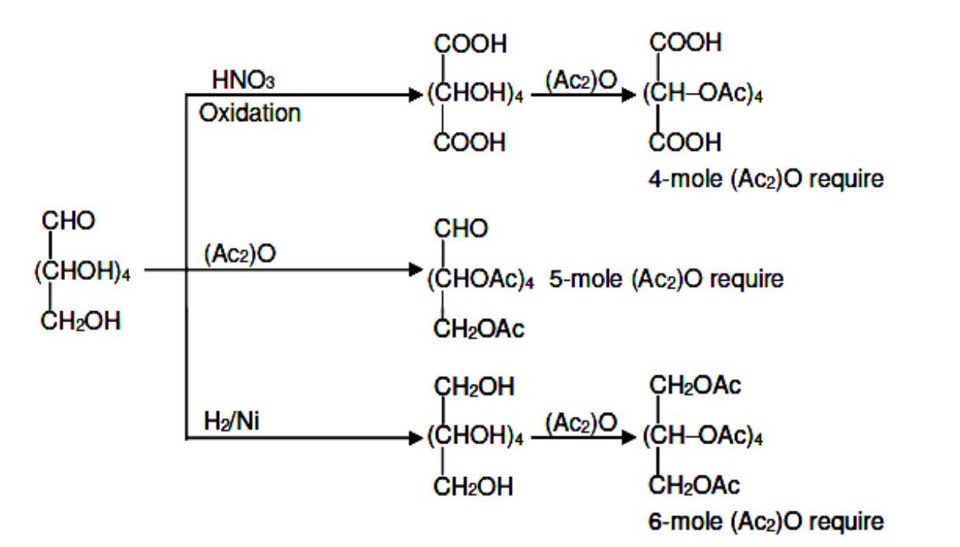
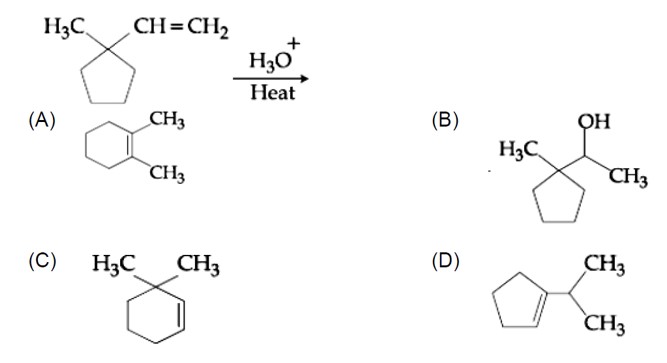

Taking an Exam? Selecting a College?
Get authentic answers from experts, students and alumni that you won't find anywhere else
Sign Up on ShikshaOn Shiksha, get access to
- 67k Colleges
- 1.2k Exams
- 716k Reviews
- 1850k Answers