

Chemistry
Get insights from 6.9k questions on Chemistry, answered by students, alumni, and experts. You may also ask and answer any question you like about Chemistry
Follow Ask Question
6.9k
Questions
0
Discussions
22
Active Users
0
Followers
New answer posted
a year ago
0 Follower
3 Views
A
New answer posted
a year ago
0 Follower
1 View
A
New answer posted
a year ago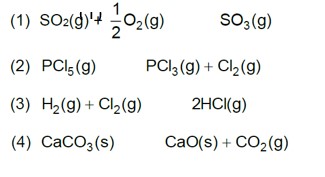
0 Follower
2 Views
A
alok kumar singh
Contributor-Level 10
On increasing pressure, equilibrium moves in that direction where number of gaseous moles decreases.

New answer posted
a year ago
0 Follower
1 View
A
alok kumar singh
Contributor-Level 10
In physisorption multimolecular layers are formed on solid surface.
New answer posted
a year ago
0 Follower
9 Views
A
alok kumar singh
Contributor-Level 10
More the number of ions in solution, more will be the specific conductance
is more than that of Ionic conductivity of H? Na+
Taking an Exam? Selecting a College?
Get authentic answers from experts, students and alumni that you won't find anywhere else
Sign Up on ShikshaOn Shiksha, get access to
- 67k Colleges
- 1.2k Exams
- 716k Reviews
- 1850k Answers