Class 11th

Get insights from 8k questions on Class 11th, answered by students, alumni, and experts. You may also ask and answer any question you like about Class 11th

Follow Ask Question
8k

Questions

0

Discussions

5

Active Users

0

Followers

New answer posted

6 months ago

0 Follower 3 Views

A
alok kumar singh

Contributor-Level 10

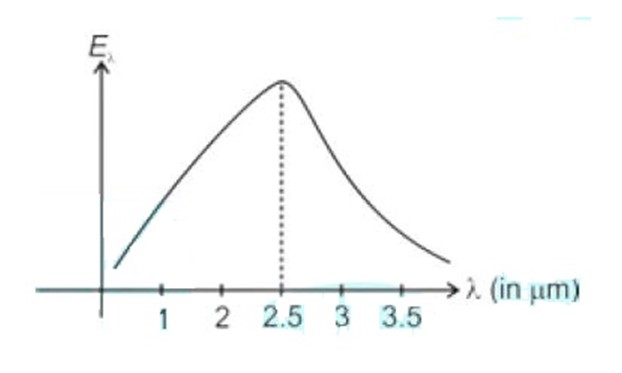
From Wien's displacement law.

λ m T = b ? T = 2.89 * 10 - 3 2.5 * 10 - 6 1.156 * 10 3

= 1156 K

New answer posted

6 months ago

0 Follower 1 View

A
alok kumar singh

Contributor-Level 10

Kinetic energy E ? T

E 1 E 2 = T 1 T 2

T 2 = 2 * 293

T 2 = 586 K = 313 0 C

New answer posted

6 months ago

0 Follower 1 View

A
alok kumar singh

Contributor-Level 10

C O P = Q t W = T l o w T h i g h - T l o w = 250 300 - 250 = 5

Q L W = 5

W = 500 * 4.2 5 420 J

New answer posted

6 months ago

0 Follower 28 Views

A
alok kumar singh

Contributor-Level 10

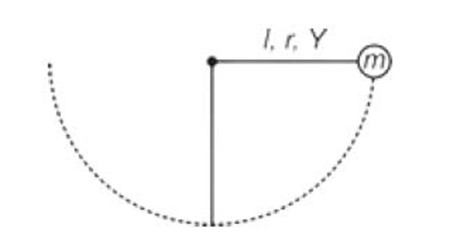
Elongation in the wire is given as

? I = F l A Y

T m a x = m v 2 l + m g

T m a x = 3 m g

? l m a x = 3 m g l π r 2 Y

New answer posted

6 months ago

0 Follower 7 Views

A
alok kumar singh

Contributor-Level 10

From equation of uniformly accelerated motion

v = u + a t

7.5 = 15 + 5 a

a = - 1.5 m / s 2

n o w F = m a

F ? = 120 * 1.5

= 180 N

New answer posted

6 months ago

0 Follower 1 View

P
Pallavi Pathak

Contributor-Level 10

In NEET exam, the weightage of Equilibrium is around 3% to 6% and in JEE Main exam, the weightage is 4% to 6.6%.

New answer posted

6 months ago

0 Follower 1 View

P
Pallavi Pathak

Contributor-Level 10

There are two conditions needed for equilibrium. The net force and net torque acting upon an object must be zero.

New answer posted

6 months ago

0 Follower 1 View

P
Pallavi Pathak

Contributor-Level 10

There are four types of equilibrium constants: Formation constants, stability constants, association constants, and binding constants.

New answer posted

6 months ago

0 Follower 2 Views

P
Pallavi Pathak

Contributor-Level 10

It consists of concepts such as Le Chatelier's Principle, equilibrium constant, and factors affecting equilibrium. It is not considered an easy chapter.

New answer posted

6 months ago

0 Follower 1 View

P
Pallavi Pathak

Contributor-Level 10

A reversible reaction where rate of the forward reaction equals to the rate of the backward reaction is called the equilibrium. It results in constant reactants and products concentrations over time.

Get authentic answers from experts, students and alumni that you won't find anywhere else

Sign Up on Shiksha

On Shiksha, get access to

  • 66k Colleges
  • 1.2k Exams
  • 687k Reviews
  • 1800k Answers

Share Your College Life Experience

×

This website uses Cookies and related technologies for the site to function correctly and securely, improve & personalise your browsing experience, analyse traffic, and support our marketing efforts and serve the Core Purpose. By continuing to browse the site, you agree to Privacy Policy and Cookie Policy.