

Class 12th
Get insights from 12k questions on Class 12th, answered by students, alumni, and experts. You may also ask and answer any question you like about Class 12th
Follow Ask QuestionQuestions
Discussions
Active Users
Followers
New answer posted
a year agoContributor-Level 10
Let the total work is 300 units (LCM of 150,100 and 60)
A's per day work = 2 units
B's per day work = 3 units
C's per day work = 5 units
(A+ B + C)'s per day work = 2 + 3 + 5 = 10 units
Time taken = 300/10 = 30 Days
New answer posted
a year ago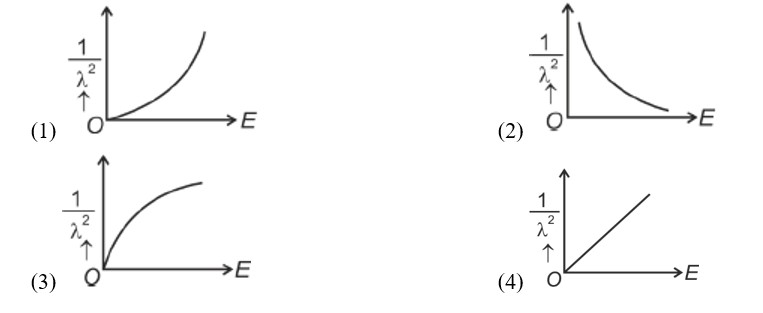
Contributor-Level 10
de-Broglie wavelength
where
Squaring both sides,
Graph passes through origin with constant slope.
New answer posted
a year ago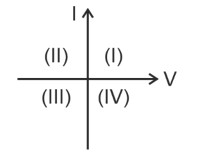
Contributor-Level 10
Solar cell characteristics
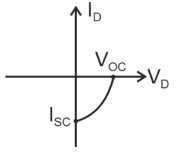
B: In reverse biased junction diode, the current measured in , is due to minority charge carrier.
New answer posted
a year agoContributor-Level 10
Yes, a candidate is eligible for admission inCotton University for BA with 60% in Class 12th. The minimum required aggregate for admission in the course is 60% itself. Admissions to this course are entrance-based and marks of CUET UG exam is accepted for the same. Interested candidates must fill out the applicaton form available online on the official website of the college.
New answer posted
a year agoContributor-Level 10
Let y = 2111x then,
y3 – 8y2 +16y – 4 = 0
Let three real roots be a, b and c then abc = and corresponding values of x be x1, x2, and x3\
111 (x1 + x2 + x3) = 2
x1 + x2 + x3 = 2/111
m + n = 2 + 111 = 113
New answer posted
a year agoContributor-Level 10
p and q are the roots of the equation x2 – 4ax + 3 = 0
pq = 3
Similarly the constant term of x2 – 2bx + c = 0
Product of
Hence, c =
New answer posted
a year agoContributor-Level 10
f (x) = ………. (1)
Divide by x in numerator and denominator equation (1) can be written as f (x) =
f (x) is maximum, when the denominator is minimum we have to find the minimum value of , so, denomination will also minimum
we know that, AM ≥ GM
The minimum value of is 12
Therefore, the maximum value of f (x) =
New answer posted
a year agoContributor-Level 10
| Aman | Baman | Daman |
Number of notebook | 1 | 10 | 25 |
Amount | 14 | 130 | 300 |
Profit% | a percent |
| b percent |
For Aman,
SP of 1 book = 14Rs.
CP of 1 book =
For Baman,
SP of 1 book = 12Rs.
CP of 1 book =
Price of all notebooks is same, therefore.
=
100 + 7y = 6a
100 = 12y – 7y; [x=2y]
5y = 100
y = 20
a = 40
CP each notebook = = 10Rs.
In his sales with Daman, he sold 10 books to her for Rs. 130
CP of 10books = Rs. 100
Profit percent =
=30percent
New answer posted
a year agoContributor-Level 10
a + b + c + d = 7
a ³ 0, b³ 0, c ³ 1, d ³ 1
(a, b, c, d are the numbers of balls)
Let c = c' + 1 = 0, 0 ≤ c' ≤ 5
d = d' + 1 = 0, 0 ≤ d' ≤ 5
a + b + c' + d' = 5
Numbers of solution = 5 + 4 – 1C4–1
= 8C3 = 56
New answer posted
a year agoContributor-Level 10
Let f (x) = ax2 + bx + c
f (0)= 2
2 = a (0)2 + b (0) + c
c = 2
f (– 2) = 3
a (–2)2 +b (–2) + 2 = 3
4a – 2b = 1 ………. (1)
The given equation has a maximum value at x = –2
b = 4a
put in equation 1
we get,
f (6)=
= –13
Taking an Exam? Selecting a College?
Get authentic answers from experts, students and alumni that you won't find anywhere else
Sign Up on ShikshaOn Shiksha, get access to
- 67k Colleges
- 1.2k Exams
- 717k Reviews
- 1850k Answers