

Class 12th
Get insights from 12k questions on Class 12th, answered by students, alumni, and experts. You may also ask and answer any question you like about Class 12th
Follow Ask QuestionQuestions
Discussions
Active Users
Followers
New answer posted
a year agoLet f be a non-negative function in [0, 1] and twice differentiable in (0, 1). If and f(0) = 0, then
Contributor-Level 9
Applying Leibniz theorem,
on integrating both sides, we get
put x = 0 and f (0) = 0 we get C = 0
by L' Hospital rule
New answer posted
a year agoContributor-Level 10
Following is the structure of the stops on this route:
Case I:
Aligarh | Rajghat | Peetampura | Kanpur | Lokhand wala | Saket Xingh | |
Stop 1 | Stop 2 | Stop 3 | Stop 4 | Stop 5 | Stop 6 | |
Case II: | ||||||
Kanpur | Lokhand wala | Peetampura | Aligarh | Rajghat | Saket Xingh | |
Stop 1 | Stop 2 | Stop 3 | Stop 4 | Stop 5 | Stop 6 | |
New answer posted
a year agoContributor-Level 10
Following is the structure of the stops on this route:
Case I:
Aligarh | Rajghat | Peetampura | Kanpur | Lokhand wala | Saket Xingh | |
Stop 1 | Stop 2 | Stop 3 | Stop 4 | Stop 5 | Stop 6 | |
Case II: | ||||||
Kanpur | Lokhand wala | Peetampura | Aligarh | Rajghat | Saket Xingh | |
Stop 1 | Stop 2 | Stop 3 | Stop 4 | Stop 5 | Stop 6 | |
New answer posted
a year agoContributor-Level 10
Following is the structure of the stops on this route:
Case I:
Aligarh | Rajghat | Peetampura | Kanpur | Lokhand wala | Saket Xingh | |
Stop 1 | Stop 2 | Stop 3 | Stop 4 | Stop 5 | Stop 6 | |
Case II: | ||||||
Kanpur | Lokhand wala | Peetampura | Aligarh | Rajghat | Saket Xingh | |
Stop 1 | Stop 2 | Stop 3 | Stop 4 | Stop 5 | Stop 6 | |
New answer posted
a year agoContributor-Level 9
put x = 0 and y = 1 we get C = -1
put x = 1 and we get y = log2 (1 + e)
New answer posted
a year agoContributor-Level 10
Battery is connected while dielectric is inserted so potential difference will be remains same.
New answer posted
a year ago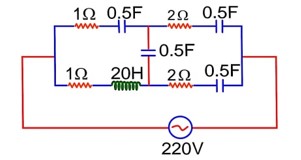
Contributor-Level 10
New answer posted
a year agoContributor-Level 10
Ranking in born | Name | Game | School |
1 | Riya | Chess | Trinity |
2 | Vikash | Cricket | Mansorover |
3 | Raman | Cricket | Mansorover |
4 | Kuntala | Chess | Trinity |
5 | Tamanna |
| St. Stefan |
6 | Umesh | Football | St. Stefan |
7 | Shivam | Hockey | St. Stefan |
8 | Janki | Chess | Trinity |
Taking an Exam? Selecting a College?
Get authentic answers from experts, students and alumni that you won't find anywhere else
Sign Up on ShikshaOn Shiksha, get access to
- 67k Colleges
- 1.2k Exams
- 718k Reviews
- 1850k Answers