

Class 12th
Get insights from 12k questions on Class 12th, answered by students, alumni, and experts. You may also ask and answer any question you like about Class 12th
Follow Ask QuestionQuestions
Discussions
Active Users
Followers
New answer posted
a year agoContributor-Level 10
The order of the house is given to us, it is orange, white, black and pink, now it is given that P1 stay in between P4 and P2. Hence P1 cannot stay at corner houses i.e in the orange and pink house, the same thing applied for P2 as well. Now from given condition about their salaries we can complete the following table
Name | Orange | White | Black | Pink | Salary |
P1 | * | √ | * | * | 20000 |
P2 | * | * | √ | * | 100000 |
P3 | * | * | * | √ | 40000 |
P4 | √ | * | * | * | 60000 |
P2 is living in black house.
New answer posted
a year agoContributor-Level 10
According to the given condition following sitting arrangement is possible.
I | F | A | D | G | C |
New answer posted
a year ago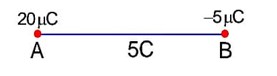
Contributor-Level 9
From observation, we can say that right of
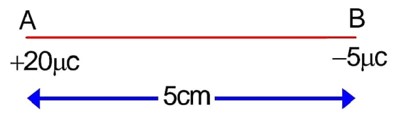
x = 5 cm
New answer posted
a year agoContributor-Level 10
Marks in Physics
S5 > S1 > S3 > S4 > S6 > S2
Or
S5 > S1 > S3 > S4 > S2 > S6
Or
S1 > S3 > S4 > S2 > S6 > S5
Or
S1 > S3 > S4 > S2 > S5 > S6
Or
S1 > S3 > S4 > S5 > S2 > S6
Or
S1 > S3 > S4 > S5 > S6 > S2
Or
S1 > S3 > S4 > S6 > S5 > S2
Or
S1 > S3 > S4 > S6 > S2 > S5
Marks in Math
S2 > S3 > S1 > S6 > S4 > S5
Or
S2 > S3 > S1 > S6 > S5 > S4
New answer posted
a year agoContributor-Level 10
According to the condition, Shahid can only vote for school bill and tax bill so option (c) is correct.
New answer posted
a year agoContributor-Level 10
If Shahid votes for the tax bill, Dev and Sukhdev cannot vote for tax bill, which means Dev votes only for recreation bill. Adding to it, Had Shahid voted for school as well, than Sukhdev would have voted only for recreation bill. In that core option (a) is correct
New answer posted
a year agoContributor-Level 10
If the set of members of the council who vote against the school bill are the only ones who also vote against the tax bill, then they are Dev and Sukhdev because Shahid votes against recreation bill. Hence, Sukhdev must vote against the school bill.
New answer posted
a year agoContributor-Level 10
| Recreation Bill | School Bill | Tax Bill |
Dev | √ | * |
|
Shahid | * |
|
|
Sukhdev | √ |
| * |
Exactly one member of the council votes for the tax bill. Sukhdev votes against the tax bill. So, Dev and Shahid can't vote for or against the tax bill in the same way. Hence, option (a) is ruled out. Shahid votes against and Sukhdev votes for recreation bill. Hence, option (b) is ruled out. Shahid and Sukhdev can't vote the same way on the school bill as in option (c).
Taking an Exam? Selecting a College?
Get authentic answers from experts, students and alumni that you won't find anywhere else
Sign Up on ShikshaOn Shiksha, get access to
- 67k Colleges
- 1.2k Exams
- 718k Reviews
- 1850k Answers