Class 12th

Get insights from 12k questions on Class 12th, answered by students, alumni, and experts. You may also ask and answer any question you like about Class 12th

Follow Ask Question
12k

Questions

0

Discussions

28

Active Users

0

Followers

New answer posted

a year ago

0 Follower 3 Views

R
Raj Pandey

Contributor-Level 9

Δ H = ( E a c t ) f − ( E a c t ) b

= x – (x + y) = -y

              = -45 KJ/mol

              Ans. = 45

New answer posted

a year ago

0 Follower 2 Views

V
Vishal Baghel

Contributor-Level 10

  b → * c → = | i ^ j ^ k ^ 1 3 β − 1 2 − 3 | = i ^ ( − 9 − 2 β ) − j ^ ( − 3 + β ) + k ^ ( 5 )             

| b → * c → | = 5 3         g i v e s     ( 9 − 2 β ) 2 + ( β − 3 ) 2 + 2 5 = 5 3         

8 1 + 4 β 2 + 3 6 β + β 2 + 9 − 6 β + 2 5 = 7 5

β = − 2 , − 4    

also a → ⊥ b →     s o     a → . b → = 0     i . e .     1 + 1 5 + α β = 0

So, | a → | 2 = 1 + 2 5 + α 2 = 9 0

New answer posted

a year ago

0 Follower 1 View

P
Payal Gupta

Contributor-Level 10

According to the question, S7 > S1; S1 > S2 S7 > S1 > S2

If S3 scores the highest, we have S3 > … > S5

If S4 scores the highest, we have S4 > … > S2 or S4 > … > S6

If S7 ranks fifth, then S1 and S2 coming after S7 will occupy sixth and seventh places respectively i.e., S2 ranks the lest.

So, S4 will score the highest.

New answer posted

a year ago

0 Follower 10 Views

R
Raj Pandey

Contributor-Level 9

HgS, PbS, CuS, Sb2S3, As2S3, & CdS are given sulphides

              CdS, PbS, As2S3 & CuS are soluble in 50% HNO3 but Sb2S3 & HgS are not soluble.

              Ans. = 4

New answer posted

a year ago

0 Follower 4 Views

V
Vishal Baghel

Contributor-Level 10

Let f (x) = 3x4 + 4x3 – 12x2 + 4

So, f' (x) = 12x3 + 12x2 – 24x = 12x (x2 + x – 2)

=12x (x + 2) (x – 1)

So, number of distinct real roots = 4

New answer posted

a year ago

0 Follower 3 Views

R
Raj Pandey

Contributor-Level 9

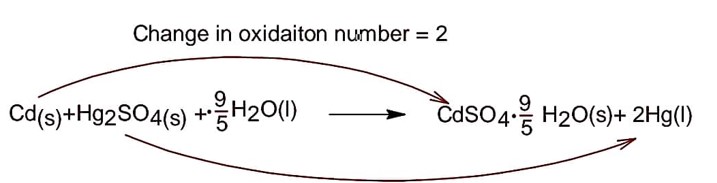
Change in oxidation number = 2

Δ G ° = − n E c e l l o F

Δ G ° = − n E c e l l o F

=-2 * 4.315 * 96487 Jmol-1

∴ Δ G ° = Δ H ° − T Δ S °

Δ S ° = Δ H ° − Δ G ° T

= − 8 2 5 . 2 * 1 0 0 0 − ( − 2 * 4 . 3 1 5 * 9 6 4 8 7 ) 2 9 8 . 1 5 J K − 1

= 7 4 8 2 . 8 1 2 9 8 . 1 5 = 2 5 . 0 9 J K − 1

≈ 25.1 JK-1

Ans. = 25


New answer posted

a year ago

0 Follower 2 Views

A
alok kumar singh

Contributor-Level 10

l = ∫ 0 1 x d x ( 1 + x ) ( 1 + 3 x ) ( 3 + x )

Put x = t2 then dx = 2tdt

l = ∫ 0 1 d t ( 1 + t 2 ) ( 3 + t 2 ) − ∫ 0 1 d t ( 1 + 3 t 2 ) ( 3 + t 2 )

= 1 2 ( t a n − 1 t ) 0 1 − 3 8 3 ( t a n − 1 t 3 ) 0 1 − 8 8 3 ( t a n − 1 3 t ) 0 1

= π 8 ( 1 − 3 2 )      


New answer posted

a year ago

0 Follower 2 Views

A
alok kumar singh

Contributor-Level 10

Given 2 l + 2 m − n = 0 . . . . . . . . ( i )

m n + n l + l m = 0 . . . . . . . . . . . ( i i )

&     w e     h a v e     l 2 + m 2 + n 2 = 1 . . . . . . . . . . ( i i i )

( i ) ⇒ 2 ( l + m ) = n  

  ( i i ) ⇒ l m + n ( l + m ) = 0

2 l 2 + 2 m 2 + 5 l m = 0             

(a) lm=−2  

(i) ⇒ 2 l m + 2 − n m = 0  

n m = − 2  

S o , ( l , m , n ) = ( − 2 m , m , − 2 m )  

= (-2, 1, -2)

(b)   l m = − 1 2 g i v e s     n = − 2 l

( l , m , n ) = ( l , − 2 l , − 2 l ) = ( 1 , − 2 , − 2 )

N o w , c o s θ = − 2 − 2 + 4 3 * 3 = 0

⇒ θ = π 2  


New answer posted

a year ago

Four houses orange, white, black and pink are located in a row in the given order. Each of the houses is occupied by a person earning a fixed amount of a salary. The four persons are P1, P2, P3 and P4.

Read the following instruction carefully:

I. P1 lives between P4 and P2

II. P3 does not stay in orange house

III. The person living in black house earns more than that of person living in orange is not

IV. Salary of P4 is more than that of P1 but lesser than that of P2

V. One of the person earns Rs. 60,000

VI. The person earning Rs. 1,00,000 is not P3

VII. The salary difference between P3 and P4 is Rs. 20,000

VIII. The house in which P

...more
0 Follower 1 View

P
Payal Gupta

Contributor-Level 10

P1 is living in white house and earning low salary.

New answer posted

a year ago

0 Follower 11 Views

R
Raj Pandey

Contributor-Level 9

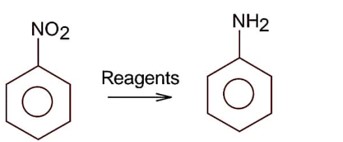
Reagents can be used are Þ       (1) Sn/HCl

                                                                        (2) Fe/HCl


...more

Get authentic answers from experts, students and alumni that you won't find anywhere else

Sign Up on Shiksha

On Shiksha, get access to

  • 67k Colleges
  • 1.2k Exams
  • 718k Reviews
  • 1850k Answers

Share Your College Life Experience

×
×

This website uses Cookies and related technologies for the site to function correctly and securely, improve & personalise your browsing experience, analyse traffic, and support our marketing efforts and serve the Core Purpose. By continuing to browse the site, you agree to Privacy Policy and Cookie Policy.