
Physics Current Electricity
Get insights from 213 questions on Physics Current Electricity, answered by students, alumni, and experts. You may also ask and answer any question you like about Physics Current Electricity
- 213
Questions
- 0
Discussions
- 0
Active Users
- 2
Followers
Have a question about Physics Current Electricity? Ask our experts
Keep it short & simple. Type complete word. Avoid abusive language.
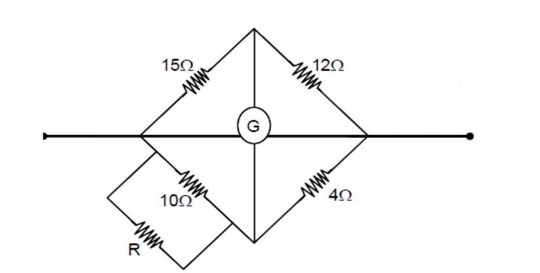
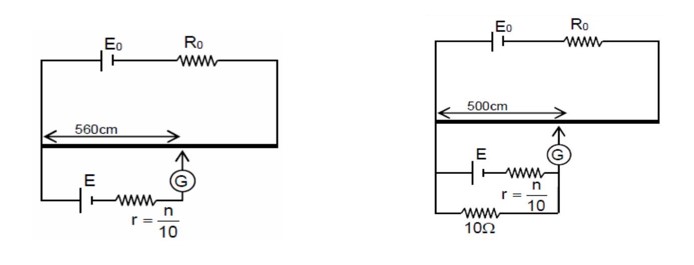
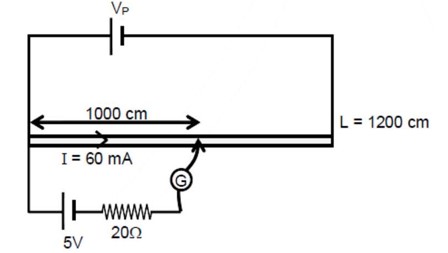
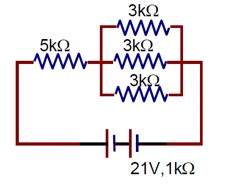
The current (in A) flowing through resistor in the following circuit is
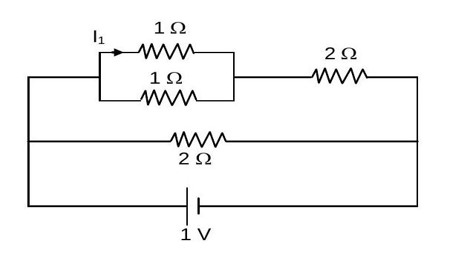
The current (in A) flowing through resistor in the following circuit is
In a building there are 15 bulbs of bulbs of small fans of and 2 heaters of . The voltage of electric main is . The minimum fuse capacity (rated value) of the building will be
<!-- [if !supportLineBreakNewLine]-->
<!--[endif]-->
In a building there are 15 bulbs of bulbs of small fans of and 2 heaters of . The voltage of electric main is . The minimum fuse capacity (rated value) of the building will be
<!-- [if !supportLineBreakNewLine]-->
<!--[endif]-->
Total power is .
So, current is
Answer is .
 Upvote

A resistor develops 500J of thermal energy in 20 s when a current of 1.5A is passed through it. If the current is increased from 1.5 A to 3 A, what will be the energy developed in 20 s.
<!-- [if !supportLineBreakNewLine]-->
<!--[endif]-->
A resistor develops 500J of thermal energy in 20 s when a current of 1.5A is passed through it. If the current is increased from 1.5 A to 3 A, what will be the energy developed in 20 s.
<!-- [if !supportLineBreakNewLine]-->
<!--[endif]-->
Heat generated in the resistance
H = i²RT
H? = 500 = (1.5)²R (20) ⇒ R = 500/45 = 11.11 Ω
H? = (3)²R (20) = 9 × (500/45) × 20 = 2000 J.
Upvote A conducting wire of length ‘ l ’,area of cross-section A and electric resistivity ρ is connected between the terminals of a battery. A potential difference V is developed between its ends causing an electric current. If the length of the wire of the same material is doubled and the area of cross-section is halved, the resultant current would be :
A conducting wire of length ‘ l ’,area of cross-section A and electric resistivity ρ is connected between the terminals of a battery. A potential difference V is developed between its ends causing an electric current. If the length of the wire of the same material is doubled and the area of cross-section is halved, the resultant current would be :

The resistance of a conductor at 15°C is 16Ω and at 100°C is 20Ω. What will be the temperature coefficient of resistance of the conductor?
The resistance of a conductor at 15°C is 16Ω and at 100°C is 20Ω. What will be the temperature coefficient of resistance of the conductor?
R = R? [1 + α? T]
⇒ 16 = R? [1 + α (15 - T? )]
20 = R? [1 + α (100 - T? )]
Assuming T? = 0°C:
16 = R? (1 + 15α)
20 = R? (1 + 100α)
Dividing the equations:
16/20 = (1+15α)/ (1+100α)
16 + 1600α = 20 + 300α
1300α = 4
α = 4/1300 ≈ 0.003 °C? ¹
Upvote Consider an electrical circuit containing a two way switch 'S'. Initially S is open and then T? is connected to T?. As the current in R = 6Ω attains a maximum value of steady state level, T? is disconnected from T? and immediately connected to T?. Potential drop across r = 3Ω resistor immediately after T? is connected to T? is _______ V. (Round off to the Nearest Integer)
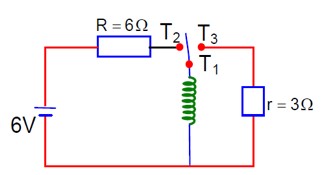
Consider an electrical circuit containing a two way switch 'S'. Initially S is open and then T? is connected to T?. As the current in R = 6Ω attains a maximum value of steady state level, T? is disconnected from T? and immediately connected to T?. Potential drop across r = 3Ω resistor immediately after T? is connected to T? is _______ V. (Round off to the Nearest Integer)
When T? & T? are connected, at steady state current, I becomes
I = 6V/6Ω = 1A
Now when T? & T? are connected, the current through the inductor, just after connecting, remains same. So
V? Ω = 1A × 3Ω = 3volt.
Upvote