

Physics
Get insights from 5.6k questions on Physics, answered by students, alumni, and experts. You may also ask and answer any question you like about Physics
Follow Ask QuestionQuestions
Discussions
Active Users
Followers
New answer posted
a year ago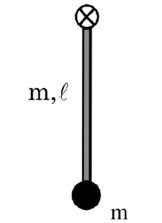
Contributor-Level 10
From conservation of Angular momentum about hinged point
Now from conservation of Energy.
New answer posted
a year agoContributor-Level 10
If n2 -> n1 in H (Z = 1) gives
New answer posted
a year ago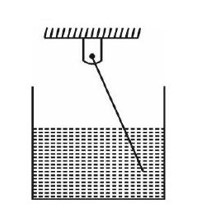
Contributor-Level 9
Let length of rod is immersed in water.
net
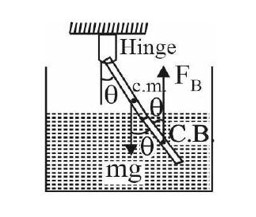
, where density of material of rod
Buoyant force
Equate
immersed
New answer posted
a year ago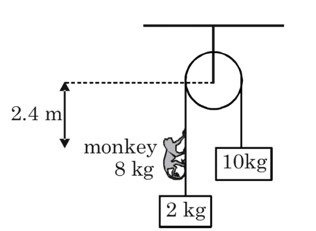
Contributor-Level 10
Let the acceleration of string = a
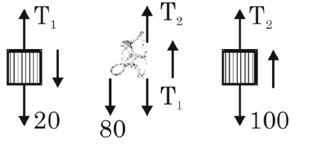
For 2 kg 20 – T1 = 2a ………… (i)
For monkey T2 – 80 – T1 = 8 (2 – a) …. (ii)
For 10 kg T2 – 100 = 10a ……. (iii)
Acceleration of monkey w.r. to ground
= 2 – 0.8 = 1.2 m/s2
t = 2 sec

Taking an Exam? Selecting a College?
Get authentic answers from experts, students and alumni that you won't find anywhere else
Sign Up on ShikshaOn Shiksha, get access to
- 67k Colleges
- 1.2k Exams
- 718k Reviews
- 1850k Answers