

Physics
Get insights from 5.6k questions on Physics, answered by students, alumni, and experts. You may also ask and answer any question you like about Physics
Follow Ask QuestionQuestions
Discussions
Active Users
Followers
New answer posted
a year agoContributor-Level 10
In a prism, the light ray undergoes refraction twice as it passes through a prism. Let us take a look at both types of refraction.
The first refraction takes place when a light ray enters the prism from air or another medium into glass. It then bends toward the normal if the prism material is denser (n>1)
During the second refraction, the light ray exits the prism again into air, it then bends away from the normal. In case, the angle of incidence is too steep, total internal reflection may occur at the second interface of prism, which prevents the ray from exiting. When this happens, there is only one refraction and one reflection.
New answer posted
a year agoContributor-Level 10
Total deviation in a prism is the total angle by which the light ray gets bent as it passes through the prism. It is an angle between incident ray and emergent ray of the prism. When a light enters the prism, it will bend towards the normal. After that, it will travel through the prism and bend away from the normal as it exits. Total deviation is the sum of these two from which the apex angle is subtracted.
The formula for total deviation for a prism is as follows:
- : angle of incidence at first surface
- : angle of emergence at second surface
- A: apex angle of the prism
New answer posted
a year agoContributor-Level 10
Hydrogen shows many spectral lines because of the following reasons.
Its electron can occupy many levels (n = 1, 2, 3.).
Each line in the hydrogen spectrum actually represents the transition from higher to lower energy levels.
These lines are grouped by the final energy level (Lyman n'=1, Balmer n'=2, etc.)
Higher energy levels are closer together. They tend to create more possible transitions.
New answer posted
a year agoContributor-Level 10
Hydrogen produces a line spectrum because electrons exist only in discrete, quantised energy levels. When electrons jump between these fixed energy states, they emit photons with specific energies (E = h? ). This creates distinct spectral lines instead of continuous wavelengths. Bohr's model explains this through quantised orbits. Classical physics, on the other hand, would predict a continuous spectrum.
New answer posted
a year agoContributor-Level 10
The hydrogen emission spectrum contains several spectral series, each named after its discoverer.
- Lyman series (n' = 1): To ground state, visible only in ultraviolet region
- Balmer series (n' = 2): Transitions to second level, appearing in visible region
- Paschen series (n' = 3): Moved to third level, visible in the infrared region
- Brackett series (n' = 4): Transitions to fourth level, appearing in the far infrared region
- Pfund series (n' = 5): Transitions to fifth level, showing in the infrared region
- Humphreys series (n' = 6): Transitions to sixth level, appearing in the infrared region
New answer posted
a year agoContributor-Level 9
First band  = Red
= Red
2nd band = Red
3rd band = Orange (Multiplier)
4th band Gold (Tolerance)
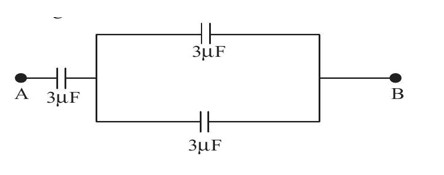
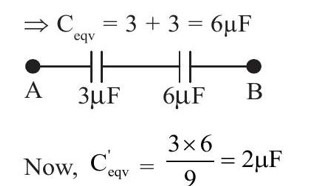
New answer posted
a year agoContributor-Level 10
There are different types of glasses that are used in optical instruments, including the following:
Crown glass (K): This glass is used in eyeglasses, microscopes and cameras. It is used in prisms and windows in optical systems. Crown glass has a low refractive index, low dispersion and excellent transparency in visible spectrum.
Flint Glass (F): This glass, when combined with crown glass, can correct chromatic aberration in lenses. They are also used in prisms for spectroscopy.
Extra-low dispersion glass: These glasses are used in premium optics that are also used for making high-quality camera lenses, telescopes and binoculars.
New answer posted
a year agoContributor-Level 10
Optical instruments can have some of the following defects that may impact their performance, which have arisen due to design limitations, manufacturing and physical properties of light:
- Chromatic Aberration: This defect occurs because of the different wavelengths of light that refract at slightly different angles when they pass through the lens. It causes them to focus on different points.
- Spherical Aberration: This happens because light rays pass through the edges of spherical lens or reflect off spherical mirror focus at different point than rays that pass through the center.
- Astigmatism: This type of defect occurs due to the uneven cu
Taking an Exam? Selecting a College?
Get authentic answers from experts, students and alumni that you won't find anywhere else
Sign Up on ShikshaOn Shiksha, get access to
- 67k Colleges
- 1.2k Exams
- 718k Reviews
- 1850k Answers