Physics

Get insights from 5.6k questions on Physics, answered by students, alumni, and experts. You may also ask and answer any question you like about Physics

Follow Ask Question
5.6k

Questions

0

Discussions

29

Active Users

0

Followers

New answer posted

5 months ago

0 Follower 1 View

S
Syed Aquib Ur Rahman

Contributor-Level 10

Resonance occurs when the frequency of an external periodic force matches the natural frequency of a system. From that, physicists know that resonance causes the amplitude of oscillations to increase significantly. This can be beneficial in devices, such as musical instruments, but dangerous in structures like bridges.

New answer posted

5 months ago

0 Follower 1 View

S
Syed Aquib Ur Rahman

Contributor-Level 10

The phase in SHM tells us the position and direction of motion of the particle at a specific instant. It determines the state of oscillation and includes both displacement and time information.

New answer posted

5 months ago

0 Follower 1 View

S
Syed Aquib Ur Rahman

Contributor-Level 10

The restoring force in SHM is the force that always acts towards the mean position and is directly proportional to the displacement from it. It follows F=? kx. Here, the negative sign indicates the force is in the opposite direction to the displacement.

New answer posted

5 months ago

0 Follower 5 Views

A
alok kumar singh

Contributor-Level 10

According to Brewster's law, reflected rays are completely polarized and refracted rays are partially polarized.


New answer posted

5 months ago

0 Follower 8 Views

A
alok kumar singh

Contributor-Level 10

Time period of Oscillation, T = 2 π I M B

1 4 = 2 π 9 . 8 * 1 0 6 M * 0 . 0 4 9

1 1 6 = 4 π 2 * 9 . 8 * 1 0 6 M * 4 9 * 1 0 3

M = 4 π 2 * 9 . 8 * 1 0 6 4 9 * 1 0 3 * 1 6

= 4 π 2 * 9 . 8 * 1 6 * 1 0 3 4 9

= 1 2 . 8 π 2 * 1 0 3 * 1 0 2 * 1 0 2

=1280π2*105Am2

New answer posted

5 months ago

0 Follower 4 Views

A
alok kumar singh

Contributor-Level 10

Sol. Before collision

It undergoes completely inelastic collision

Using conservation of linear momentum

Initial momentum = Final momentum

m v 1 = m v 2 + m v 2

m v 1 = 2 m v 2

v 1 v 2 = 2 1

New answer posted

5 months ago

0 Follower 3 Views

A
alok kumar singh

Contributor-Level 10

The potential V at any point, at distance r from centre of dipole = KPcosθ r 2

At axial point where  θ=0? , V=KPr2=9*109*4*10622=9*103 V

At axial point where  θ=180? , V=KPr2=9*103 V

New answer posted

5 months ago

0 Follower 3 Views

A
alok kumar singh

Contributor-Level 10

x = 2 t 1

v=dxdt=2 m s1

P = F · v

=2*5=10 W

New answer posted

5 months ago

0 Follower 16 Views

A
alok kumar singh

Contributor-Level 10

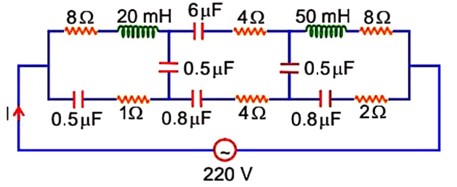
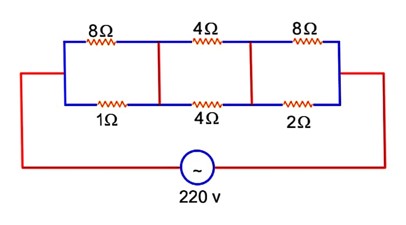
Given circuit is balanced Wheatstone bridge

C A B = 1 + 1

= 2 ? F


New answer posted

5 months ago

0 Follower 16 Views

A
alok kumar singh

Contributor-Level 10

In the case of pure rolling,

The topmost point will have velocity 2 v while point Q i.e. the lowest point will have zero velocity. Hence point P moves faster than point Q .


Get authentic answers from experts, students and alumni that you won't find anywhere else

Sign Up on Shiksha

On Shiksha, get access to

  • 66k Colleges
  • 1.2k Exams
  • 681k Reviews
  • 1800k Answers

Share Your College Life Experience

×
×

This website uses Cookies and related technologies for the site to function correctly and securely, improve & personalise your browsing experience, analyse traffic, and support our marketing efforts and serve the Core Purpose. By continuing to browse the site, you agree to Privacy Policy and Cookie Policy.