
Chemical Bonding and Molecular Structure
Get insights from 189 questions on Chemical Bonding and Molecular Structure, answered by students, alumni, and experts. You may also ask and answer any question you like about Chemical Bonding and Molecular Structure
- 189
Questions
- 0
Discussions
- 0
Active Users
- 0
Followers
Have a question about Chemical Bonding and Molecular Structure? Ask our experts
Keep it short & simple. Type complete word. Avoid abusive language.
Arrange the following in the decreasing order of their covalent character:
(A) LiCl
(B) NaCl
(C) KCl
(D) CsCl
Arrange the following in the decreasing order of their covalent character:
(A) LiCl
(B) NaCl
(C) KCl
(D) CsCl
Covalent character is As the cationic size increases polarization decreases.
Covalent character decreases.
 Upvote

Given below are two statements : One is labeled as Assertion A and the other is labeled as Reason R.
Assertion A: Zero orbital overlap is an out of phase overlap.
Reason R: It results due to different orientation / direction of approach or orbitals.
In the light of the above statements, choose the correct answer from the options given below
Kindly consider the following figure
Upvote The hybridization of P exhibited in PF5 is spxdy. The value of y is
The hybridization of P exhibited in PF5 is spxdy. The value of y is
Hybridization of P in PF5 is sp3d, so value of y = 1.
Upvote Number of lone pairs of electrons in the central atom of SCl2, O3, ClF3 and SF6, respectively are:
Number of lone pairs of electrons in the central atom of SCl2, O3, ClF3 and SF6, respectively are:
SCl2 – 2 lone pair of central atom
O3 – 1 lone pair of central atom
ClF3 – 2 lone pair of central atom
SF6 – 0 lone pair of central atom
Upvote Which of the following pair of molecules contain odd electron molecule and an expanded octet molecule?
Which of the following pair of molecules contain odd electron molecule and an expanded octet molecule?
BCl3 – electron deficient molecule
SF6 – expanded octet molecule
NO – odd electron bond containing molecule
H2SO4 – expanded octet molecule
Upvote Aromatic species are most stable, here
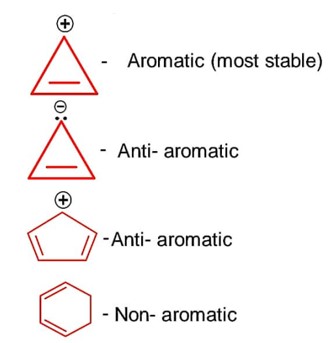 Upvote

4.27. Draw diagrams showing the formation of a double bond and a triple bond between carbon atoms in C2H4 and C2H2 molecules.
4.27. Draw diagrams showing the formation of a double bond and a triple bond between carbon atoms in C2H4 and C2H2 molecules.


