Class 11th

Get insights from 8k questions on Class 11th, answered by students, alumni, and experts. You may also ask and answer any question you like about Class 11th

Follow Ask Question
8k

Questions

0

Discussions

0

Active Users

0

Followers

New answer posted

a year ago

0 Follower 10 Views

A
alok kumar singh

Contributor-Level 10

In the case for maximum elongation,

Stress = Elastic limit

δ m a x = σ elastic  * L  Young's modulus  = 8 * 1 0 8 * 1 2 * 1 0 1 1 = 4 * 1 0 − 3

=4 mm

i.e. maximum elongation is 4 mm

New answer posted

a year ago

0 Follower 8 Views

A
alok kumar singh

Contributor-Level 10

Excess force  = T * 2 π R

= 7 1 0 0 * 2 * 3 . 1 4 * 4 . 5 1 0 0

= 1 9 7 . 8 2 * 1 0 − 4

=19.8*10−3 N

=19.8mN

New answer posted

a year ago

0 Follower 5 Views

P
Payal Gupta

Contributor-Level 10

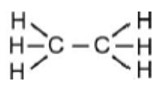
(A) Ethane                   one (C−C)σ bond

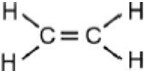
(B) Ethene                         one (C−C)σ and one (C−C)π bond

(C) C2                                                       two (C−C)π bonds

(D) Ethyne H−C≡C−H                       two (C−C)π bonds and one (C−C)σ bond

New answer posted

a year ago

0 Follower 2 Views

A
alok kumar singh

Contributor-Level 10

V . C = M S D − V S D     … (i)

given :  (N+1)VSD=NMSD

VSD= (NN+1)MSD     … (ii)

From (1) and (2)

V . C = ( MSD ) − N N + 1 ( MSD )

=MSD (1−NN+1)=MSDN+1

= 0 . 0 1 N + 1 = 1 1 0 0 ( N + 1 )

New answer posted

a year ago

0 Follower 6 Views

P
Payal Gupta

Contributor-Level 10

En=−RH (Z2n2)J

For + (n=1) ,

En=−x=−RH (2212)=−4RH

∴RH=x4

For 3+ (n=2) ,

En=−RH (z2n2)J

=−x4* (4*42*2)=−xJ

New answer posted

a year ago

0 Follower 1 View

A
alok kumar singh

Contributor-Level 10

A particle moving with uniform speed in a circular path maintains varying velocity and varying acceleration. It is because direction of both velocity as well as acceleration will change continuously.

New answer posted

a year ago

0 Follower 2 Views

P
Payal Gupta

Contributor-Level 10

(A) Isothermal process ⇒ Temperature is constant throughout the process

(B) Isochoric process ⇒ Volume is constant throughout the process

(C) Isobaric process ⇒ Pressure is constant throughout the process

(D) Adiabatic process ⇒ No exchange of heat  (q) between system and surrounding

New answer posted

a year ago

0 Follower 20 Views

P
Payal Gupta

Contributor-Level 10

(1) 4 mol of =4A atoms

(2) 4 u of =4u4u=1 atom

(3) 4 g of Helium =44 mole =1 mole =NA He atom

(4) 2.2710982 of He at STP =2.27122.710982 mole

=0.1

=0.1A

New answer posted

a year ago

0 Follower 3 Views

P
Payal Gupta

Contributor-Level 10

2? +C, KC=4*10−3

At a given time t, Qc is to be calculated and been compared with Kc .

QC= [B] [C] [A]2= (2*10−3) (2*10−3) (2*10−3)2

QC=1

New answer posted

a year ago

0 Follower 10 Views

A
alok kumar singh

Contributor-Level 10

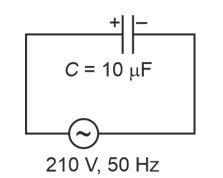
Capacitive Reactance X C = 1 ω C = 1 2 π f C = 1 2 * 3 . 1 4 * 5 0 * 1 0 * 1 0 − 6

= 1 0 0 0 3 . 1 4

Vrms=210 V

i rms = V rms X C = 2 1 0 X C

 Peak current =2ims=2*2101000*3.14=0.932

?0.93 A

Get authentic answers from experts, students and alumni that you won't find anywhere else

Sign Up on Shiksha

On Shiksha, get access to

  • 67k Colleges
  • 1.2k Exams
  • 717k Reviews
  • 1850k Answers

Share Your College Life Experience

×

This website uses Cookies and related technologies for the site to function correctly and securely, improve & personalise your browsing experience, analyse traffic, and support our marketing efforts and serve the Core Purpose. By continuing to browse the site, you agree to Privacy Policy and Cookie Policy.