Class 11th

Get insights from 8k questions on Class 11th, answered by students, alumni, and experts. You may also ask and answer any question you like about Class 11th

Follow Ask Question
8k

Questions

0

Discussions

4

Active Users

0

Followers

New answer posted

7 months ago

0 Follower 13 Views

A
alok kumar singh

Contributor-Level 10

NaOH + Na2CO3

(1) When Hph is added

m.e NaOH + 1 2 m . e N a 2 C O 3 = m . e . H C l = 1 7 . 5 * 1 1 0 = 1 . 7 5  (m.e = milli equivalents)

(2) When MeOH is added after Hph

1 2 m e N a 2 C O 3 = m . e H C l = 1 . 5 * 1 1 0 = 0 . 1 5

m . e N a O H = 1 . 7 5 0 . 1 5 = 1 . 6 m . e N a 2 C O 3 = 0 . 1 5 * 2 = 0 . 3  

W N a 2 C O 3 E N a 2 C O 3 * 1 0 0 0 = 0 . 3   

W e i g h t % o f N a 2 C O 3 = ( 0 . 3 * 5 3 1 0 0 0 0 . 4 ) * 1 0 0 = 0 . 3 * 5 3 1 0 * 0 . 4 = 1 5 . 9 4 = 3 . 9 7 5 % 4 % .               

New answer posted

7 months ago

0 Follower 3 Views

A
alok kumar singh

Contributor-Level 10

( + 6 ) ( + 2 ) ( + 3 ) ( + 6 ) C r O 4 2 + S 2 O 3 2 C r ( O H ) 4 + S O 4 2 ?  

O.N.C = 4

n factor of S2O3-- = 8

n factor of CrO4-- = 3

m . e C r O 4 2 = m . e . S 2 O 3 2        

V * ( 0 . 1 5 4 * 3 ) = 4 0 * ( 0 . 2 5 * 8 ) v = 8 0 0 . 4 6 2       

= 173.16 ml 173 ml

New answer posted

7 months ago

0 Follower 30 Views

A
alok kumar singh

Contributor-Level 10

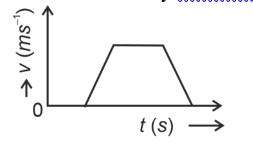
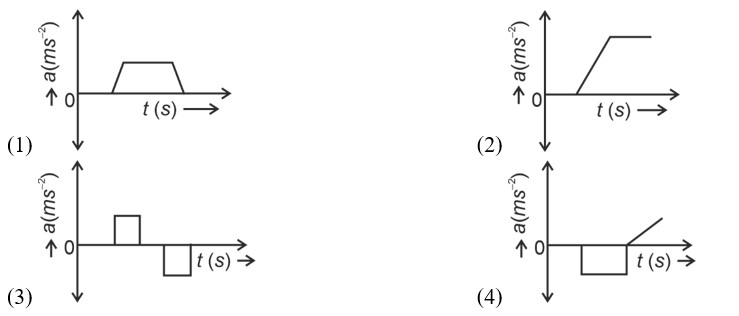
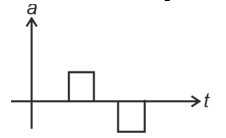
Initially, the body has zero velocity and zero slope. Hence the acceleration would be zero initially.

After that, the slope of v-t curve is constant and positive.

After some time, velocity becomes constant and acceleration is zero.

After that, the slope of v-t curve is constant and negative.
 

New answer posted

7 months ago

0 Follower 5 Views

A
alok kumar singh

Contributor-Level 10

Thermal strain = Longitudinal strain = α Δ T

Longitudinal strain, δ = 1 0 5 * 1 0 2 = 1 0 3

Compressive stress = δ *  Young's Modulus

= 1 0 3 * 0 . 5 * 1 0 1 1

= 0 . 5 * 1 0 8

Compressive force = 0 . 5 * 1 0 8 * 1 0 3 = 0 . 5 * 1 0 5

= 5 * 1 0 4 * 1 0 1 0

=50*103 N

New answer posted

7 months ago

0 Follower 2 Views

A
alok kumar singh

Contributor-Level 10

From principle of homogeneity

[ F ] = [ α t 2 ] = [ β t ]

[α]=[F][t2] and [β]=[F][t]

[ α ] [ t ] = [ β ]

αtβ= dimensionless 

New answer posted

7 months ago

0 Follower 3 Views

A
alok kumar singh

Contributor-Level 10

Apply energy conservation,

U i + K i = U f + K f

G M m R + K i = G M m 3 R + 1 2 m v 2

G M m R + K i = G M m 3 R + 1 2 * m * G M 3 R

K i = 1 6 G M m R + G M m R

K i = 5 6 G M m R

New answer posted

7 months ago

0 Follower 4 Views

A
alok kumar singh

Contributor-Level 10

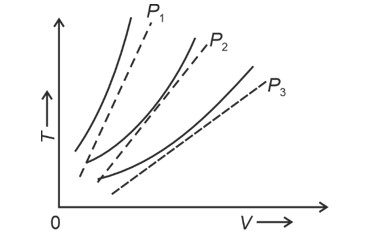
At same temperature, curve with higher volume corresponds to lower pressure.

V 3 > V 2 > V 1

P 1 > P 2 > P 3

(We draw a straight line parallel to volume axis to get this)

New answer posted

7 months ago

0 Follower 5 Views

A
alok kumar singh

Contributor-Level 10

T = 2 π ? g where t = l 2

T = 2 π t g

T = x 2 T

2 π t 2 g = x 2 2 π t g

1 2 = x 2 x = 2

New answer posted

7 months ago

0 Follower 4 Views

A
alok kumar singh

Contributor-Level 10

T = m ? ^ ω 2

T = m : ( 2 ω ) 2

T = 4 T

New answer posted

7 months ago

0 Follower 10 Views

A
alok kumar singh

Contributor-Level 10

In the case for maximum elongation,

Stress = Elastic limit

δ m a x = σ elastic  * L  Young's modulus  = 8 * 1 0 8 * 1 2 * 1 0 1 1 = 4 * 1 0 3

=4 mm

i.e. maximum elongation is 4 mm

Get authentic answers from experts, students and alumni that you won't find anywhere else

Sign Up on Shiksha

On Shiksha, get access to

  • 66k Colleges
  • 1.2k Exams
  • 687k Reviews
  • 1800k Answers

Share Your College Life Experience

×
×

This website uses Cookies and related technologies for the site to function correctly and securely, improve & personalise your browsing experience, analyse traffic, and support our marketing efforts and serve the Core Purpose. By continuing to browse the site, you agree to Privacy Policy and Cookie Policy.