

NCERT
Get insights from 608 questions on NCERT, answered by students, alumni, and experts. You may also ask and answer any question you like about NCERT
Follow Ask QuestionQuestions
Discussions
Active Users
Followers
New answer posted
a year agoBeginner-Level 5
NCERT Class 12 Chemistry Chapter 7 Alcohols, Phenols, and Ethers, is highly significant for JEE Mains as it forms a fundamental part of organic chemistry. Chapter 7 Alcohol, Phenol, and Ethers is frequently asked in JEE Mains with 1-2 direct questions every year. Questions are asked aften in the form of Conversions & Reaction Mechanisms, Acidity and Basicity Comparisons, and Named Reactions. NCERT Solutions for Class 12 Chemistry Ch 7 can be very helpful resource, Studenst can use that for practicing, revision, and conceptual understanding. Students can check solutions link below;
New answer posted
a year agoContributor-Level 10
Along with NCERT Solutions for Class 12 Physics Chapter 12 Atoms, students can refer to reference books like:
H.C. Verma's Concepts of Physics
D.C. Pandey's Understanding Physics
I.E. Irodov's Problems in General Physics.
Students can also use online educational platforms for video explanations, solved examples, and interactive problem-solving sessions. To improve the overall preparation students should also practise mock tests and sample papers to strengthen their conceptual understanding and improve their confidence before exams.
New answer posted
a year agoContributor-Level 10
Students who wish to study offline can download the NCERT Class 12 Physics Chapter 12 Atoms PDF from Shiksha's homepage or other educational platforms. This allows students to access NCERT Solutions PDFs anytime without an internet connection.
NCERT Solution Class 12 Physics Ch 12 Atoms PDF: Download Free PDF
The PDF provides a detailed explanations along with solved numerical problems, and conceptual insights to help students revise and prepare better. By downloading the PDF, students can practice various types of theoretical and numerical questions, which improve their problem-solving skills and boosts their exam performance
New answer posted
a year agoContributor-Level 10
Class 12 Physics Ch 12 Atoms NCERT Solutions covers various important topics that play a significant role in modern physics. Here are some of the topics students must include during their exam preparation:
Rutherford's Atomic Model
Bohr's Model of the Hydrogen Atom
Energy Quantization
The Hydrogen Spectral Series (Lyman, Balmer, Paschen, Brackett, and Pfund series)
de Broglie's Explanation of Bohr's Second Postulate
The Limitations of Bohr's Model.
Additionally, it also includes X-ray Spectra and Moseley's Law, which help explain the relationship between atomic number and X-ray frequency. These concepts are frequently asked in board exa
New answer posted
a year agoContributor-Level 10
NCERT Solutions for Class 12 Physics Chapter 12 Atoms are important for students preparing for CBSE board exams as well as competitive exams like JEE and NEET.
Class 12 Physics Chapter 12 Atoms conisists of fundamental concepts such as Hydrogen Spectral Series, Rutherford's Atomic Theory, Bohr's Model, and Energy Quantization. Being aware of these concepts will prepare students build a strong foundation in modern physics, which is important for advanced studies in engineering and medical fields. The NCERT solutions pdfs also provide step-by-step problem-solving methods, making it easier for students to tackle with numerical and th
New answer posted
a year agoContributor-Level 10
Students preparing for the CBSE Board exams must know important topics and type of questions asked from this chapter. Knowing the weightge of Class 12 chemistry chapter 7 alcohol phenol and ether in class 12 board exams helps understanding the importance of the chapter. The Class 12 Chapter 7 alcohol phenol and ether is asked for 6-7 marks in most of the class 12 board exams in india. Students can use NCERT Solutions for Class 12 chemistry chapter 7 alcohol phenol and ethers for studying and practice the questions of the chapter.
New answer posted
a year agoBeginner-Level 5
Shiksha provides NCERT Solutions for Class 12 Chemistry Chapter 7 Alcohols Phenols and Ethers to help students. NCERT Solutions provided by Shiksha have several key features, check below;
- NCERT Solutions class 12 Chemistry for Ch 7 contains well explained solutions of all the questions in the chapter.
- Key topics of the chapter are also given on the Alcohol Phenols and Ethers NCERT Solutions page.
- Students can also check important reaction of Alcohol, phenol and Ethers to revise quickly.
- Students can download the Class 12 Chemistry Chapter 7 Alcohols Phenols and Ethers NCERT Solution PDF to study offline.
- Students can also practice more ques
New answer posted
a year agoContributor-Level 10
Torque (? ) is used to measure the force that causes rotational motion. It is similar to how force causes linear motion. Newton's second law for rotational motion shows the relation between torque and angular acceleration.
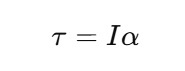
I stand for the moment of inertia and a is the angular acceleration. According to this equation, the greater the torque applied to an object, the higher its angular acceleration. Moreover, the object with a larger I will require more torque to achieve the same angular acceleration.
New answer posted
a year agoContributor-Level 10
Translational motion is when every part of an object moves at the same speed and uniformly in the same direction, like a car moving along a straight road. Rotational motion refers to an object rotating around a fixed axis, eg- a spinning wheel. One of the main difference is that in translation motion, all points on the object have the same velocity and in rotational motion, velocity changes based on the distance from the axis of rotation. Various real-life motions combine both rotational and translation motion.
New answer posted
a year agoContributor-Level 10
The centre of mass (COM) of a system refers to the point that represents the average position where the entire mass of the system is considered to be concentrated. The concept helps in analyzing the motion of a system of particles. Following is the formula to determine the COM of two or more particles:

In this formula, m1, and m2 stand for masses and r1, r2 are their respective positions. COM motion follows Newton's law which says that if no external force acts on a system, COM moves with uniform velocity.
Taking an Exam? Selecting a College?
Get authentic answers from experts, students and alumni that you won't find anywhere else
Sign Up on ShikshaOn Shiksha, get access to
- 66k Colleges
- 1.2k Exams
- 714k Reviews
- 1850k Answers