

Physics
Get insights from 5.6k questions on Physics, answered by students, alumni, and experts. You may also ask and answer any question you like about Physics
Follow Ask QuestionQuestions
Discussions
Active Users
Followers
New answer posted
a year ago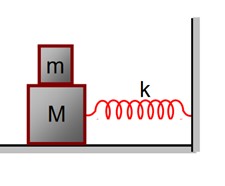
Contributor-Level 10
Velocity of block in equilibrium, in first case,
Velocity of block in equilibrium, is second case,
From conservation of momentum,
Mv = (M + m) v'
New answer posted
a year agoContributor-Level 10
Since, should be dimensionless.
So, dimension of
Dimension of
So,
New answer posted
a year agoContributor-Level 9
by conservation of mechanical energy
K.Ei + P.Ei = K.Ef + P.Ef
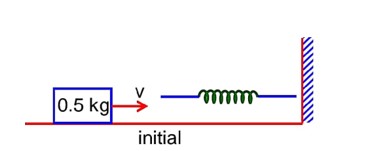
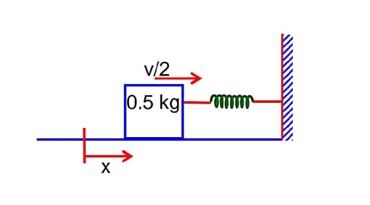
k = 600 N/m1
New answer posted
a year ago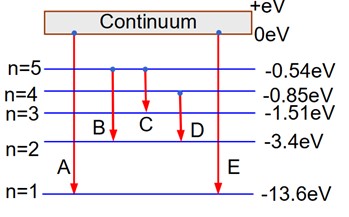
Contributor-Level 10
A : Series limit of Lyman series
B : Third line of Balmer series
C : Second line of Paschen series
New answer posted
a year agoContributor-Level 10
When connected in series, equivalent capacitance,
When connected in parallel, equivalent capacitance
C2 = C + C = 2C
New answer posted
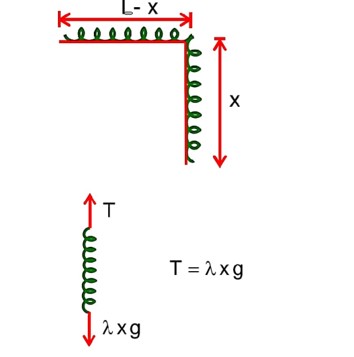
a year agoContributor-Level 9
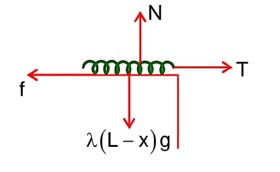
F.B.D. of hanging length
F.B.D. of chain lying on the table
f = T =
x = 2m
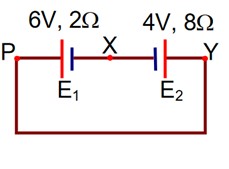
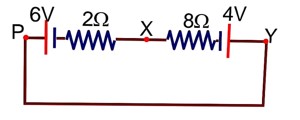
New answer posted
a year agoContributor-Level 10
So, two photons having equal linear momenta have equal wavelength. As wavelength decreases, momentum and energy of photon increases.
Taking an Exam? Selecting a College?
Get authentic answers from experts, students and alumni that you won't find anywhere else
Sign Up on ShikshaOn Shiksha, get access to
- 67k Colleges
- 1.2k Exams
- 718k Reviews
- 1850k Answers