Physics

Get insights from 5.6k questions on Physics, answered by students, alumni, and experts. You may also ask and answer any question you like about Physics

Follow Ask Question
5.6k

Questions

0

Discussions

24

Active Users

0

Followers

New answer posted

a year ago

0 Follower 4 Views

R
Raj Pandey

Contributor-Level 9

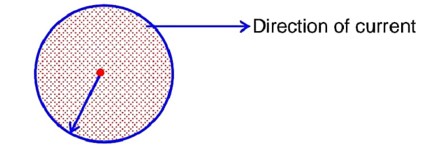
for π R 2     A r e a → ' l ' current\

1 unit Area ® l π R 2  

              π r 2 → l π R 2 * π r 2  

i = l     r 2 R 2              


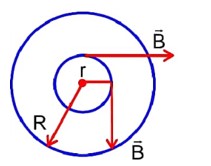
Now, consider Amperian loop of radius small 'r' ln Amperian loop magnetic field will be tangential to the amperian loop.

? B → . d i → = μ 0       l e n c l o s e d           (Ampere circuital law)

B = μ 0 2 π l R 2 r

B ∝ r  


New answer posted

a year ago

0 Follower 4 Views

R
Raj Pandey

Contributor-Level 9

Based on theory

New answer posted

a year ago

0 Follower 7 Views

R
Raj Pandey

Contributor-Level 9

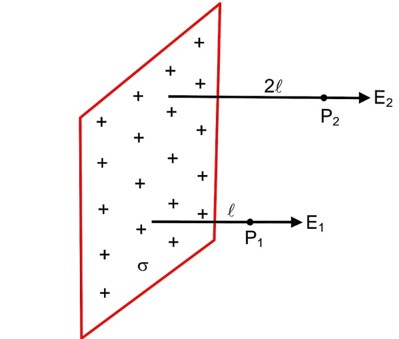
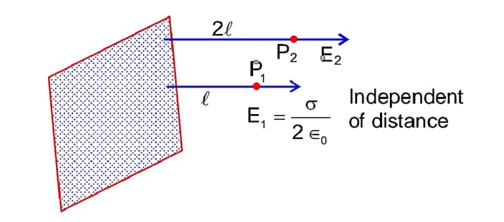
(Independent of distance)

E 1 = E 2 = σ 2 ∈ 0

New answer posted

a year ago

0 Follower 1 View

R
Raj Pandey

Contributor-Level 9

V r m s = 3 R T M

& v P = 2 R T M

v r m s = 3 2 v P

New answer posted

a year ago

0 Follower 2 Views

R
Raj Pandey

Contributor-Level 9

Let, Rain drop moving with terminal velocity vt in the air Fb (Bnoyancy force) = 4 3 π r 3 ρ a i r g  
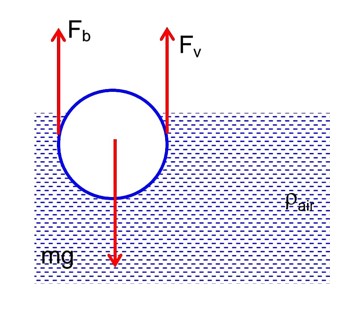
m g = 4 3 π r 3 ρ a i r g

F v = ( v i s c o n s       f o r c e ) = 6 π η r v T

F b + F v = m g

⇒ 4 3 π r 3 ρ a i r g + 6 π η     r     v T = 4 3 π r 3 ρ g

v T = 2 9 r 2 η ( ρ − ρ a i r )

v T ∝ r 2

New answer posted

a year ago

0 Follower 2 Views

R
Raj Pandey

Contributor-Level 9

g 1 = G M ( R + h ) 2

g 1 = g ( 1 + h R ) 2

Given h = D = 2R

g 1 = g ( 1 + 2 R R ) 2

g 1 = g 9

New answer posted

a year ago

0 Follower 2 Views

R
Raj Pandey

Contributor-Level 9

r → = 2 i ^ + j ^ + 2 k ^

τ → = r → * F →

= ( 2 i ^ + j ^ + 2 k ^ ) * ( 3 i ^ + 4 j ^ − 2 k ^ ) = | i ^ − j ^ k ^ 2 1 2 3 4 − 2 |

τ → = − 1 0 i ^ + 1 0 j ^ + 5 k ^

New answer posted

a year ago

0 Follower 3 Views

R
Raj Pandey

Contributor-Level 9

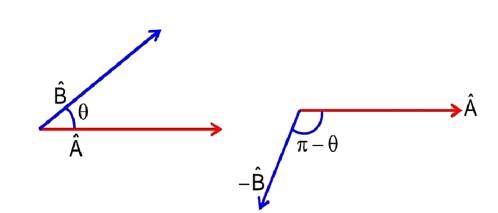
| A ^ + B ^ | = A 2 + B 2 + 2 A B c o s θ

= 1 + 1 + 2 c o s θ

= 2 ( 1 + c o s θ )

= 2 * 2 c o s 2 θ 2

| A ^ + B ^ | = 2 c o s θ 2  -(1)

| A ^ − B ^ | = A 2 + B 2 − 2 A B c o s θ

= 1 + 1 − 2 c o s θ

= 2 s i n θ 2  -(2)

(2) ÷  (1)

| A ^ − B ^ | | A ^ + B ^ | = 2 s i n θ 2 2 c o s θ 2

⇒ | A ^ − B ^ | = | A ^ + B ^ | t a n θ 2

New answer posted

a year ago

0 Follower 2 Views

R
Raj Pandey

Contributor-Level 9

A → * A → = A A s i n θ n ^

= A A s i n 0 ° n ^

= 0 [since Angle between the vectors are zero degree]

A → * A → = 0

New answer posted

a year ago

0 Follower 5 Views

P
Pallavi Arora

Beginner-Level 5

The direction of the net magnetic force is always perpendicular to the plane of current-carrying conductors. The direction of the magnetic force is determined through the right-hand rule. 

The right-hand thumb rule states that if you wrap a wire in a way that the thumb points towards the flow of current. Then your curled fingers represent the direction of the field lines of the magnetic field

Get authentic answers from experts, students and alumni that you won't find anywhere else

Sign Up on Shiksha

On Shiksha, get access to

  • 67k Colleges
  • 1.2k Exams
  • 718k Reviews
  • 1850k Answers

Share Your College Life Experience

×
×

This website uses Cookies and related technologies for the site to function correctly and securely, improve & personalise your browsing experience, analyse traffic, and support our marketing efforts and serve the Core Purpose. By continuing to browse the site, you agree to Privacy Policy and Cookie Policy.