Thermodynamics
Get insights from 325 questions on Thermodynamics, answered by students, alumni, and experts. You may also ask and answer any question you like about Thermodynamics
- 325
Questions
- 0
Discussions
- 0
Active Users
- 0
Followers
Have a question about Thermodynamics? Ask our experts
Keep it short & simple. Type complete word. Avoid abusive language.
A balloon filled with helium (32°C and 1.7 atm.) bursts. Immediately afterwards the expansion of helium can be considered as:
<!-- [if !supportLineBreakNewLine]-->
<!--[endif]-->
A balloon filled with helium (32°C and 1.7 atm.) bursts. Immediately afterwards the expansion of helium can be considered as:
<!-- [if !supportLineBreakNewLine]-->
<!--[endif]-->
After burning, heat exchange occurs between helium and atmospheric. Hence, irreversible, isothermal process.
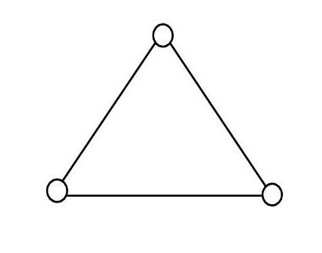
Consider a gas of triatomic molecules. The molecules are assumed to be triangular and made of massless rigid rods whose vertices are occupied by atoms. The internal energy of a mole of the gas at temperature T is:
The internal energy of one mole of an ideal gas is given by U = (f/2)RT, where f is the number of degrees of freedom.
For a non-linear triatomic molecule (assumed to be a rigid rotator), there are:
3 translational degrees of freedom.
3 rotational degrees of freedom.
Vibrational modes are generally not c