Aldehydes, Ketones and Carboxylic Acids
Get insights from 184 questions on Aldehydes, Ketones and Carboxylic Acids, answered by students, alumni, and experts. You may also ask and answer any question you like about Aldehydes, Ketones and Carboxylic Acids
- 184
Questions
- 0
Discussions
- 0
Active Users
- 0
Followers
Have a question about Aldehydes, Ketones and Carboxylic Acids? Ask our experts
Keep it short & simple. Type complete word. Avoid abusive language.
The species given below that does NOT show disproportionation reaction is:
The species given below that does NOT show disproportionation reaction is:
In
 Upvote

The major product (P) in the following reaction is:
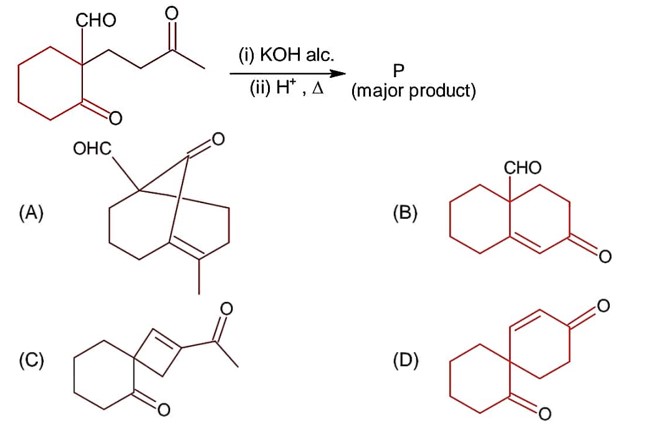
The major product (P) in the following reaction is:
Kindly consider the following figure
Upvote Match List – I with List – II
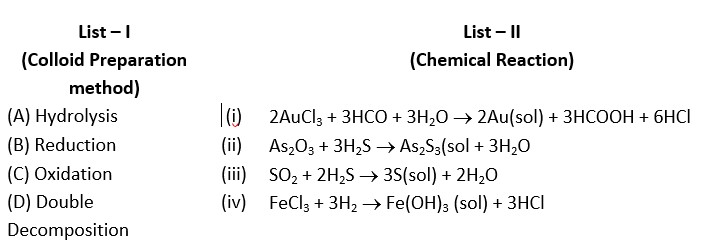
Match List – I with List – II
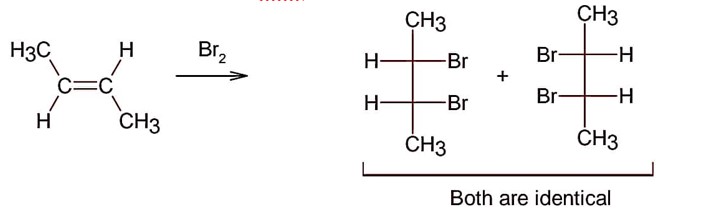
Electrophilic addition of bromine to an alkene is anti-addition, in which cis-alkene gives two enantiomers and trans – alkene gives meso form
Here; trans-but-2-ene will give meso products
Upvote Identify correct A, B and C in the reaction sequence given below:
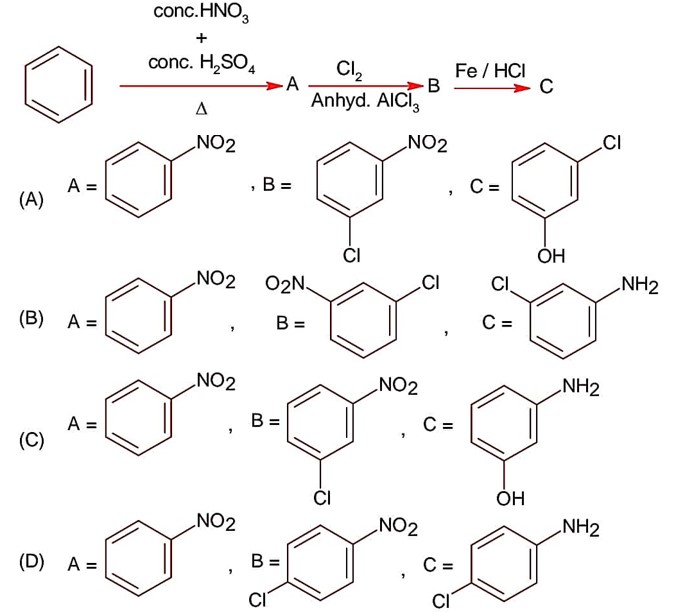
Identify correct A, B and C in the reaction sequence given below:
Kindly consider the following figure
Upvote <p><strong>The potassium ferrocyanide solution gives a Prussian blue colour, when added to:</strong></p>
<p><strong>The potassium ferrocyanide solution gives a Prussian blue colour, when added to:</strong></p>
Number of paramagnetic oxides among the following given oxides is_________.
Li2O, CaO, Na2O2, KO2, MgO and K2O
Number of paramagnetic oxides among the following given oxides is_________.
Li2O, CaO, Na2O2, KO2, MgO and K2O
Given are the oxide of alkali and alkaline earth metals which are ionic in nature.
Simple oxide are Li2O, CaO, MgO and K2O.
Peroxide is Na2O2 and superoxide is KO2.
All simple oxides are diamagnetic as it has no unpaired electron.
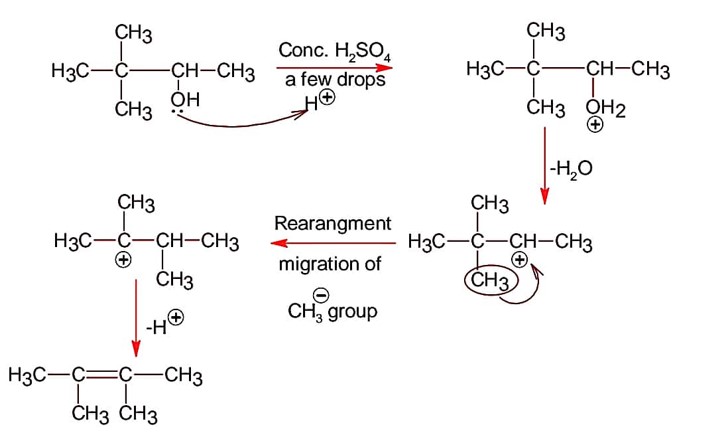
Upvote The major product formed in the following reaction is:
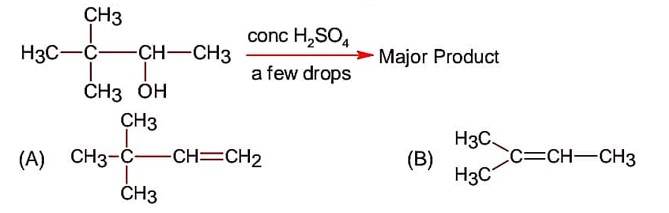

The major product formed in the following reaction is:
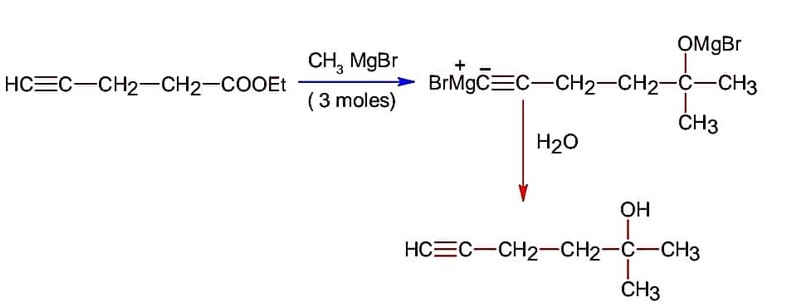
Given below are two statements:
Statement I: Ethyl pent -4-yn-oate on reaction with CH3MgBr gives a 3° -alcohol.
Statement II: In this reaction one mole of ethyl pent-4-yn-oate utilizes two moles of CH3MgBr.
In the light of the above statements, choose the most appropriate answer from the options given below.
The correct structures of A and B formed in the following reactions are:
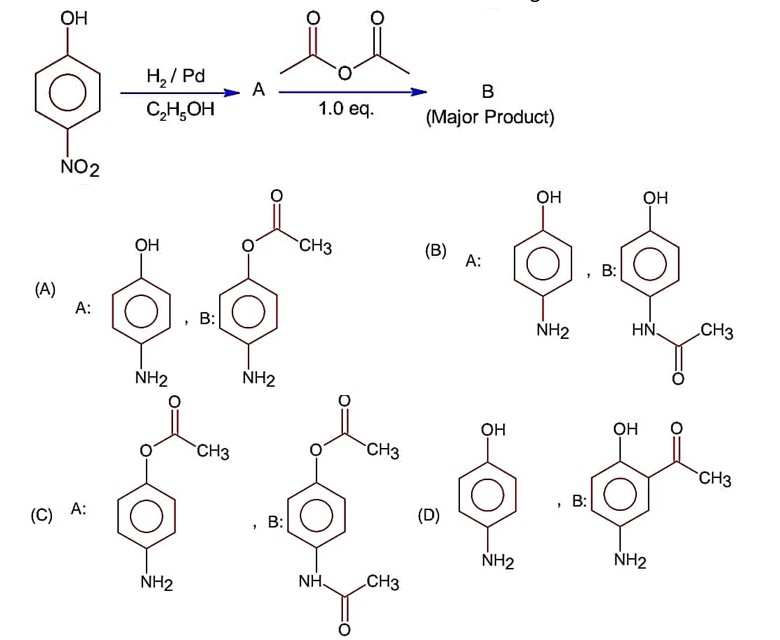
The correct structures of A and B formed in the following reactions are: