

Chemistry
Get insights from 6.9k questions on Chemistry, answered by students, alumni, and experts. You may also ask and answer any question you like about Chemistry
Follow Ask QuestionQuestions
Discussions
Active Users
Followers
New answer posted
a year agoContributor-Level 10
(a) Nitric oxide formation -> Pt is used as catalyst
(b) Haber's process -> Fe is used as catalyst
(c) Hydrolysis of ester -> Acid (H2SO4) is used as catalyst
(d) SO3 formation -> NO is used as catalyst
New answer posted
a year agoContributor-Level 10
(a)
During discharging of secondary battery this reaction takes place.
(b)
Primary battery mercury cell reaction
(c)
During charging of secondary battery PbSO4 reacts and generated
(d) reacts in fuel cell to form
New answer posted
a year agoContributor-Level 10
4 moles of HNO3 produced 3 mol of KNO3
Here mole of produced KNO3 =
If 3 mol of KNO3 produced by 4 moles of HNO3
1 mole of KNO3 produced by moles of HNO3
and mole of KNO3 produced by moles of HNO3 = 1.45 mole of HNO3
Hence mass of HNO3 = mole * mol.wt = 145 * 63 = 91.48 91.5gm
New answer posted
a year agoBeginner-Level 5
Xenon has 8 valence electrons. In , it forms two bonds with fluorine, leaving three lone pairs. The steric number =2 bonds +3 lone pairs .
As per the VSEPR Theory the electron? pair geometry due to SN = 5 will be trigonal bipyramidal. The hybridization type will be hybridisation. However, the three lone pairs occupy equatorial positions, resulting in a linear molecular geometry.
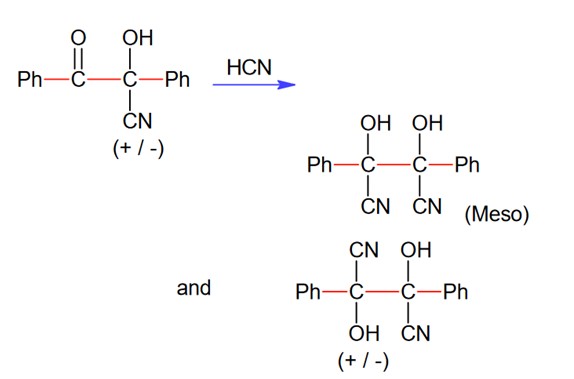
New answer posted
a year agoContributor-Level 10
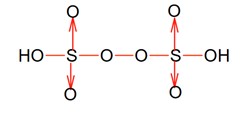
Mole of polyhydric alcohol =
Mole of H2 gas produced =
No of -OH gp present =
New answer posted
a year ago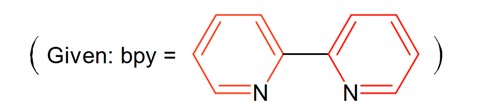
Contributor-Level 10
Oxidation state of Co = 3
And co-ordination No = 6
Sum = 3 + 6 = 9
Taking an Exam? Selecting a College?
Get authentic answers from experts, students and alumni that you won't find anywhere else
Sign Up on ShikshaOn Shiksha, get access to
- 67k Colleges
- 1.2k Exams
- 717k Reviews
- 1850k Answers