

Chemistry
Get insights from 6.9k questions on Chemistry, answered by students, alumni, and experts. You may also ask and answer any question you like about Chemistry
Follow Ask QuestionQuestions
Discussions
Active Users
Followers
New answer posted
a year agoContributor-Level 10
Stannane is the tetrahedral shape of molecule.
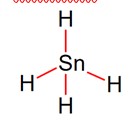
Hybridisation is- sp3, shape and structure are tetrahedral
New answer posted
a year agoContributor-Level 10
Liquation refining process is applicable for the metal having low m.p, but containing impurities have higher m.p
New answer posted
a year agoBeginner-Level 5
The difference in boiling or melting point, even after nearly the same molecular geometry, is because opf the presence of hydrogen bond. HF forms intermolecular hydrogen bonds due to fluorine's high electronegativity. This intermolecular hydrogen bonding requires more energy due to break the hydrogen bonds and melt or boil. So, stronger intermolecular forces of HF result in a higher boiling point.
New answer posted
a year ago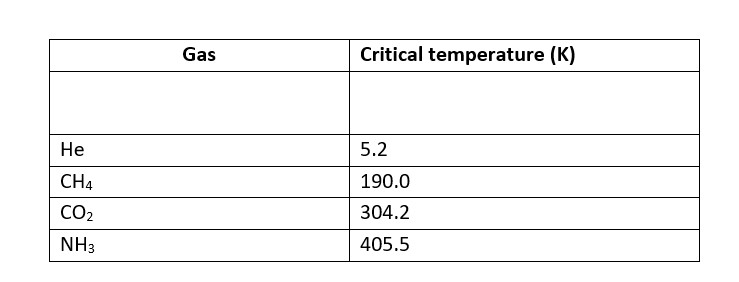
Contributor-Level 10
Higher adsorbtion of gas is corresponds to higher liquefaction and higher liquefaction is directly proportional to the higher critical temperature.
New question posted
a year ago
New answer posted
a year agoNew answer posted
a year agoContributor-Level 10
Mass of pure carbon in coal = 0.6 * 1000gm *
Mass of carbon converted into CO = 6
Mass of carbon converted into CO2 = 360 – 216 = 144gm Þ Mole =
C (s) + O2 (g) -> CO2 (g) + 400KJ
Mole – 12 for CO2 production, Hence total energy produced = 400 * 12 = 4800KJ
Mole = 18 for CO production, Hence energy produced = 100 * 18 = 1800KJ
Total heat = 4800 + 1800 = 6600KJ
Taking an Exam? Selecting a College?
Get authentic answers from experts, students and alumni that you won't find anywhere else
Sign Up on ShikshaOn Shiksha, get access to
- 67k Colleges
- 1.2k Exams
- 717k Reviews
- 1850k Answers