

Physics
Get insights from 5.6k questions on Physics, answered by students, alumni, and experts. You may also ask and answer any question you like about Physics
Follow Ask QuestionQuestions
Discussions
Active Users
Followers
New answer posted
a year ago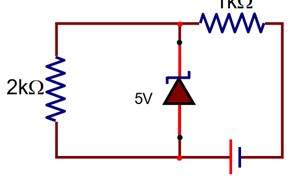
Contributor-Level 10
Potential difference across 2k
New answer posted
a year agoContributor-Level 10
Yes. Mechanical energy is the sum of both kinetic and potential energies. Kinetic energy cannot be a negative value since mass is always positive and velocity square leads to a positive value. However, potential energy can be negative depending on the reference point.
New answer posted
a year agoContributor-Level 10
Not in all cases. This happens due to the interruption of non conservative forces like friction, air resistance, etc. which are responsible for decreasing the mechanical energy by converting it into other forms of energy such as heat, noise, etc.
New answer posted
a year agoContributor-Level 10
Conservation of Mechanical Energy is linked to newton's second law of motion (F = ma) in combination with work energy theorem. The work energy theorem states that total work done on an object equals to change in kinetic energy. This theorem is used to prove that the sum of kinetic energy and potential energy remains constant.
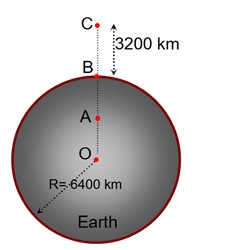
New answer posted
a year agoContributor-Level 10
With the help of conservation of volume, we can write
With the help of conservation of charge, we can write
Q = 27 q.(2)
Potential energy of single drop = U1 =
Potential energy of bigger drop =
Taking an Exam? Selecting a College?
Get authentic answers from experts, students and alumni that you won't find anywhere else
Sign Up on ShikshaOn Shiksha, get access to
- 67k Colleges
- 1.2k Exams
- 718k Reviews
- 1850k Answers