

Chemistry
Get insights from 6.9k questions on Chemistry, answered by students, alumni, and experts. You may also ask and answer any question you like about Chemistry
Follow Ask QuestionQuestions
Discussions
Active Users
Followers
New answer posted
a year agoContributor-Level 10
In strong field of octahedral complex of Fe2+, the electronic configuration is,
Number of unpaired electrons are zero in the presence of strong field ligand.
Hence, spin only magnetic moment =
New answer posted
a year ago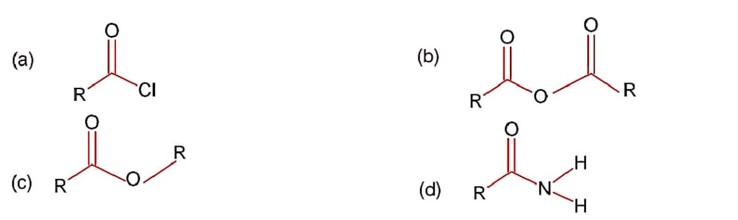
Contributor-Level 10
High leaving tendency corresponds to high reactivity towards hydrolysis. Hence order is.
New answer posted
a year agoContributor-Level 10
Anhydride of HNO3 produced by the treatment of P4O10 (anhydring reagent) in ratio of 4 : 1 is N2O5 which is acidic in nature.
New answer posted
a year agoContributor-Level 10
Calcinations is the decomposition in absence of air,
while roasting is the oxidation process,
New answer posted
a year agoContributor-Level 10
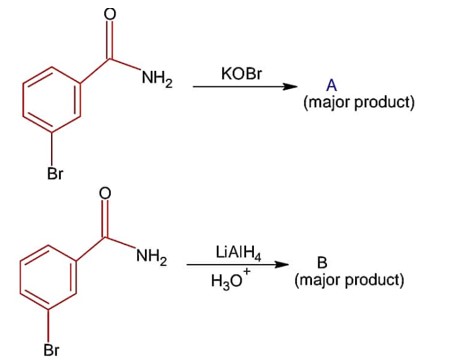
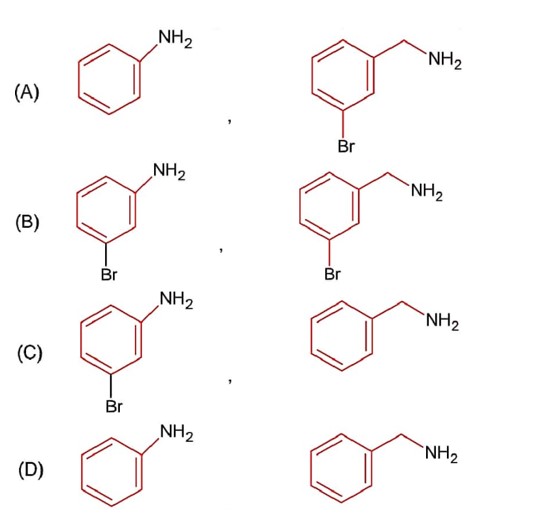
Bakelite is cross linked polymer of formaldehyde and novolac. Novolac is linear polymer of phenol-formaldehyde.
New answer posted
a year agoContributor-Level 10
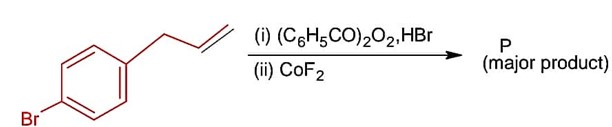
Given electronic configuration is for Ga and in 5th period diagonally situated element is Sn with respect to Ga. Hence electronic configuration of Sn is [Kr]4d105s25p2.
New answer posted
a year agoContributor-Level 10
Conductivity;
Resistance ; R = 0.243
cell constant ; G* =?
Using ;
Taking an Exam? Selecting a College?
Get authentic answers from experts, students and alumni that you won't find anywhere else
Sign Up on ShikshaOn Shiksha, get access to
- 67k Colleges
- 1.2k Exams
- 716k Reviews
- 1850k Answers