

Chemistry
Get insights from 6.9k questions on Chemistry, answered by students, alumni, and experts. You may also ask and answer any question you like about Chemistry
Follow Ask QuestionQuestions
Discussions
Active Users
Followers
New answer posted
a year agoContributor-Level 10
Mass of CuSO4. 5H2O = 80 g
Volume of solution = 5L
Molar mass of CuSO4.5H2O = 249.54g/ml
New answer posted
a year agoContributor-Level 10
Ammonium salt in rain drop resulting wet deposition
Oxides of N & S settle down on ground as dry deposition (SO2).
New answer posted
a year agoContributor-Level 10
S - -
NaOHNa+ + OH--
0.1 M - -
Here ; 2 * 10-20 = S (0.1)2
So; S = 2 * 10-18 M
New answer posted
a year agoContributor-Level 10
ln
Hence; sum of oxidation state = 2
New answer posted
a year agoContributor-Level 10
Mass of empty cylinder = 14.8 kg
Mass of cylinder when full = 29 kg
Mass of gas in cylinder when filled; W1 = 29 – 14.8 = 14.2 kg
Mass of gas in cylinder after using, W2 = 23 – 14.8 = 8.2 kg
Initial pressure ; P1 = 3.47 atm
Final pressure ; P2 =?
Using
P2 = atm
New answer posted
a year agoContributor-Level 10
Glyptal, Dacron & PHBV are polyesters.
Novalac is copolymer of phenol & formaldehyde but not polyesters.
New answer posted
a year ago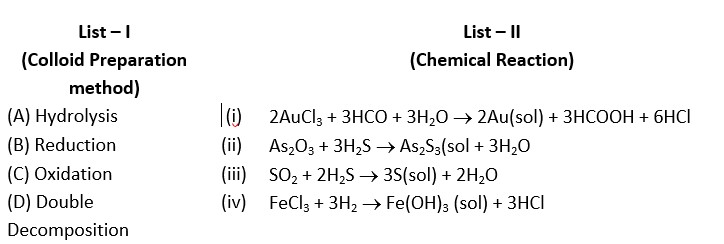
Contributor-Level 10
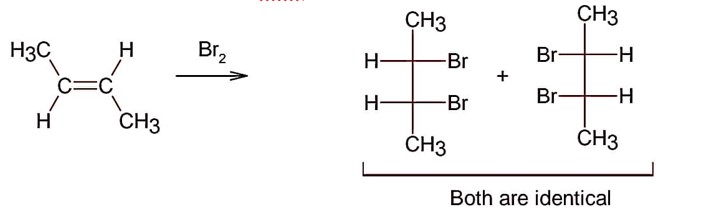
Electrophilic addition of bromine to an alkene is anti-addition, in which cis-alkene gives two enantiomers and trans – alkene gives meso form
Here; trans-but-2-ene will give meso products
New answer posted
a year ago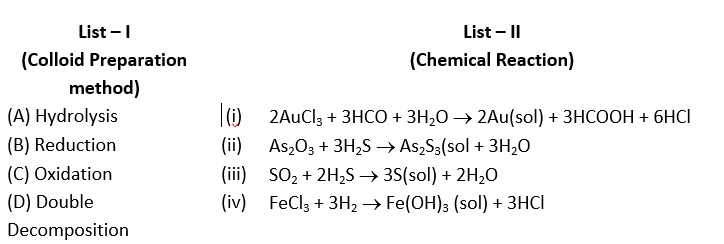
Contributor-Level 10
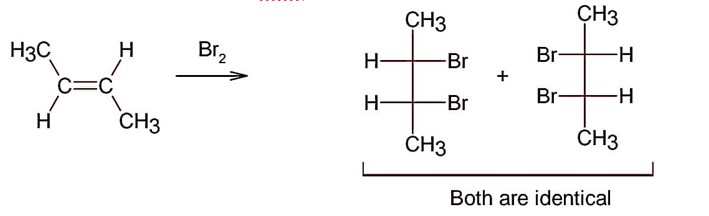
Electrophilic addition of bromine to an alkene is anti-addition, in which cis-alkene gives two enantiomers and trans – alkene gives meso form
Here; trans-but-2-ene will give meso products
Taking an Exam? Selecting a College?
Get authentic answers from experts, students and alumni that you won't find anywhere else
Sign Up on ShikshaOn Shiksha, get access to
- 67k Colleges
- 1.2k Exams
- 716k Reviews
- 1850k Answers