
Ncert Solutions Chemistry Class 11th
Get insights from 2k questions on Ncert Solutions Chemistry Class 11th, answered by students, alumni, and experts. You may also ask and answer any question you like about Ncert Solutions Chemistry Class 11th
- 2k
Questions
- 0
Discussions
- 0
Active Users
- 29
Followers
Have a question about Ncert Solutions Chemistry Class 11th? Ask our experts
Keep it short & simple. Type complete word. Avoid abusive language.
Match List - I with List - II:
List - I (Chemicals)
(a) Alcoholic potassium hydroxide
(b) Pd/BaSO?
(c) BHC (Benzene hexachloride)
(d) Polyacetylene
List - II (Use / Preparation / Constituent)
(i) electrodes in batteries
(ii) obtained by addition reaction
(iii) used for β-elimination reaction
(iv) Lindlar's Catalyst
Choose the most appropriate match:
o Alcoholic potassium hydroxide (Alc KOH):- used for β - elimination.
o Pd / BaSO? : - Lindlar's Catalyst.
 Upvote

The set of elements that differ in mutual relationship from those of the other sets is:
The set of elements that differ in mutual relationship from those of the other sets is:
A diagonal relationship is observed in the periodic table between elements of period (2) and period (3).
Li and Mg
Be and Al
B and Si
Li and Na do not show a diagonal relationship.
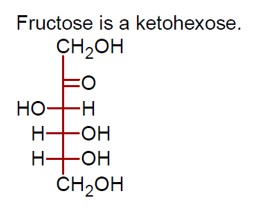
Upvote Fructose is an example of:
<!-- [if !supportLineBreakNewLine]-->
<!--[endif]-->
Fructose is an example of:
<!-- [if !supportLineBreakNewLine]-->
<!--[endif]-->
The common positive oxidation states for an element with atomic number 24, are:
<!-- [if !supportLineBreakNewLine]-->
<!--[endif]-->
The common positive oxidation states for an element with atomic number 24, are:
<!-- [if !supportLineBreakNewLine]-->
<!--[endif]-->
The electron configuration for Cr (24) is [Ar] 4s¹3d?
Chromium shows common oxidation states from +2 to +6.
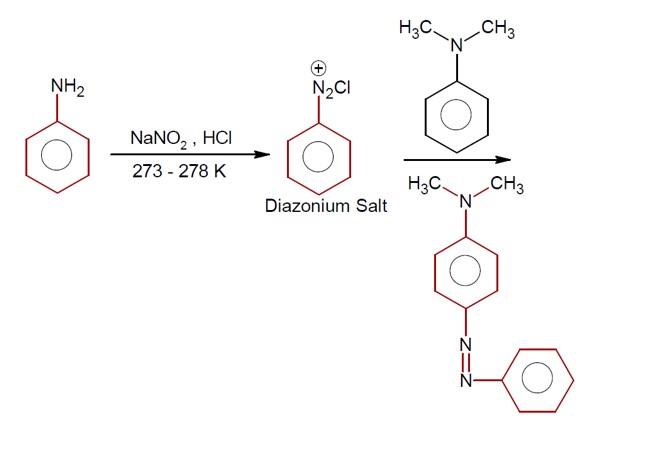
Upvote Considering the below reaction, X and Y respectively are
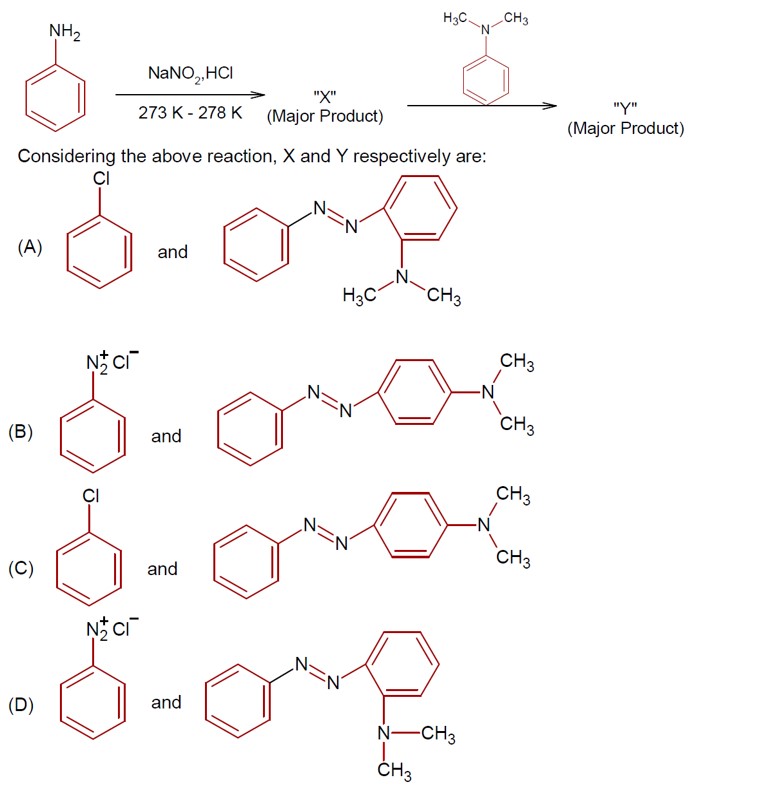
Considering the below reaction, X and Y respectively are
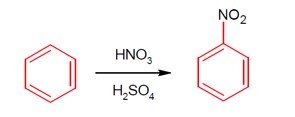
In the above reaction, 3.9 g of benzene on nitration gives 4.92 g of nitrobenzene. The percentage yield of nitrobenzene in the above reaction is _______ % (Round off to the nearest integer).
(Given atomic mass : C: 12.0u, H:1.0u, O:16.0u, N:14.0u)
In the above reaction, 3.9 g of benzene on nitration gives 4.92 g of nitrobenzene. The percentage yield of nitrobenzene in the above reaction is _______ % (Round off to the nearest integer).
(Given atomic mass : C: 12.0u, H:1.0u, O:16.0u, N:14.0u)
Moles of benzene = 3.9 g / 78 g/mol . This would produce (3.9 / 78) moles of nitrobenzene in 100% conversion.
Produced moles of nitrobenzene = 4.92 g / 123 g/mol .
% yield = [ (4.92 / 123) / (3.9 / 78) ] × 100 = [ (4.92 × 100 × 78) / (123 × 3.9) ] = 80.0%
Ans = 80
Upvote The mole fraction of a solute in a 100 molal aqueous solution is _______ ×10-2. (Round off to the nearest integer).
[Given : Atomic masses : H : 1.0u, O : 16.0u]
The mole fraction of a solute in a 100 molal aqueous solution is _______ ×10-2. (Round off to the nearest integer).
[Given : Atomic masses : H : 1.0u, O : 16.0u]
Molality = (mole of solute * 1000) / wt of solvent (gm)
100 = (n_solute * 1000) / [ (1 - n_solute) * 18]
(1 - n_solute) / n_solute = 1000 / (100 * 18) = 10/18
18 (1 - n_solute) = 10 n_solute
18 - 18 n_solute = 10 n_solute
18 = 28 n_solute
n_solute = 18 / 28? 0.6428 = 64.28 * 10? ²
Ans = 64 (Rounded off)
Upvote 0.01 moles of a weak acid HA (Ka = 2.0 ×10⁻⁶) is dissolved in 1.0 L of 0.1 M HCl solution. The degree of dissociation of HA is _______ ×10-5. (Round off to the nearest integer).
[Neglect volume change on adding HA. Assume degree of dissociation <<1]
0.01 moles of a weak acid HA (Ka = 2.0 ×10⁻⁶) is dissolved in 1.0 L of 0.1 M HCl solution. The degree of dissociation of HA is _______ ×10-5. (Round off to the nearest integer).
[Neglect volume change on adding HA. Assume degree of dissociation <<1]
For the weak acid HA in the presence of strong acid HCl:
Ka = [ (Cα + 0.1) × Cα] / [C (1-α)] ≈ (0.1 × 10? ²α) / 10? ² = 0.1α
Given Ka = 2 × 10?
2 × 10? = 10? ¹ × α
α = 2 × 10?
Ans = 2
Upvote The pressure exerted by a non- reactive gaseous mixture of 6.4 g of methane and 8.8 g of carbon dioxide in a 10 L vessel at 27°C is _______ kPa. (Round off to the nearest integer).
[ Assume gases are ideal, R = 8.314 J mol-1 K-1 Atomic masses: C: 12.0 u, H: 1.0 u, O: 16.0 u]
The pressure exerted by a non- reactive gaseous mixture of 6.4 g of methane and 8.8 g of carbon dioxide in a 10 L vessel at 27°C is _______ kPa. (Round off to the nearest integer).
[ Assume gases are ideal, R = 8.314 J mol-1 K-1 Atomic masses: C: 12.0 u, H: 1.0 u, O: 16.0 u]
Mole of CH? = 6.4 / 16 = 0.4 and mole of CO? = 8.8 / 44 = 0.2
Total mole = (0.4 + 0.2) = 0.6 mole of a non-reacting mixture of gas
Using Ideal Gas Law; P = nRT / V
P = (0.6 × 8.314 × 300) / 10 = 149.65 kPa
Ans = 150 (Rounded off)
Upvote