
Ncert Solutions Chemistry Class 11th
Get insights from 2k questions on Ncert Solutions Chemistry Class 11th, answered by students, alumni, and experts. You may also ask and answer any question you like about Ncert Solutions Chemistry Class 11th
- 2k
Questions
- 0
Discussions
- 0
Active Users
- 29
Followers
Have a question about Ncert Solutions Chemistry Class 11th? Ask our experts
Keep it short & simple. Type complete word. Avoid abusive language.
Identify the correct labels of and in the following graph from the options given below
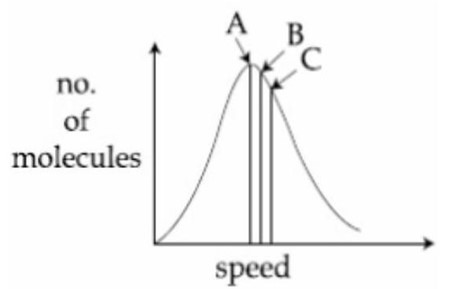
Identify the correct labels of and in the following graph from the options given below
Kindly go through the solution
 Upvote

The increasing order of for the following compounds will be
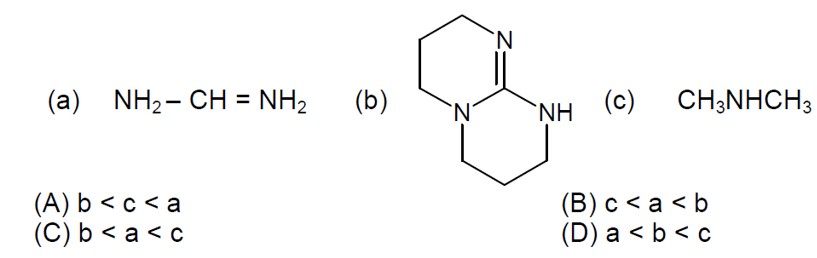
The increasing order of for the following compounds will be
In comparison to the zeolite process for the removal of permanent hardness, the synthetic resins method is
In comparison to the zeolite process for the removal of permanent hardness, the synthetic resins method is
The relative strength of interionic/intermolecular forces in decreasing order is
The relative strength of interionic/intermolecular forces in decreasing order is
<p>aaaaaaaaaaaaaaaaaaaaaaaaaaaaaaaaaaaaaaaaaaaaaaaaaaaaaaaaaaaaaaaaaaaaaaaaaaaaaaaaa</p>
A home owner uses 4.00 × 10³m³ of methane (CH?) gas, (assume CH? is an ideal gas) in a year to heat his home. Under the pressure of 1.0 atm and 300 K, mass of gas used is x × 10?g. The value of x is ______ (Nearest integer).
(Given R = 0.083 L atm K?¹mol?¹)
A home owner uses 4.00 × 10³m³ of methane (CH?) gas, (assume CH? is an ideal gas) in a year to heat his home. Under the pressure of 1.0 atm and 300 K, mass of gas used is x × 10?g. The value of x is ______ (Nearest integer).
(Given R = 0.083 L atm K?¹mol?¹)
PV = nRT
n = PV/RT = (1 atm × 4×10? L) / (0.083 LatmK? ¹mol? ¹ × 300 K) = 1.6 × 10? mol
Mass = n × Molar Mass = 1.6 × 10? mol × 16 g/mol = 25.6 × 10? g ≈ 26 × 10? g
Upvote A source of monochromatic radiation of wavelength 400 nm provides 1000 J of energy in 10 seconds. When this radiation falls on the surface of sodium, x × 10²? electrons are ejected per second. Assume that wavelength 400 nm is sufficient for ejection of electron from the surface of sodium metal. The value of x is ______ (Nearest integer).
(h = 6.626 × 10?³?Js)
A source of monochromatic radiation of wavelength 400 nm provides 1000 J of energy in 10 seconds. When this radiation falls on the surface of sodium, x × 10²? electrons are ejected per second. Assume that wavelength 400 nm is sufficient for ejection of electron from the surface of sodium metal. The value of x is ______ (Nearest integer).
(h = 6.626 × 10?³?Js)
Energy per second = 1000 J / 10 s = 100 J/s
Energy of one photon E = hc/λ = (6.626×10? ³? × 3×10? ) / (400×10? ) = 4.965 × 10? ¹? J
Number of electrons ejected = Total energy / Energy per photon = 100 / (4.965 × 10? ¹? ) = 20.14 × 10¹? ≈ 2 × 10²?
Upvote For the reaction A + B ? 2C
The value of equilibrium constant is 100 at 298K. If the initial concentration of all the three species is 1M each, then the equilibrium concentration of C is x × 10?¹M. The value of x is ______ (Nearest integer).
For the reaction A + B ? 2C
The value of equilibrium constant is 100 at 298K. If the initial concentration of all the three species is 1M each, then the equilibrium concentration of C is x × 10?¹M. The value of x is ______ (Nearest integer).
A + B? 2C
Initial: 1, 1
At eq: 1-x, 1+2x
K = [C]²/ ( [A] [B]) = (1+2x)²/ (1-x)² = 100
(1+2x)/ (1-x) = 10
1+2x = 10-10x => 12x = 9 => x = 3/4
[C] = 1+2x = 1+2 (3/4) = 1+1.5 = 2.5M = 25 × 10? ¹M
Upvote Consider the complete combustion of butane, the amount of butane utilized to produce 72.0 g of water is ______ × 10?¹g, (in nearest integer).
Consider the complete combustion of butane, the amount of butane utilized to produce 72.0 g of water is ______ × 10?¹g, (in nearest integer).
C? H? + 13/2 O? → 4CO? + 5H? O
1 mole C? H? (58 g) produces 5 mole H? O (90 g)
∴ 90 g H? O obtained from 58 g C? H?
∴ 72g H? O obtained from (58/90) × 72g = 46.4 g
= 464 × 10? ¹g
Upvote At 298 K, the enthalpy of fusion of a solid (X) is 2.8kJ mol?¹ and the enthalpy of vaporization of the liquid (X) is 98.2 kJ mol?¹. The enthalpy of sublimation of the substance (X) in kJ mol?¹ is ______ (in nearest integer).
At 298 K, the enthalpy of fusion of a solid (X) is 2.8kJ mol?¹ and the enthalpy of vaporization of the liquid (X) is 98.2 kJ mol?¹. The enthalpy of sublimation of the substance (X) in kJ mol?¹ is ______ (in nearest integer).
ΔH? = ΔH? + ΔH?
= 2.8 + 98.2 = 101 kJ/mole
Upvote