

Physics
Get insights from 5.6k questions on Physics, answered by students, alumni, and experts. You may also ask and answer any question you like about Physics
Follow Ask QuestionQuestions
Discussions
Active Users
Followers
New answer posted
a year agoContributor-Level 10
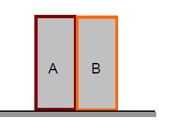
The decrement in length is more for metal strip-A than metal strip-B, so the combined system bend towards the left.
New answer posted
a year agoContributor-Level 10
Using de-Broglie equation:
λ = h/p = h/√ (2mK) = h/√ (2meV)
λ ∝ 1/√m
λ? /λ? = √ (m? /m? ) = √ (1.00727/0.00055) = √1831 ≈ 43:1
New answer posted
a year agoContributor-Level 10
A = Activity = λN = (ln (2)/t? /? ) N
N = (1.5*10? ³ / 198) * 6*10²³
A = (0.693 / (2.7*24*3600) * (1.5*10? ³ / 198) * 6*10²³ disintegration/s
A ≈ 1.32 * 10¹³ Bq = (1.32*10¹³ / 3.7*10¹? ) Ci ≈ 357 Ci
New answer posted
a year agoContributor-Level 10
As we know that for damping Oscillation
A = A? e? / (²? ) ⇒ t? /? = ln (2)2m/b = (0.693 * 2 * 500)/20 = 34.65 s
New answer posted
a year agoContributor-Level 10
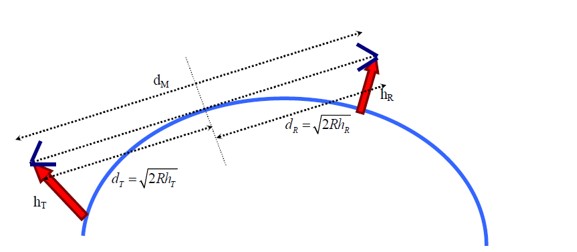
d = √ (2hT R) + √ (2hR R) = 2√ (2hR) (assuming towers are identical)
h = d²/ (8R) = (45*10³)²/ (8*6400*10³) ≈ 39.55 m
New answer posted
a year agoContributor-Level 10
As we know that magnetic force acting on a charge particle will be
F = q (v * B)
W = F.dl
Since force and displacement will be always perpendicular so work done is always zero.
New answer posted
a year ago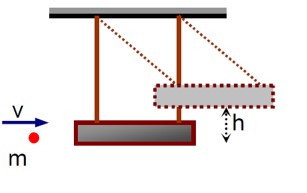
Contributor-Level 10
Using conservation of linear momentum, we can write
P? = P? ⇒ mv = (M+m)V
Using conservation of Mechanical energy, we can write
½ (M+m)V² = (M+m)gh ⇒ V = √2gh
⇒ v = (M+m)/m)√2gh
= (6/0.01)√ (2*9.8*0.098) = 600 * 1.386 = 831.4 m/s
New answer posted
a year agoContributor-Level 10
As we know that Reynolds's number R = ρvD/η
In First case: v? = (0.18*10? ³)/ (π (0.5*10? ²)²*60) = 0.03822 m/s
R = (10³ * 0.03822 * 0.01)/10? ³ = 382.2 < 2000 (Laminar/Steady)
In Second case: v? = (0.48*10? ³)/ (π (0.5*10? ²)²*60) = 0.10191 m/s
R? = (10³ * 0.10191 * 0.01)/10? ³ = 1019.1 < 2000 (Laminar/Steady)
The provided solution has a different calculation for R, leading to a different conclusion.
New answer posted
a year agoContributor-Level 10
Since speed of light is constant for all colour so red colour and blue colour have different frequencies and different wavelengths.
Taking an Exam? Selecting a College?
Get authentic answers from experts, students and alumni that you won't find anywhere else
Sign Up on ShikshaOn Shiksha, get access to
- 67k Colleges
- 1.2k Exams
- 718k Reviews
- 1850k Answers