

Chemistry
Get insights from 6.9k questions on Chemistry, answered by students, alumni, and experts. You may also ask and answer any question you like about Chemistry
Follow Ask QuestionQuestions
Discussions
Active Users
Followers
New answer posted
a year agoContributor-Level 10
Molar mass of C7H5N3O6 = 12 * 7 + 1 * 5 + 14 * 3 + 16 * 6 = 84 + 42 + 96 = 227 g/mol
Number of moles =
number of N-atoms
New answer posted
a year agoContributor-Level 10
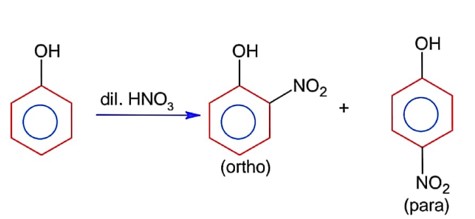
Ortho product has intramolecular H- bonding & para product has intermolecular H- bonding. Thus it can be separated by steam distillation due to difference in B.
New answer posted
a year agoContributor-Level 10
the strongest oxidizing agent have the highest reduction potential. So Mn3+ is the strongest oxidizing agent.
New answer posted
a year agoContributor-Level 10
Cerium exists in two oxidation states (+3) and (+4)
It exist as Ce+4 and acts like a strong oxidizing agent by gaining electrons
New answer posted
a year agoContributor-Level 10
Size of hydrated ion
Size of hydrated ions
Size of hydrated ions ;
Ionic mobility ;
New answer posted
a year agoContributor-Level 10
Number of electrons in
are e- deficient molecules. B2H6 is dimer of BH3, both compound has 6e- only.
Taking an Exam? Selecting a College?
Get authentic answers from experts, students and alumni that you won't find anywhere else
Sign Up on ShikshaOn Shiksha, get access to
- 67k Colleges
- 1.2k Exams
- 717k Reviews
- 1850k Answers