

Maths
Get insights from 6.5k questions on Maths, answered by students, alumni, and experts. You may also ask and answer any question you like about Maths
Follow Ask Question
6.5k
Questions
0
Discussions
18
Active Users
0
Followers
New answer posted
a year ago
0 Follower
3 Views
P
Payal Gupta
Contributor-Level 10
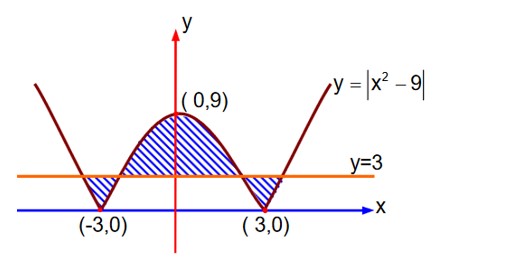
Required area = A
Note : No option in the question paper is correct.
New answer posted
a year ago
0 Follower
2 Views
V
Vishal Baghel
Contributor-Level 10
Let p1 : y2 = 8x
p2 : y2 = 16 (3 – x) = -16 (x – 3)
finding their intersection points.
y2 = 8x & y2 = -16 (x – 3)
8x = -16x + 48
= 16
New answer posted
a year ago
0 Follower
2 Views
V
Vishal Baghel
Contributor-Level 10
Given system of equations
αx + y + z = 5
x + 2y + 3z = 4, has infinite solution
x + 3y + 5z =β
= 0
α (1) – 1 (2) + 1 (1) = 0
α= 1 and
β= 3
Taking an Exam? Selecting a College?
Get authentic answers from experts, students and alumni that you won't find anywhere else
Sign Up on ShikshaOn Shiksha, get access to
- 67k Colleges
- 1.2k Exams
- 718k Reviews
- 1850k Answers