

Chemistry
Get insights from 6.9k questions on Chemistry, answered by students, alumni, and experts. You may also ask and answer any question you like about Chemistry
Follow Ask QuestionQuestions
Discussions
Active Users
Followers
New answer posted
a year agoContributor-Level 10
Gutta percha is a synthetic rubber and its monomer is isoprene .
Since isoprene has EDG, so it is prepared by cationic addition polymerization
New answer posted
a year agoContributor-Level 10
From Reaction
Δn? = 2 – 1 = 1
Kp = Kc (RT)^Δn?
Kp = Kc (RT)¹
Kc = Kp (RT)? ¹
New answer posted
a year agoContributor-Level 10
Thermal stability of compound is directly proportional to large anion of s-block elements:
T.S ∝ 1/ (PP of cation)
And p.p. ∝ charge ∝ 1/size, So, [T.S. ∝ size ∝ 1/ (charge)]
So, Sr [NO? ]? is highly stable
But Mg (NO? )? ⇒ poor
New answer posted
a year agoContributor-Level 10
All have same molarity, pH ∝ 1/ (Acidic strength) ∝ Basic strength
H? SO? → Acidic
NH? Cl (Salt of weak base and strong acid)
Acidic but less than H? SO?
NaCl → (Neutral solution)
NaOH → Basic (Strong Base)
So NaOH > NaCl > NH? Cl > H? SO?
New answer posted
a year agoContributor-Level 10
(a) [1rCl (CO) (PPh3)2] carbonylchloridobis (triphenylphosphine) iridium (I).
(b) Coordination number of Ir is four. Ir is in (+1) oxidation state with 4d8 configuration. It is trans isomer, so its geometry should be square planar.
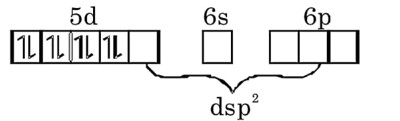
(c) All electrons are paired, hence diamagnetic
(d) Can exhibit GI only.
New answer posted
a year ago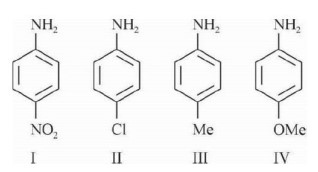
Contributor-Level 10
and basic strength ∝ 1/pK? ∝ K? ∝ +R ∝ 1/ (-R) ∝ +I ∝ 1/ (-I)
So basic strength order ⇒ IV > III > II > I, so pK? order is IV < III < II < I
New answer posted
a year agoContributor-Level 10
Fe acts a catalyst and Mo acts as promoter in Haber's process.
New answer posted
a year agoContributor-Level 10
? Solvent is H? O, which is in excess
So using m ( molality ) = (x? *1000)/ (x? * (M? )? )
? x? = 0.74 (Mol? = 18 g)
x? = 1 – 0.74 = 0.26 ∴ m = (0.26 * 1000)/ (0.74 * 18) = 19.5
Taking an Exam? Selecting a College?
Get authentic answers from experts, students and alumni that you won't find anywhere else
Sign Up on ShikshaOn Shiksha, get access to
- 67k Colleges
- 1.2k Exams
- 716k Reviews
- 1850k Answers