

Chemistry
Get insights from 6.9k questions on Chemistry, answered by students, alumni, and experts. You may also ask and answer any question you like about Chemistry
Follow Ask QuestionQuestions
Discussions
Active Users
Followers
New answer posted
a year agoContributor-Level 10
Factual
(A) Magnalium contain Al and Mg
(B) Bell metal ⇒ Cu and Sn
(C) Gun metal ⇒ Cu, Sn and Zn
(D) Chrome steel ⇒ Fe and Cr.
New answer posted
a year agoContributor-Level 10
Sm ⇒ +2, +3 (4f? , 6 s²); Gd ⇒ +3 (4f?5 d¹6 s²)
Tm ⇒ +2 + 3 (4f¹³,6 s²); Nd ⇒ +2, +3, +4 (4f? , 6 s²)

New answer posted
a year agoContributor-Level 10
(i) give NO2 (ii) NH4NO3 (iii) gives NO2 (iv) Give NO2 (v) give NO2 (vi) Given N2O
(vii) Gives NO2 (viii) Gives NO2 (ix) Gives NO
New answer posted
a year agoContributor-Level 10
σ bonded organometallic compound ⇒ M – C
σ-bond
and in π – bonded organo metallic compound
M – C
π bond
In ferrocene, there is π-bond
New answer posted
a year agoContributor-Level 10
Molecular formula from calculation comes to be C3H6O i.e., it stands for the following compounds.
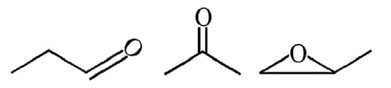
No addition reaction with Br2
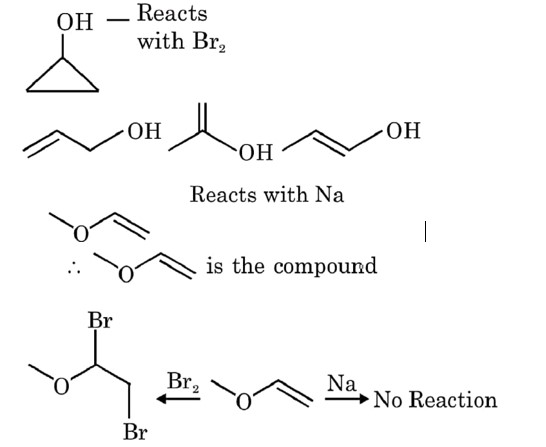
VD * 2 = MM = 29 * 2 = 58
2.9 g of ether will combines with
Y = 9 and X = 8
Y - X = 9 - 8 = 1
Taking an Exam? Selecting a College?
Get authentic answers from experts, students and alumni that you won't find anywhere else
Sign Up on ShikshaOn Shiksha, get access to
- 67k Colleges
- 1.2k Exams
- 716k Reviews
- 1850k Answers