

Chemistry
Get insights from 6.9k questions on Chemistry, answered by students, alumni, and experts. You may also ask and answer any question you like about Chemistry
Follow Ask QuestionQuestions
Discussions
Active Users
Followers
New answer posted
a year agoContributor-Level 10
Sulphide ion (s2-) form ores commonly with Pb & Ag as PbS and Ag2S
New answer posted
a year agoContributor-Level 10
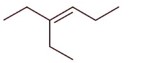
3-Ethylhex-3-ene will not show stereo isomerism
Methylhex-1-ene will show steroisomerism (optical isomerism)
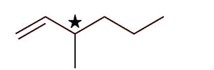
Since it has chiral carbon.
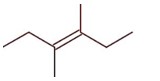
3, 4-Dimethylhex-3-ene will show stereoisomerism (Geometrical isomerism)
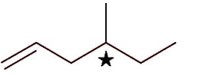
4-Methylhex-1-ene will show stereoisomerism (optical) since it has one chiral carbon
New answer posted
a year agoContributor-Level 10
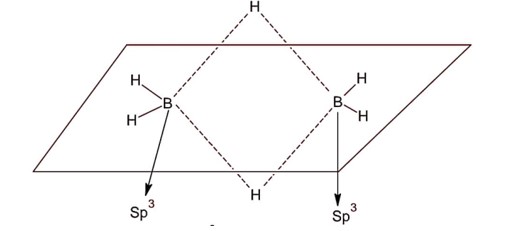
Diborane is produced when NaBH4 is reacted with I2
New answer posted
a year ago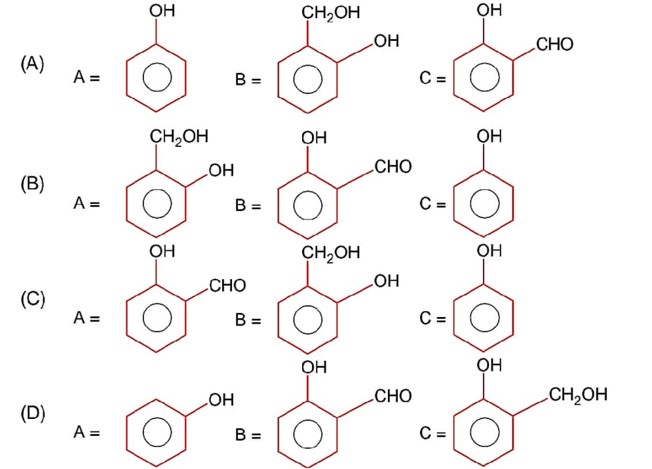
Contributor-Level 10
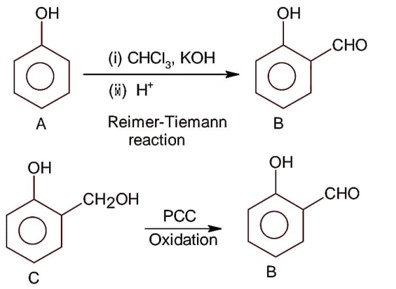
Compound A is phenol since phenol gives dark green colour with FeCl3.
New answer posted
a year agoContributor-Level 10
(A) - Paramagnetic & coloured
- Diamagnetic & colourless
- Diamagnetic & colourless
(B) - Diamagnetic & colourless
- Diamagnetic & colourless
- paramagnetic & coloured
(C)
All are diamagnetic & colourless
(D)
All are paramagnetic & coloured
All d- & f block paramagnetic cations are coloured also.

New answer posted
a year agoContributor-Level 10
Species | Sigma bonds | lone pairs | Hybridisation |
SF4 | 4 | 1 | Sp3d |
IF5 | 5 | 1 | Sp3d2 |
2 | 0 | Sp | |
4 | 0 | Sp3 |
New answer posted
a year agoContributor-Level 10
Depression in freezing point will be maximum for Al2 (SO4)3 since its Van't Hoff factor is the highest. So its solution will have the lowest freezing point.
New answer posted
a year agoContributor-Level 10
Only tritium is the isotope of hydrogen which is radioactive in nature that emits low energy b- particles since its
Taking an Exam? Selecting a College?
Get authentic answers from experts, students and alumni that you won't find anywhere else
Sign Up on ShikshaOn Shiksha, get access to
- 67k Colleges
- 1.2k Exams
- 716k Reviews
- 1850k Answers