Environmental chemistry

Get insights from 152 questions on Environmental chemistry, answered by students, alumni, and experts. You may also ask and answer any question you like about Environmental chemistry

  • 152

    Questions

  • 0

    Discussions

  • 0

    Active Users

  • 0

    Followers

Have a question about Environmental chemistry? Ask our experts

Ask Your Question

Keep it short & simple. Type complete word. Avoid abusive language.

New answer posted•a year ago
A
a year ago

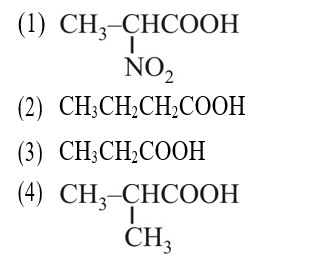
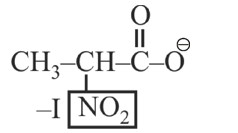
–I effect ∝ Acidic strength

+I effect ∝ Basic strength

*  Most stable anion due to maximum –I effect.

*  Most acidic

...Read more

Thumbs Up IconUpvote Thumbs Down Icon
New answer posted•a year ago
A
a year ago

with increase in separation of screen from slits plane, fringe width increases.

Thumbs Up IconUpvote Thumbs Down Icon
New answer posted•a year ago
A
a year ago

Excessive nitrate in drinking water causes methemoglobinemia

Thumbs Up IconUpvote Thumbs Down Icon
New answer posted•a year ago
A
a year ago

Excessive nitrate in drinking water causes methemoglobinemia

Thumbs Up IconUpvote Thumbs Down Icon
New answer posted•a year ago
A
a year ago

Release of toxic/undesirable materials in the environment.

Thumbs Up IconUpvote Thumbs Down Icon
New answer posted•a year ago
A
a year ago

Classical smog contains SO2

Thumbs Up IconUpvote Thumbs Down Icon
New answer posted•a year ago
A
a year ago

Depletion of ozone is due to CF2Cl2

Thumbs Up IconUpvote Thumbs Down Icon
New answer posted•a year ago
A
a year ago

The maximum prescribed concentration of manganese in drinking water is 0.05 ppm

Thumbs Up IconUpvote Thumbs Down Icon
New answer posted•a year ago
V
a year ago

So2 is the component of classical smog.

Thumbs Up IconUpvote Thumbs Down Icon
New answer posted•a year ago
A
a year ago

Classical smog contains SO2.

Thumbs Up IconUpvote Thumbs Down Icon