

Chemistry
Get insights from 6.9k questions on Chemistry, answered by students, alumni, and experts. You may also ask and answer any question you like about Chemistry
Follow Ask QuestionQuestions
Discussions
Active Users
Followers
New answer posted
a year agoContributor-Level 10
In the ammonolysis reaction, HCl is produced as a byproduct. To neutralize this acidic impurity, the mixture is treated with NaOH.
New answer posted
a year agoContributor-Level 9
First ionization enthaly of Mg is smaller than Ar and Cl but higher than Na.
New answer posted
a year agoContributor-Level 9
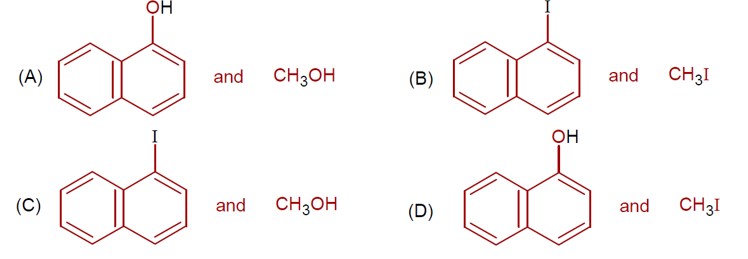
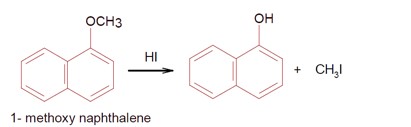
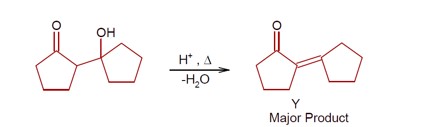
The following depicts a chemical reaction leading to a Major Product Y.
Mercury has low boiling point so is refined by distillation method.
Copper refining is done through electrolytic refining.
Silicon is refined by zone refining method.
Nickel is refined by vapour phase refining.

New answer posted
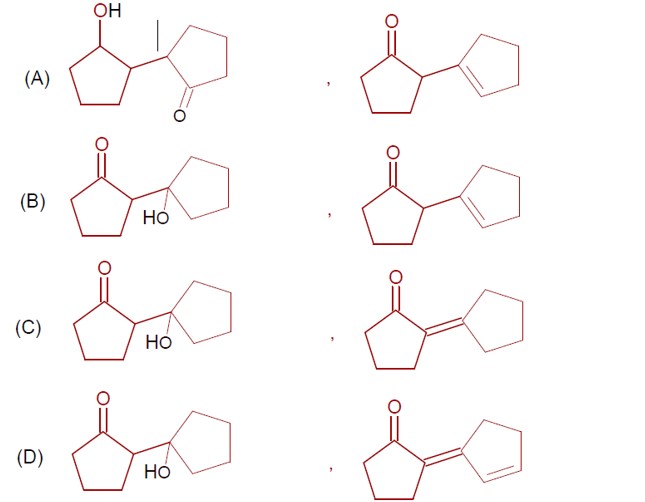
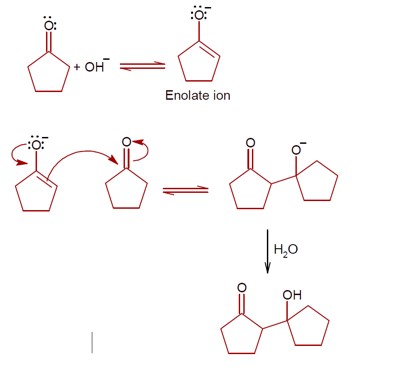
a year ago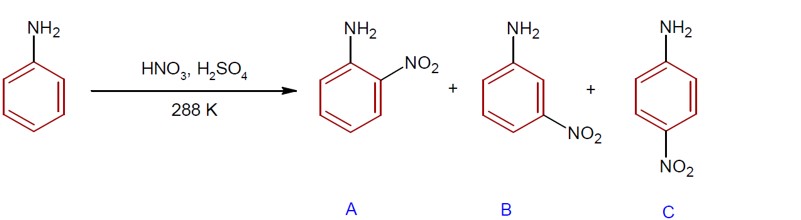
Contributor-Level 9
During nitration of aniline, meta- nitroaniline is also formed as product due to formation of –NH? group. The percentage of p, m and o product is 51%, 47% and 2% respectively
New answer posted
a year agoContributor-Level 9
In Hoffmann bromamide reaction, hypobromite ion react with amide and in this reaction carbonyl group is lost as CO? ²? in form of Na? CO?
New answer posted
a year agoContributor-Level 9
CuSO? 5H? O is blue vitriol which is represented as [Cu (H? O)? ]. H? O.SO? Here, secondary valencies are 4 H? O and 1H? O molecule outside coordination sphere is involved in hydrogen bonding.
New answer posted
a year agoContributor-Level 9
Oxidation state of N
| NO | +2 |
|-|-|
| NO? | +4 |
| N? O | +1 |
| NO? | +5 |
So, order of oxidation state is
NO? > NO? > NO > N? O
Taking an Exam? Selecting a College?
Get authentic answers from experts, students and alumni that you won't find anywhere else
Sign Up on ShikshaOn Shiksha, get access to
- 67k Colleges
- 1.2k Exams
- 716k Reviews
- 1850k Answers