An IITian lights 10,000 homes in rural Bihar
 Call 8585951111Got Doubts?
Taking innovation to the new level, Gyanesh Pandey, CEO and Co-founder of Husk Power Systems and Manoj Sinha, a Darden University alumnus are lighting up over 10,000 homes and small shops across villages in Bihar, reported Archana Rai and Pankaj Mishra of Economic Times.
Husk Power owns and operates miniature power plants generating between 35 kw and 100 kw of electricity from paddy husk that it 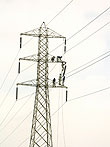 supplies to consumers in off-grid villages. The startup plans to raise a fresh round of venture capital this month to scale up operations to more than 60 villages and to set up 50 plants to generate electricity from the current level of 22 plants by May 2010. "We have an open-source model of operations and can very quickly replicate across multiple locations," says Pandey, an electrical engineer from IIT Varanasi, who envisages Husk Power Systems rolling out services akin to a cell phone company.
In the last few years, India emerged as a laboratory for innovations in the alternative energy space with entrepreneurs and investors looking to build innovative solutions to address a power-starved economy. The is happening at a time when other countries are losing their luster in clean tech. North America's share of clean technology venture capital was down from 72 percent in 2008 to 62 percent in 2009, a four-year low.
It is the opportunity in bio-mass-generated electricity that Husk Power Systems is chasing, with plans now to replicate its model in Bihar in other states such as West Bengal, Uttar Pradesh, Andhra Pradesh and Tamil Nadu. "Our model works around involving local teams. There is no magic wand that we use, we just keep technology simple, generate power and feed it to consumers who have no access to state-grid power," says Pandey. Currently, Husk Power offers electricity at Rs.80 for 30 watts and Rs.40 for every incremental 15 watts. This allows rural homes to get about 6-7 hours of electricity.
"The idea is to have a 40 kw plant that services perhaps four villages," Pandey, who feels the price point makes it possible for consumers, who depend on kerosene lamps or diesel generated power, to switch easily to this cleaner source.
Source: http://www.siliconindia.com
Date: 3rd Feb., 2010
For further details about related courses and colleges please click below:

Comments