IISER Bhopal researchers studies role of coronavirus' nucleocapsid protein in spreading infection


Since the virus is highly infectious, most studies do not use the live virus, but use a similar protein capsule made up of spike that has been filled with another viral core, in a process called ‘pseudotyping.’
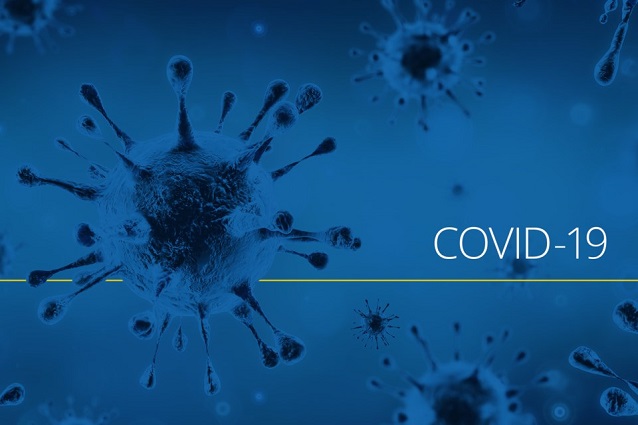
A team of researchers from the Indian Institute of Science Education and Research (IISER), Bhopal have established that proteins from the COVID-19 virus other than the well-known ‘spike protein’ can play a critical role in the infectivity of the virus. The SARS-CoV-2 virus has an RNA genome, surrounded by a sphere-shaped structure. This structure comprises various types of proteins, with one of them being the ‘spike protein’ that gives the virus its characteristic spiked look or ‘crown’.
It suggests that it is not enough to study spike protein alone to develop therapeutic drugs, antibodies, and entry inhibitors, since actual infectivity levels may vary significantly based on the presence of other viral proteins like the nucleocapsid (N) protein.

Since the virus is highly infectious, most studies do not use the live virus, but use a similar protein capsule made up of spike that has been filled with another viral core, in a process called ‘pseudotyping.’
The infectivity of each of the pseudovirus containing one of the twenty-four proteins was studied. With this, the researchers found that pseudovirus produced with the nucleocapsid (N) protein had higher infectivity than those containing other proteins.
The researchers also found that a synthetic microbody that neutralizes spike-pseudotyped viruses was less effective against the N protein-containing pseudotype. They observed similar patterns during experiments with a spike mutant that is found in the UK variant of COVID-19.
The study was led by Dr. Ajit Chande, Assistant Professor, Department of Biological Sciences, IISER Bhopal.
The results of this work have recently been published in the peer-reviewed journal Frontiers in Cellular and Infection Microbiology co-authored by Mr Tarun Mishra, Mr Sreepadmanabh M, Ms Pavitra Ramdas, Mr Amit Kumar Sahu, Dr Atul Kumar, and Dr Ajit Chande.
Elaborating on his research, Dr. Ajit Chande said, “Current methods of retrovirus pseudotyping are focused on the spike protein of the virus. Our study picks off from this point”.
Read More:
Follow Shiksha.com for latest education news in detail on Exam Results, Dates, Admit Cards, & Schedules, Colleges & Universities news related to Admissions & Courses, Board exams, Scholarships, Careers, Education Events, New education policies & Regulations.
To get in touch with Shiksha news team, please write to us at news@shiksha.com

She has over 10 years of experience in the education and publishing sectors. She specialises in exam coverage and content creation. At Shiksha, she writes, analyses, and presents information for students preparing f
Read Full Bio