IIT Madras researchers develop algorithm for lensless, miniature cameras


The researchers have developed a deep learning algorithm for producing photo-realistic images from the blurred lensless capture.
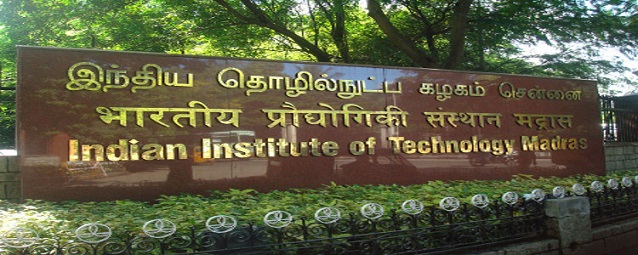
Indian Institute of Technology (IIT) Madras in collaboration with the Rice University, US have come out with an algorithm for lensless, miniature cameras supported with augmented reality or virtual reality, security, smart wearables and robotics where cost, form-factor and weight are major constraints.
Lensless cameras do not have a lens which, in a conventional camera, acts as a focusing element allowing the sensor to capture a sharp photograph of the scene. Due to the absence of this focusing element, the lensless camera captures a multiplexed or globally blurred measurement of the scene.
The researchers have developed a deep learning algorithm for producing photo-realistic images from the blurred lensless capture.
Dr. Kaushik Mitra, Head of Computational Imaging Laboratory, IIT Madras and Assistant Professor, Department of Electrical Engineering, said, “Existing algorithms to deblur images based on traditional optimization schemes yield low-resolution ‘noisy images’.
He further said that “Our research team used ‘Deep Learning’ to develop a reconstruction algorithm called ‘FlatNet’ for lensless cameras which resulted in significant improvement over traditional optimization-based algorithms. FlatNet was tested on various real and challenging scenarios and was found to be effective in de-blurring images captured by the lensless camera”.

The research has been funded by the National Science Foundation and NSF EXPEDITIONS, US, Neural Engineering System Design (NESD), Defense Advanced Research Projects Agency (DARPA), US, National Institutes of Health (NIH) Grant, US and Qualcomm Innovation Fellowship India 2020.
Meanwhile, IIT Madras has commenced the application process for a free artificial intelligence online course. Candidates interested in IIT Madras Admissions 2021 must note that the course, called “Artificial Intelligence Search Methods for Problem Solving” aims at “providing learners with an understanding of a wide variety of search methods that agents can employ for problem-solving as an autonomous agent will have to behave in an intelligent manner for it to be able to solve problems.” The 12-week course is being offered on the National Programme on Technology Enhanced Learning (NPTEL) platform by IIT Madras.
Read More:
Follow Shiksha.com for latest education news in detail on Exam Results, Dates, Admit Cards, & Schedules, Colleges & Universities news related to Admissions & Courses, Board exams, Scholarships, Careers, Education Events, New education policies & Regulations.
To get in touch with Shiksha news team, please write to us at news@shiksha.com

She has over 10 years of experience in the education and publishing sectors. She specialises in exam coverage and content creation. At Shiksha, she writes, analyses, and presents information for students preparing f
Read Full Bio