
Ncert Solutions Chemistry Class 12th
Get insights from 2.6k questions on Ncert Solutions Chemistry Class 12th, answered by students, alumni, and experts. You may also ask and answer any question you like about Ncert Solutions Chemistry Class 12th
- 2.6k
Questions
- 0
Discussions
- 0
Active Users
- 79
Followers
Have a question about Ncert Solutions Chemistry Class 12th? Ask our experts
Keep it short & simple. Type complete word. Avoid abusive language.
Arrange the following in increasing order of reactivity towards AgNO? solution:
(I) 1-chloro-2-phenylethane
(II) (Dichloromethyl)cyclopropane
(III) 1-chloro-1-cyclohexylethane
(IV) (1-chloroethyl)benzene
Arrange the following in increasing order of reactivity towards AgNO? solution:
(I) 1-chloro-2-phenylethane
(II) (Dichloromethyl)cyclopropane
(III) 1-chloro-1-cyclohexylethane
(IV) (1-chloroethyl)benzene
The reactivity of reaction depends upon stability of carbocation.
 Upvote

The incorrect statement is:
<!-- [if !supportLineBreakNewLine]-->
<!--[endif]-->
The incorrect statement is:
<!-- [if !supportLineBreakNewLine]-->
<!--[endif]-->
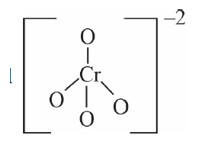
Chromate ion shape tetrahedral
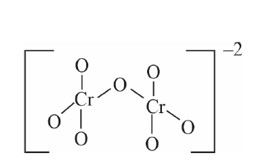
But dichromate ion has only one common oxygen bond.
Upvote CMC is the particular concentration above which micelle formation takes place. CMC for soap lies between:
CMC is the particular concentration above which micelle formation takes place. CMC for soap lies between:
Above a particular concentration called critical micelle concentration at which micelles are formed. for soaps, the
is to
Upvote The increasing order of the reactivity of the following compounds in nucleophilic addition reaction is:
(a) Di-tert-butyl ketone
(b) Acetone
(c) Acetaldehyde
(d) p-Nitrobenzaldehyde
The increasing order of the reactivity of the following compounds in nucleophilic addition reaction is:
(a) Di-tert-butyl ketone
(b) Acetone
(c) Acetaldehyde
(d) p-Nitrobenzaldehyde
Nucleophilic addition on carbonyl compounds decreases by increasing steric hindrance.
Upvote Consider the following molecules and statements related to them:
Molecule (P) is p-nitrophenol.
Molecule (Q) is o-nitrophenol.
(a) (Q) is more volatile than (P)
(b) (Q) has higher boiling point than (P)
(c) (P) dissolves more readily than (Q) in water
(d) pKa value of (P) is higher than (Q)
Identify the correct option from below:
<!-- [if !supportLineBreakNewLine]-->
<!--[endif]-->
Consider the following molecules and statements related to them:
Molecule (P) is p-nitrophenol.
Molecule (Q) is o-nitrophenol.
(a) (Q) is more volatile than (P)
(b) (Q) has higher boiling point than (P)
(c) (P) dissolves more readily than (Q) in water
(d) pKa value of (P) is higher than (Q)
Identify the correct option from below:
<!-- [if !supportLineBreakNewLine]-->
<!--[endif]-->
Due to Intramolecular hydrogen bonding, O-nitrophenol fails to spread its surface, so that its b.p is less than para-nitrophenol.
Upvote The Number of Species which have square pyramidal shape Species:-
XeOF4, ClF5, XeF4, PCl5, XeO3F2, SbCl5, BrF5.
The Number of Species which have square pyramidal shape Species:-
XeOF4, ClF5, XeF4, PCl5, XeO3F2, SbCl5, BrF5.
According to VSEPR theory:
For the species which contain
Has square pyramidal shape
These are BrF? , ClF? , XeOF?
Upvote 6.84gm Al2(SO4)3 is needed to coagulate 2.5 L of As2S3 sol completely in 2.0 hrs. The coagulation value of Al2(SO4)3 in terms of millimoles per litre is:
[Atomic Mass : Al = 27, S = 32].
6.84gm Al2(SO4)3 is needed to coagulate 2.5 L of As2S3 sol completely in 2.0 hrs. The coagulation value of Al2(SO4)3 in terms of millimoles per litre is:
[Atomic Mass : Al = 27, S = 32].
Kindly go through the solution
Ans. (8.00)
Upvote An ionic compound (A+B-) crystallizes in rock salt structure. If the ionic radii of A+ and B- is 200pm and 400pm respectively, then calculate distance between nearest anions in Å.
An ionic compound (A+B-) crystallizes in rock salt structure. If the ionic radii of A+ and B- is 200pm and 400pm respectively, then calculate distance between nearest anions in Å.
Kindly go through the solution
Ans. (8.40 to 8.57)
Upvote The correct statement is:
<!-- [if !supportLineBreakNewLine]-->
<!--[endif]-->
The correct statement is:
<!-- [if !supportLineBreakNewLine]-->
<!--[endif]-->
Factual
(A) Magnalium contain Al and Mg
(B) Bell metal ⇒ Cu and Sn
(C) Gun metal ⇒ Cu, Sn and Zn
(D) Chrome steel ⇒ Fe and Cr.
Upvote