
 4 Videos,


NIST University (National Institute of Science and Technology)
Ask a question
 Anything you would want to ask experts?
Can I apply for NIST University BTech admission offline, or is it strictly online?
NIST University BTech admission process is online. Applicants should follow the NIST University official portal for everything from registration to fee payment. After a seat is provisionally allotted during counselling, students need to go to the college campus in Berhampur for document verification
 Upvote
What are the expected deadlines for submitting the NIST University BTech 2026 application?
The deadlines for the NIST University BTech application usually fall a few weeks after the results of major entrance exams are announced. The primary application phase ends by June or July. Counselling and seat allocation dates can vary based on OJEE counselling or other regulatory bodies. Please ch
Upvote When should I start looking for the NIST University BTech 2026 admission notification?
Applicants can start checking for the NIST University BTech notifications around January or February. Admssions to NIST B.Tech courses are aligned with national entrance exam schedules like JEE Main. We suggest checking the official portal, as it provides the most accurate dates for application rele
Upvote What kind of hands-on learning components are integrated into the NIST University BTech program?
Hands-on learning is a vital part of the NIST University BTech with a lot of lab work, workshops, and live projects. Students practice what they have learned through projects supported by various government departments and private companies. The course focuses on "learning-by-doing", Students get to
Upvote How is the NIST University BTech curriculum designed to meet current industry standards?
BTech at NIST University helps to bridge the gap between academic theory and professional practice. The course combines industry-aligned modules, research-driven pedagogy, and practical applications, and prepares BTech graduates for the global Tech employment field.
Upvote What is the BTech with Minor at NIST?
If you miss a BTech with Minor branch change at NIST, you can earn a Minor Degree by completing 20 additional credits (often through NPTEL/SWAYAM or offline classes). For example, a Mechanical student can earn a Minor in Computer Science to boost job prospects.
Upvote Can I change my BTech branch at NIST University?
Yes. Under NIST (Autonomous) guidelines, you can apply for a branch change after your first year. Selection is strictly merit-based, usually requiring a CGPA of 8.0 or higher and no active backlogs. Changes depend on seat availability in the target branch.
Upvote How does the faculty at NIST University BTech compare to other engineering colleges?
A major highlight of NIST University BTech programme is its faculty, most of whom are alumni of top engineering colleges like IITs, NITs, and IISc. Unlike many other private colleges where teaching is mostly theoretical, NIST emphasises research-led learning, with a focus on project work.
Upvote Are there seats reserved for specialised electronics programs within NIST University BTech?
Yes, NIST University BTech programme offers dedicated seats for electronics-related specialisations. There are 120 seats available for Electronics and Communication Engineering and 60 seats for Electronics and Computer Engineering. The seat count is managed to ensure all students have access to the
Upvote Does NIST University BTech offer an Information Technology branch, and what is its capacity?
IT is a key offering of the NIST University BTech course. It has a planned intake of 90 students. This department focuses on the practical application of computing and communication technologies. With a slightly smaller batch size than general Computer Science, IT students often benefit from focused
Upvote - 6
- 7
- 8
- 9
- 10

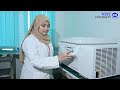
NIST UniversityTake a look at Campus
 Campus Building
 Campus Building
 Academic Block



NIST UniversityContact Information

Institute Park, Pallur Hills, Golanthara, National Institute Of Science and Technology (NIST)
Brahmapur ( Orissa)

(For general query)
(For admission query)
(For general query)
(For admission query)
Useful Links
Know more about NIST University
- All About NIST University
- Courses 2027
- Fees 2027
- Reviews on Placements, Faculty & Facilities
- Admission 2027 - Cutoffs, Eligibility & Dates
- Placement - Highest & Average Salary Package
- Cut off & Merit List 2027
- NIST University Rankings
- Gallery 2027
- Infrastructure Details & Reviews
- NIST University Faculty
- Compare NIST University
- Scholarships