Environmental Engineering: Study programmes, scope & prospects
 Call 8585951111Got Doubts?
Environmental Engineering: Study programmes, scope & prospects
Typically speaking Environmental Engineering is an integration of principles of science and engineering which is basically done to bring about positive changes in the environment such that clean and healthy air, water and land is available for all living organisms. Thus, the primary task of an environmental engineer is to work towards cleaning pollution sites.
So, people pursuing such a field are responsible for finding solutions in the sphere of:
- Public health issues which generally speaking involves dealing with waterborne diseases
- Implementing laws which help to promote adequate sanitation in rural, urban and recreational areas.
- Waste water management
- Air pollution control
- Recycling
- Waste disposal
- Radiation protection
- Industrial hygiene
- Environmental sustainability
- Impact of proposed construction projects on the environment
Environmental Engineering: Scope
Since the task at hand is so vast Environmental Engineers have an option to specialise in as well as make a career in basic sciences, social sciences, radiological science, ecology and economics. Apart from these, environmental engineers can also make a career as electrical, civil or mechanical engineers.
Mentioned below are the spheres/aspects wherein environmental engineers work:
Wastewater treatment
Environment engineers are entrusted with the task of using various technologies to treat waste water. Typically speaking the process involves using different techniques and systems which help to remove solid as well as floating materials, nitrogen, phosphorus and a means to disinfect the water as well.

Solid waste management
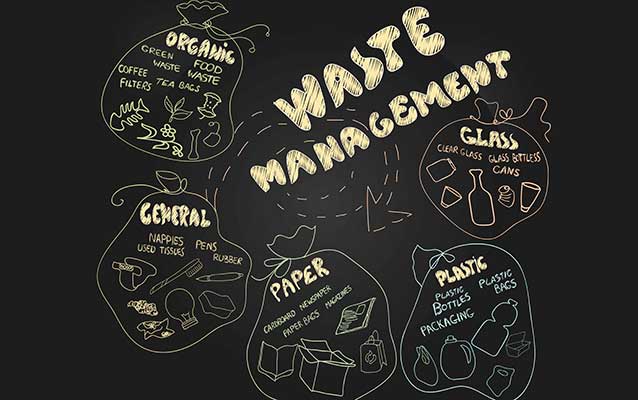
In such a task, people who have pursued environmental engineering need to work towards collecting, transporting, processing, disposing, managing as well as monitoring solid waste materials.
Air pollution management
Environmental engineers along with scientists have developed various models to test the concentration of a pollutant at a specific area. After identifying the pollutant they then work towards reducing poisonous gases from the environment.
Water supply and treatment
Environmental engineers and scientists work together to secure water supplies such that they have a fair idea of how much water is available for agricultural use as well as how much portable water is present. Engineers may also work towards calculating how much is the demand for water for various activities and how much water is available for use at any given time in a day.
As part of the water treatment process, engineers work towards meeting the water quality objective. Portable water is treated for infections and water distribution systems are built and designed in such a way that adequate water pressure as well as flow is maintained.
Environmental impact assessment and mitigation
Scientists and engineers work hand-in-hand to develop air pollution dispersion models which help to evaluate the overall air quality and also help in figuring out the concentration of a pollutant. Environmental engineers also work to decrease the content of carbon dioxide as well as other greenhouse gas emissions from different stages of combustion processes.
Environmental Engineering: Programmes
Aspirants can pursue environmental engineering at the undergraduate (UG) level, postgraduate (PG) level and even at the research level. So, candidates have an option of either pursuing a BSc in Environmental Science or MSc in Environmental Science.
In order to pursue the above mentioned courses, students should have studied Physics, Chemistry and Biology at the 10+2 level.
Apart from studying Environmental Engineering as BSc and MSc degree programmes, students can even pursue a PG diploma course in Environmental Engineering.
Candidates also have the option of pursuing a BE degree in Environmental Engineering or they may even pursue a BE or BTech in Environmental or Civil Engineering and thereafter pursue MTech in Energy and Environmental Management.
As per officials, a BTech degree in Environmental Engineering may cost an individual a little more than Rs 3 lakhs. Also, pursuing MTech in Environmental Engineering course is known to cost around Rs 2 lakhs.
Environmental Engineering: Prospects
Environmental engineering as a branch offers immense scope to professionals. Individuals who possess any qualification in chemical, thermal, radioactive, biological or even in mechanical engineering are fit to become environmental engineers because this field requires people from diverse educational backgrounds. Also, professionals who are specialists in environmental chemistry, water and sewage treatment, process engineering as well as pollution prevention are needed in huge numbers in this field.
Industry insiders share that job prospects for environmental engineering professionals are good in NGOs, research centres, as well as various government departments which work to promote the concept of – green Earth.
Candidates who possess MTech in Environmental Engineering are usually offered with opportunities to work in government built assessment committees. These committees work in such a manner wherein individuals study and thereafter analyse the various risks certain modern projects can have on the environment. Such a committee then submit a report to the concerned authorities who then further observe the things pointed out in the report and thereafter take a decision on whether a project should be undertaken or not.
On the other hand, candidates who possess a PhD in Environmental Engineering are ideal to opt for senior teaching posts in colleges as well as universities.
Environmental Engineering: Salary Offered
Candidates who have successfully completed their degree course or equivalent from a recognised college/institute are known to be offered many employment opportunities with the Central as well as State pollution control boards. These boards typically work to maintain an extremely clean environment such that there is sustainable growth in almost every field.
Thus, Environmental Engineers who are working with the State Pollution Control Board can expect to receive salaries ranging anywhere from Rs 15,000 to Rs 30,000.
However, candidates who possess MTech in Environment Engineering are known to receive a higher salary which can be anywhere from Rs 35,000 to Rs 50,000.
Also, candidates opting to pursue a designation related to research work in environmental engineering can expect to receive an impressive pay package. Such professionals can expect to earn a salary package ranging between Rs 50,000 and Rs 75,000.
Environmental Engineers can even head abroad to make a mark for themselves. The UNO also hires people with qualifications similar to environmental engineers for various projects. As per information shared by people in this field, organisations in US offer a median salary of $80,000 to environmental engineers.
