IIT Madras develops AI-based algorithm to detect cancer-causing alterations


The algorithm uses a relatively unexplored technique of leveraging DNA composition to pinpoint genetic alterations responsible for cancer progression.
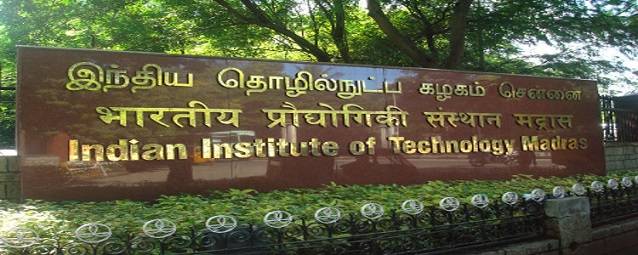
A team of researchers at the Indian Institute of Technology (IIT) Madras has developed an Artificial Intelligence-based Mathematical Model to identify cancer-causing alterations in cells. The algorithm uses a relatively unexplored technique of leveraging DNA composition to pinpoint genetic alterations responsible for cancer progression.
Cancer is caused due to the uncontrolled growth of cells driven mainly by genetic alterations. In recent years, high-throughput DNA Sequencing has revolutionized the area of cancer research by enabling the measurement of these alterations. However, due to the complexity and size of these sequencing datasets, pinpointing the exact changes from the genomes of cancer patients is notoriously difficult.
This research was led by Prof. B. Ravindran, Head, RBCDSAI, and Mindtree Faculty Fellow IIT Madras and Dr. Karthik Raman, Faculty Member, Robert Bosch Centre for Data Science and AI (RBCDSAI), IIT Madras, and also the Coordinator, Centre for Integrative Biology and Systems Medicine (IBSE), IIT Madras. Mr. Shayantan Banerjee, a Master’s Student at IIT Madras, performed the experiments and analysed the data.

The results have been recently published in the reputed peer-reviewed International Journal Cancers.
Explaining the rationale behind this study, Prof. B. Ravindran, Head, Robert Bosch Centre for Data Science and AI (RBCDSAI), IIT Madras, said, “One of the major challenges faced by cancer researchers involves the differentiation between the relatively small number of ‘driver’ mutations that enable the cancer cells to grow and the large number of ‘passenger’ mutations that do not have any effect on the progression of the disease.”
Given their vital role in tumour progression and development, computational prioritization of cancer driver mutations is an active area of research. Understanding the underlying mechanism of these alterations will help identify the most appropriate treatment strategy for a patient in an approach known as ‘precision oncology’
Tailoring treatments, not only to a specific illness but also to a specific person’s genetic make-up is challenging and requires extensive cataloging of the “driver” variants of interest.
The researchers hope that the driver mutations predicted through their mathematical model will ultimately help discover potentially novel drug targets and will advance the notion of prescribing the “right drug to the right person at the right time.”
Read More:
Follow Shiksha.com for latest education news in detail on Exam Results, Dates, Admit Cards, & Schedules, Colleges & Universities news related to Admissions & Courses, Board exams, Scholarships, Careers, Education Events, New education policies & Regulations.
To get in touch with Shiksha news team, please write to us at news@shiksha.com

She has over 10 years of experience in the education and publishing sectors. She specialises in exam coverage and content creation. At Shiksha, she writes, analyses, and presents information for students preparing f
Read Full Bio