Color Theory for NIFT , NID, UCEED and CEED
 Call 8045680126Got Doubts?
Understanding Color theory is an important part of the Design entrance exam preparation. Many questions are based on Color theory. Some questions are asked directly, others indirectly. Let's see how color theory is asked in the exams.

Colour Theory in Design Entrance Exam
Colors not only add spice to our lives but can do the same to your sketch if you know how to use them. The secret to the right color usage is contained in color theory. So, you must understand color theory. The study of how different colors work together and affect human perception is known as Color Theory. If one understands the color theory well, it will help in understanding colors, communicating ideas, messages, emotions, etc.
According to the color wheel invented by Sir Issac Newton, colors may be categorised into THREE groups.
- Primary red, blue, and yellow.
- Secondary mixes of primary colors
- Tertiary or intermediate - mixes of primary and secondary colors
- What is a Color Wheel?
- What are Warm and Cool Colors?
- What are Hue, Value and Saturation?
- Psychological Effect of Colors
- Type of Questions based on Color Theory
- Prep Tips to learn about Color Theory
- Important Topics for Design Exams

What is a Color Wheel?
The foundation of color theory is based on the color wheel. It consists of Primary colors, Secondary colors, and Tertiary Colors.
- Primary colors: These are colors that cannot be created by mixing other colors. These include red, blue and yellow.
- Secondary colors: There are those colors which can be formed by mixing two primary colors. For example, orange can be formed by mixing red and yellow, green can be formed by mixing yellow and blue, pink can be formed by mixing red and white, etc.
- Tertiary Colors: There are such colors that are formed by mixing a primary color and a secondary color. For Example, mixing red and orange, mixing yellow and green, mixing red and pink, etc.
What are Warm and Cool Colors?
Warm colors include Red, orange and yellow. These colors create a feeling of energy, warmth and happiness. These are often used in advertisements and festivals to attract people.
Cool Colors are colors that create a sense of calmness, peace, trust, and serenity. These are used in resorts, healthcare, environmental design, eco-friendly packaging, etc. Some of the colors include blue, green, and violet.
What are Hue, Value and Saturation?
Now, you need to learn what is hue, value and saturation.
- Hue - It is an attribute that helps distinguish colors into various types - red, blue, green, yellow, etc. Any color on the color wheel is of a different hue.
- Value - The relative lightness or darkness, or grayscale, is defined by its value. Using the value element, you can create depth, contrast, etc.
- Saturation - The purity or intensity of a color is represented by its saturation. A pure color will be fully saturated in contrast to an impure (desaturated) color.
Also Read:
Psychological Effect of Colors
Colors are said to affect human emotions and mood. A designer must know about this. Let's check some of the colors and effect on humans.
| Color | Common Associations |
|---|---|
| Red | Energy, passion, urgency |
| Blue | Trust, stability, intelligence |
| Yellow | Optimism, happiness, creativity |
| Green | Nature, growth, sustainability |
| Orange | Enthusiasm, friendliness |
| Purple | Luxury, imagination, creativity |
| Black | Elegance, power, sophistication |
| White | Simplicity, purity, cleanliness |
These are some of the basic concepts related to color theory, which have many other key concepts that you need to learn and master. Other key concepts you will need to learn include warm and cool colors, design harmony, etc.
Type of Questions based on Color Theory
The questions in Design exams, like NIFT, NID and UCEED are asked indirectly. Check how it is asked.
- Colour composition exercises
- Design situation questions
- Creative ability tests
- Fashion and communication design concepts
- Visual Storytelling
- Observation drawing
- Studio and Situation test
- Visualization questions
- Design sensitivity problems
- Colour relationship concepts
Also Read:
Prep Tips to learn about Color Theory
Check out the prep tips to prepare Color Theory.
- Learn the colour wheel thoroughly.
- Practice creating colour combinations.
- Observe colour usage in advertisements, logos, fashion, and products.
- Study famous brand colour identities and understand their purpose.
- Experiment with watercolours, poster colours, and digital colour palettes.
- Create mood boards using different colour schemes.
- Solve previous-year design aptitude questions related to colour and visual perception.
Questions Based on Color Theory
Check out some of the questions asked in popular design entrance exams like NIFT, NID Exam, UCEED and CEED.
- ‘Eco’ or ‘green’ products are
a. Green in color
b. Having Minimum environmental impact
c. having only raw material which is from nature
d. all the above - Architecture, like design or fashion, is often hard for people to perceive as an art form, for so much of it is wrapped up not only in purely aesthetic terms—
appearances, colors, beauty—but also in feats of engineering. That is, form in architecture, by definition, has to follow function. Take the skyscraper. It is necessarily
tall because of the limited amount of space on Earth. Its form—that is its impressive height—follows its function: to fit as much building as possible into a small lot. But
the architect takes it further. Instead of merely building a lifeless, monolithic structure, she inserts art into the design, so that each skyscraper has its own character, its
own ambience, its own
essence. Thus, the Chrysler Building, with its art deco façade, presents a stark contrast to the functional modernism of the Seagram Building, even though both
structures stretch into the sky a mere ten blocks from each other in Midtown Manhattan. Their functions are the same, but both solve the problems of function
differently and using radically contrasting forms.
As used in the middle of the passage, the word monolithic most nearly means
a. huge and drab
b. cheery and opulent
c. giant and inventive
d. characterless and unimpressive - Night-time flowering plants are typically_________ in colour, but have a pleasing smell, as insects do not see at night time but get attracted to their smell. Identify the correct colour.
(A) Purple (B) Red (C) White (D) Yellow - In the given box, make a poster of crows demanding their right to drink juices from juice shops. You may use colour.
- A triad colour scheme contains 3 colours. Considered to be the most basic type of color scheme, a triadic color scheme is defined as any three colors located 120 degrees from each other on the color wheel. In some way, triadic schemes can be considered the most flexible of the three combination-types, as there are many directions you can go in to measure 120 degrees. Given is a picture of a color wheel.
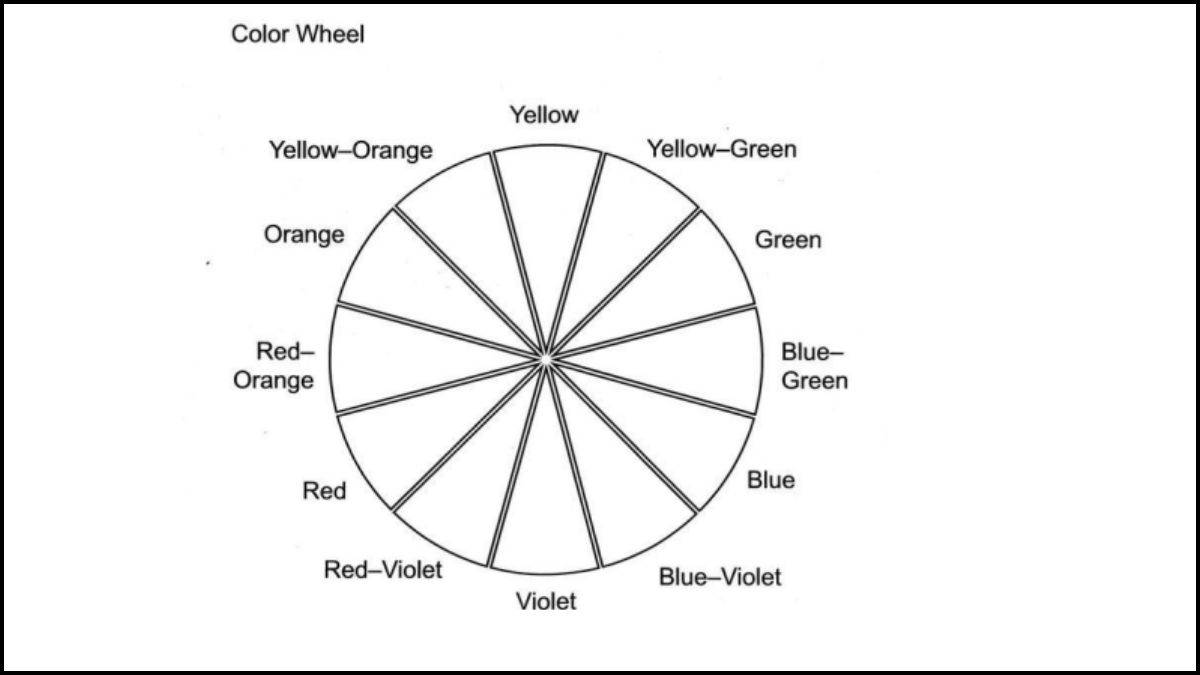
Color Wheel
(A) Yellow + Yellow-Green + Green
(B) Violet + Yellow + Orange
(C) Blue Violet + Red-Orange + Yellow-Green
(D) Green + Orange + Blue Violet
6. Which of the options is/are correct according to pigment colour theory?
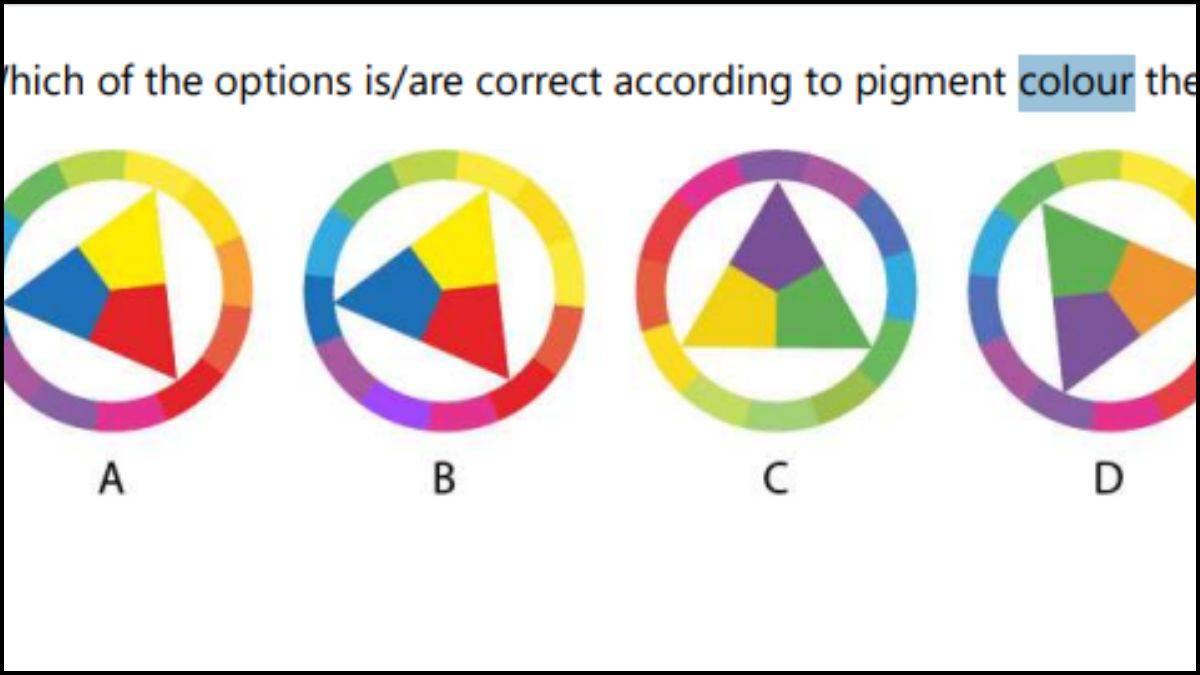
Color Wheel
7. Identify the correct silhouette of the coloured dragon.
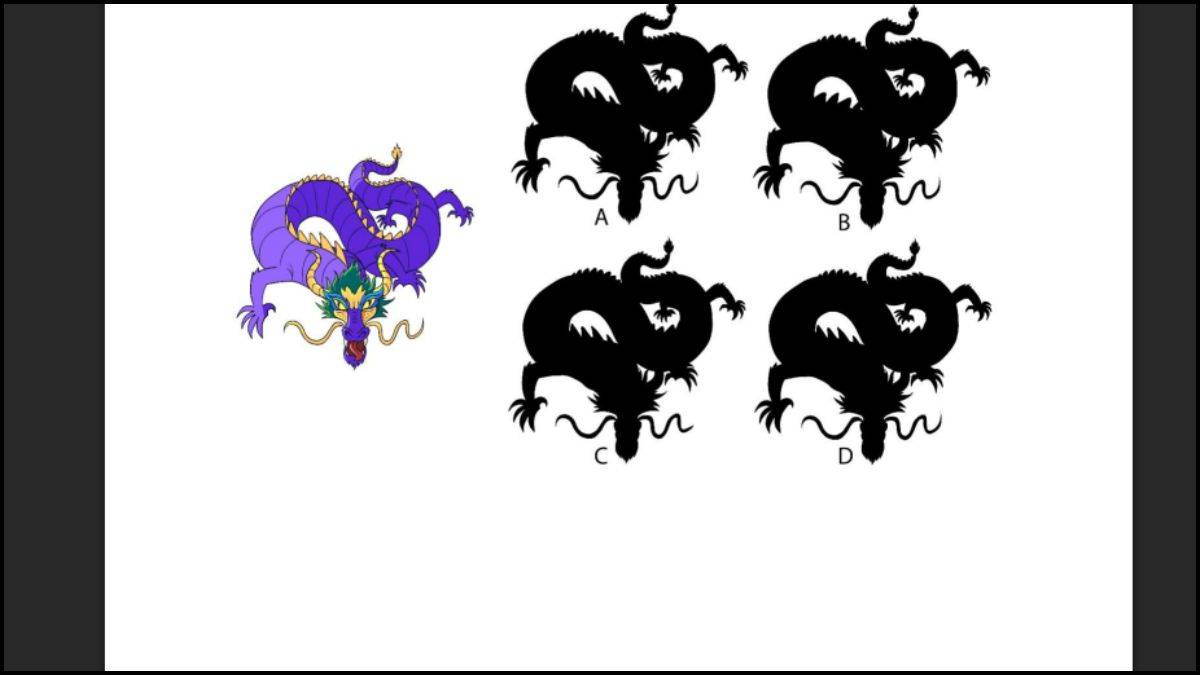
Color of dragon
8. A six-year old girl is going to school for the first time. She needs to carry a lunch box in her school bag. Her lunch can contain typical Indian food items (both dry as well as liquid food items, such as Roti, Rice, Dosa, Dal, Sambar, etc.). Design a lunch box for her, considering her needs. Sketch your design, and visually explain the features of your design along with clear labels.
Note:
- Use only pencil. Do not use colours.
- Explain your design only through visuals and short labels.
- Do not write separate explanations.
Also Read: Tips to Draw Sketches and Human Figures
Important Topics for Design Exams
Practise sketching, creative thinking, visual communication and time management to perform well in design entrance exams. Check out the important topics for design.
| Important Topics for CEED | ||
|---|---|---|
| Creative Writing Skills | Drawing Ability and Skills | Communication Skills |
| Design Concepts | How to Develop Characters | Logical Reasoning |
| Light and Shadow | Perspective Design | Logo Design |
| Problem Identification & Design Problem Solving | Scale and Proportion | Product Designing |
| Basics of Drawing- Lines and Shapes | Gradation Chart | Colour Theory, Color Schemes and color Compositions |
| Still Life Drawings, Eye Levels and Symmetrical Drawing Concepts, Object drawings from everyday life | Perspective- Types and Usage | Human Body Knowledge |
| Anatomy, Proportions and Divisions | Basic and advanced Human Drawings | Hands and Feet Study |
| Human Features | Animal and Bird Study | Colour Rendering and Design |
| Inspirational Design | Means of Advertisement-Visual Communication | Grid Collages |
| Metamorphosis | Study of Objects and Lateral Thinking | Compositions |
| Story Illustrations | Pictograms and Signage | Geometrical and Design Exercise |
| Compositional sense | Placement of different figures proportionally | Sense of proportion |
| Basics of materials and manufacturing processes | Interaction Design and Visual Communication | Sketching |
| Representation techniques | Problem identification & solving | Visual perception |
| Interface design & Product Design | Poster, Logo, Character designing | Story telling |
| Drawing of human figures of different postures, action, and age groups | ||
Also Read:


Sayeba Naushad is a commerce postgraduate from Banaras Hindu University. She has over five years of experience in content writing and editing. She has a nose for current events in design field. At Shiksha.com, she s
Read Full Bio