Beyond the Syllabus: 10 least explored areas on Earth
 Call 8585951111Got Doubts?
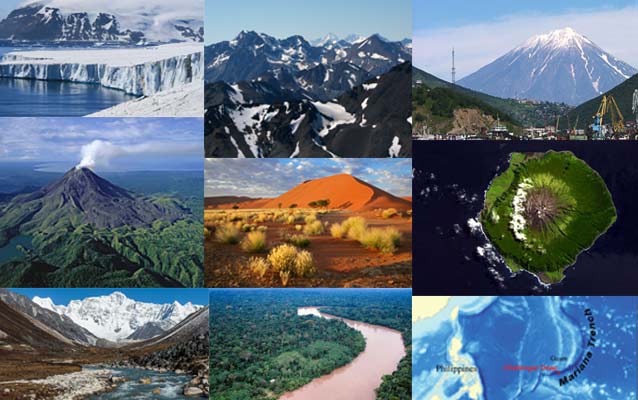
Are you a travel buff or an adventure freak wanting to explore the sights and sounds of our world? What’s on your wish list of places you want to visit in this lifetime?
Most of us come up with the usual holiday destinations such as Switzerland, Greece, Hawaii and the likes. However, if you are truly an explorer, you would definitely want to visit some such spots of Earth which have not been explored much. Yes, it will be difficult reaching these places but then that is where the adventure starts.
Shiksha.com in this edition of Beyond the Syllabus brings for you ten unexplored areas on Earth and we even try to demystify why these areas have managed to secure a spot for themselves in this list.
Antarctica
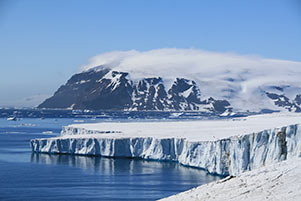
Antarctica is primarily inhabited by scientists who head over to study this mysterious continent. Much of the continent is more than 3,000 m above sea level. Strong winds, subfreezing temperatures, thrashing waves, ice fields and ice bergs are some of the reasons which have contributed to Antarctica becoming the least explored continent on Earth.

Given the latitude at which Antarctica lies it has long periods of darkness or constant sunlight which is unfamiliar to human beings. The temperature in winters rangers from −80 °C to −90 °C whereas maximum temperature in summers at the continent’s coast ranges from 5 °C to 15 °C. However, with global warming, scientists now claim that the climate at Antarctica is getting warmer by the day.
Amazon Rainforest
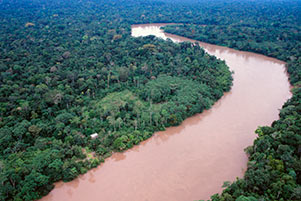
This rainforest covers a major part of the Amazon basin in South America. The basin of the river covers an area of 7,000,000 square kms and out of this total area the rainforest is spread over 5,500,000 square kms. However, this region includes territories belonging to nine nations.
The Amazon rainforest is known to cover approximately 50% of the world’s remaining rainforests and comprises of 390 billion individual trees divided into 16,000 species. This unexplored rainforest also has about 2.5 million insect species, 2,000 species of mammals and bird as well as 438,000 species of plants which have been officially documented till date.
The Amazon rainforest is now being studied through remote sensing because its climate, habitat and venomous creatures make it highly unfavourable for exploration.
Mariana Trench
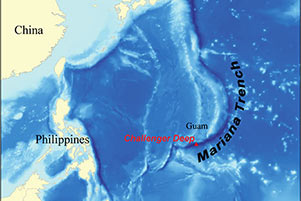
The deepest part of the world's oceans, Mariana Trench is next on our list of unexplored places on Earth. It is located in the western Pacific Ocean, east of the Mariana Islands. The trench is about 2,550 kms long but has an average width of only 69 kms. It reaches a maximum known depth of 10.911 km. This deepest point of the trench is a small slot-shaped valley in its floor which is present at its southern end called the Challenger Deep.
The trench remains unexplored because at its bottom, the water column above exerts a pressure of 1,086 bars which is more than 1,000 times the standard atmospheric pressure at sea level.
Gangkhar Puensum
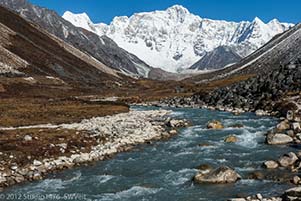
Bordering Bhutan, China and Tibet is Gangkhar Puensum, which literally means the three mountain siblings. Lying at an elevation of 7,570 meters above sea level, Gangkhar Puensum is the highest unclimbed mountain on Earth.
Gangkhar Puensum has been an unexplored spot on Earth till date because climbing these high altitude mountains have been banned since 1994 due to spiritual, social, political and obviously geographical reasons.
Greenland
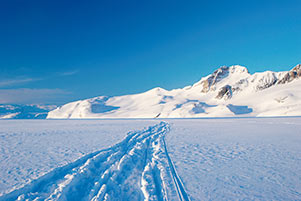
Located between the Arctic and Atlantic Oceans, Greenland is the least populated country in the world. The main reason behind Greenland being uninhabited is that 81% of this country is covered in ice.
Spread over an area of 2,166,086 square kms, the average temperature in Greenland (over different seasons) varies from −8 °C to 7 °C.
The few land mammals in Greenland include polar bear, reindeer, musk ox, arctic fox, wolf, stoat and arctic hare. There are dozens of species of seals and whales along the coast. Over 100 species of birds have been seen, and around 50 breed in Greenland.
Harsh weather conditions at Greenland are the main reason why a major chunk of this country remains unexplored till date.
Kamchatka Peninsula
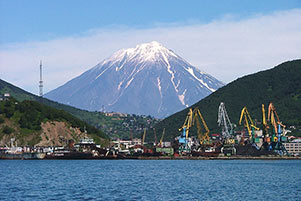
A 1,250 km peninsula in the Russian Far East, Kamchatka Peninsula lies over an area of about 270,000 square km. It lies between the Pacific Ocean to the east and the Sea of Okhotsk to the west.
The Kamchatka Peninsula is often referred to as the – land of fire and ice. This is primarily because the peninsula has many active volcanoes and a thick subsurface layer of soil that remains below freezing point throughout the year. Scientists reveal that if one digs a foot under the surface then they can find solid ice at this peninsula.
The Kamchatka peninsula contains the volcanoes of Kamchatka. It also receives up to 2,700 mm precipitation per year. The summers are moderately cool and the winters tend to be rather stormy but lightning here is an unusual phenomenon.
Kamchatka peninsula does not see many travelers or exploration work because of its topography and climate.
Papua New Guinea
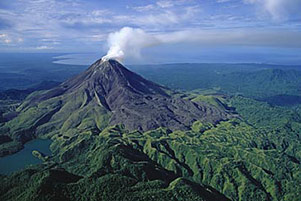
The island state of Papua New Guinea, about 100 miles from the northeastern tip of Australia is considered to be one of the most unexplored places on Earth. Most of the population is sparsely distributed on the coastal lowlands, while the remote interior contains vast tracts of uncharted rainforest, rugged highlands and extinct volcanoes.
Research work in the earlier unexplored regions of Papua New Guinea led scientists to finding unidentified species of animals such as spiders, frogs and a giant wooly rat the size of a large cat.
Papua New Guinea is sometimes even compared to places such as Madagascar and Belize with regard to the rich flora and fauna it possesses.
Colombia's North Mountains
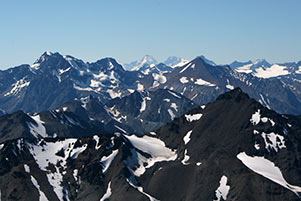
The Columbia Mountains are a group of mountain ranges located in southeastern British Columbia and partially in Montana, Idaho and Washington.
The mountains of Northern Colombia have been unexplored until recently when a group of scientists embarked on a biological expedition. Scientists recently discovered a new bird species at the Yariguies Mountains which are now called Brush-Finch. In 2010, a new subspecies of the bird Lachrymose Mountain Tanager was also discovered in this area.
The Colombian mountain area is home to extensive cloud rainforests that envelop these mountains in mist.
Namibia
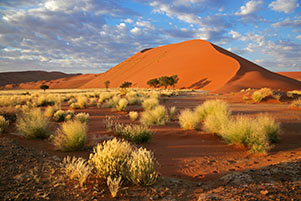
The least populated country in Africa with just 2.1 million people residing in 300,000 square miles of land is Namibia. The country has thousands of square miles of largely unexplored deserts which include the famous Kalahari Desert as well as many plateaus.
There are many endangered animals such as rhinos and cheetahs at Namibia. The country also has other smaller animals facing extinction such as the ant bear and honey badger.
Tristan da Cunha
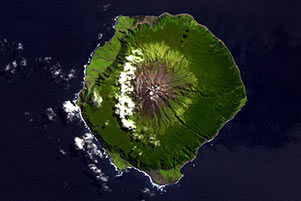
One of the most isolated island archipelagos in the world is Tristan da Cunha which has a north-south length of 11.27 kms and a total area of 98 square kms.
Many of Tristan da Cunha’s outlying islands haven’t been thoroughly explored, so much so that, one such island is even named to be the – Inaccessible Island.
Many seals, including the mammoth elephant seals, share the islands’ beaches with a plethora of shore birds and waterfowl.
The main reason why the island remains unexplored is that it lies in an area of high volcanic activity. The climate of this area is neither too hot nor too cold, but the islands are susceptible to powerful oceanic storms with high winds making it hostile for humans.
