Indian student's rocket makes it to space
 Call 8585951111Got Doubts?
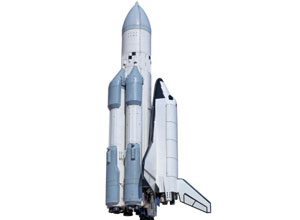 Research contests and new inventions have always added excitement to the intensive study at science and engineering colleges.
The students of Indian Institute of Space and Technology (IIST), Thiruvananthapuram, Kerala have an unusual feat to their name. They have designed a sounding rocket that has been launched from the Thumba Equatorial Rocket Launching Station near Thiruvananthapuram in May.
For the first time in India’s history, a student designed rocket called ‘Vyom’ has got a chance to make it to the ‘space’. A sounding rocket is also known as a research rocket. It carries instruments to measure and perform scientific experiments during the course of its flight. ‘Vyom’ means ‘sky’ in Sanskrit. This student-designed sounding rocket is 2.3 metres long and is a single-stage rocket. It can carry weight of 88 kg. It used a new type of rocket fuel called hydroxyl-terminated polybutadiene.
The systems engineering team of 26 students from IIST’s Vikram Sarabhai Space Centre, was led by a 21-year old boy from Vadodara – Gagan Agrawal. He has just finished his B.Tech in Aerospace from IIST and has already become youngest project scientist in Asia. While in IIST, Gagan had also created a student technical forum to promote and nurture innovation in the institute established by the Indian Space Research Organization (ISRO).

The team had students from both the first and second batches of the IIST who were keenly interested in designing, developing and launching rockets. Read more
Space research has been an area of keen interest for Indian students. In January this year, nine Indian students between the ages of 14 to 18 years had made it to the list of finalists in a global science competition called ‘Space Lab’. The competition was conducted by YouTube, Lenovo, and Space Adventures along with space agencies like NASA, European Space Agency, and Japan Aerospace Exploration Agency. Know more
Recently, IIT Bombay also announced a unique competition called E-Yantra, where students will be given robots and they will have to develop solutions and applications to make them to the pre-set tasks. See details
Other interesting reads:
- Uncover scientific mysteries
- IIT-B's electric car to race UK's Formula One Circuit

Comments
(3)