Shiksha Opinion: Funny business behind JEE ranks
 Call 8585951111Got Doubts?
Joint entrance examination (JEE) ranks were finally declared yesterday, July 8, 2014, amid much confusion over when and at what time the ranks would finally be declared by CBSE. We, at Shiksha.com were glued to the JEE Main as well as CBSE website and helplines, apart from reaching out to our sources to get information on the declaration of the All India Ranks (AIRs). However, the authorities kept us waiting for an entire day, wherein, whenever we asked for information we were informed that the website would be updated in an hour or so, which obviously did not happen.
Amid all this confusion, there were reports that the ranks would be announced on July 12 and some people even went on to say that there is some problem with the JEE Main and CBSE websites and that was the primary reason why no announcement was being made about the result.
What we feel is that when we as reporters were finding it difficult to fish out information, how cumbersome the entire process would have been for students. Such uncertainty is killing.
Thankfully, students found humour in this delay in results, as well. We came across many social media updates by frustrated students on the delay in JEE Main rank declaration, which got us cracking.

This entire mess started in 2012 when the then HRD minister Kapil Sibal introduced many so-called educational reforms, the most publicised of them being the introduction of FYUP in DU, introduction of NEET for medical entrance, and bringing about changes in the IIT (Indian Institute of Technology) JEE.
Well, we know about the FYUP drama; this new initiative went down the drain in just one year after launch. As far as the IIT JEE is concerned, we feel that it’s on the same path.
At the time of its introduction, most of the IITs had openly stated that – the changes in JEE have been brought about in a hurry and have complicated the examination; which even we feel is true.
However, one aspect of the exam which is absolutely annoying is the normalisation process. The process is not only confusing but at times it is hopelessly unfair as well. And seriously, what is the whole point of having separate results being declared for the same examination?
We feel that some of the main flaws arising from normalisation in JEE are as follows:
- Students securing high ranks in JEE Main may not have qualified for a seat at any of the IITs.
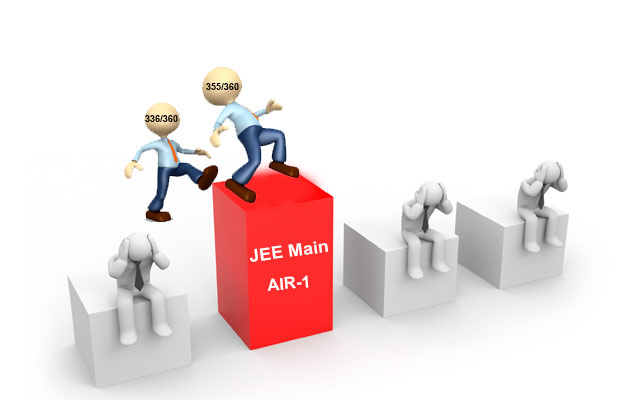
Srinidhi Prabhu who has secured AIR 1 in JEE Main as per the recently declared results, scored 336 in the JEE Main exam and he managed to hold the 133 rank in JEE Advanced. Prabhu managed to secure a seat at only IIT Madras. Similarly, second rank holder in JEE Main, D Srilekha scored 327 marks in the JEE Advanced exam and held rank 471 in JEE Advanced.
- Students may have a high score in JEE Main but that doesn’t necessarily mean they have a high rank in the exam.
Pramod Vakacharla who secured a whooping 355/360 in JEE Main along with Krishlay Raj and Mohammad Akram Khan who scored 350 marks in the examination are not even in the list of first 10 rank holders, as per the final AIRs announced by CBSE. Click here to read more about the highest scorers in JEE Main 2014.
- Students who have qualified for JEE Advanced may not have qualified for admissions at any of the NITs
Having scored 334/360, the JEE Advanced 2014 AIR-1 holder, Chitraanga Murdia after normalisation has managed a score of 265.5 in JEE Main (his JEE Main score was 335/360).
Our Take
So, our point here is that – is this even fair? Even after students have performed exceedingly well in their examinations, they still do not have any guarantee of getting admission at any good institution.
Did the children not have caliber? No, they definitely did and all this fuss around IITs and NITs is completely baseless. NITs are certainly good educational institutions and the ranks and scores mentioned above show that students entering NITs are no less than the ones studying at IITs.
So, this entire normalisation process in itself is flawed. Yes, it does give more students the opportunity to become toppers. But, keeping this point aside there is just confusion and more confusion created by the existence of such a process.
The concerned authorities should definitely evaluate and mull over this aspect of the examination because the current system is known to put unnecessary pressure on students who seem to be playing a game of chance as they wait for multiple results to know their fate. While the JEE result may declare them to be on top of the list, the board result may keep them counting but the normalisation results can just dash their hopes and dreams with a single blow.
Also, with the new proposal of setting up new IITs in the country, this entire engineering admission process is bound to get even more confusing. So, Smriti Irani, the new HRD minister has a tough time ahead as she gears up to clear all the confusion around these entrance examinations.

Comments
(4)
S
2014-07-14 22:18:35
2014-07-11 13:17:59
M
2014-07-10 10:15:42